


.Dl7BAwhJ_bSbwe.webp)

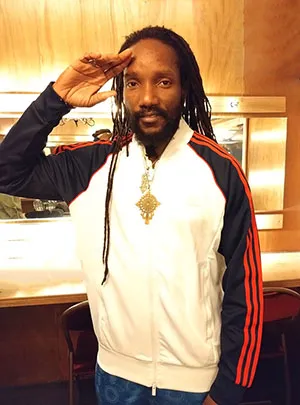
Kabaka Pyramid: "I never used to read and wasn't interested in anything too deep or too spiritual. Rastafari really opened that world to me!"
door Jah Rebel
Kabaka Pyramid trakteerde zijn fans onlangs op 'Rebel Music, The Lyrics Tape', maar wij blikten met hem nog eens graag terug op 'The Kalling' en de Grammy die dat album hem opleverde!
Kabaka, since we last spoke, you’ve released 'The Kalling', which won you a Grammy. The Reggae Grammy has been controversial for years, and now that you've won one yourself - and given your close ties with the Marley family- I'm curious to hear your perspective. What does the award mean to you, and how do you look at the controversy surrounding it?
Kabaka Pyramid: "It's definitely a prestigious award when it comes to reggae, probably the most prestigious thing you can win as a reggae artist. It was amazing to be there and see just how big the whole thing is. Even though the reggae category isn't part of the televised portion of the Grammys anymore, it was still great to be there and see so many artists, songwriters and musicians collect their awards and give their speeches. I went there just to experience it. I wasn't expecting to win or anything like that, but then we won, and it was an amazing feeling, just completely euphoric. It has been life-changing as well. The way my career has taken off since then, and the way people perceive me, has changed, from the media and the fans to my streaming numbers and bookings. I've been to countries I'd never visited before. I do think we probably benefited from the fact that Damian Marley produced the album. He's won three Grammys himself, I believe, and obviously Stephen has won multiple times, Ziggy has won multiple times; the whole Marley family has that name and that brand behind them. There are a lot of people in the US who are Grammy voters, and I think some of them probably vote based on name recognition. So I actually felt that, out of all the nominees, I had one of the biggest disadvantages when it came to that. Sean (Paul, nominated for 'Scorcha', red.) won multiple, Shaggy (nominated for 'Com Fly Wid Mi', red.) won multiple, Koffee (nominated for 'Gifted', red.) won before, Protoje (nominated for ' Third Time's The Charm', red.) was nominated before. But I honestly felt like I had the strongest album. I think we deserved it based on the music alone. The previous year, SOJA won and got a lot of backlash because they're a white American band. But they've worked very hard to get where they are, and I appreciate the work they've put in. A lot of people still see reggae as Jamaican music, but it's become an international genre now. And I think it's a good thing when our music can get that kind of recognition, for sure."
As an artist, does a Grammy also come with a certain pressure to live up to that achievement with your next project?
Kabaka Pyramid: "Yeah, but it's good pressure! It motivates you to raise the quality of your music and keep the standard high. It's even pushing me as a producer, as I want to start producing more of my own music going forward."
You already mentioned Damian Marley. 'The Kalling' is the second album you've done together. In my review of the album, I wrote: "Never change a winning team!"; would you say that’s your perspective too, and do you see yourselves continuing to work together in the future?
Kabaka Pyramid: "Yeah, for sure. I might probably drop an EP or some smaller project between now and the next album ('Rebel Music, The Lyrics Tape' was released on August 28 2026, red.), especially while Damian is working on his album. I want to keep active, dropping songs, but I definitely want to do my next major album with Damian again. As you say, it's brought me success, so I think we can at least explore that opportunity and see where it takes us"
Damian is not the only Marley you collaborated with on the album. Stephen's voice can be heard in the title track, but, on a more poignant note, there's also the late Jo Mersa Marley, who I believe co-wrote one of the songs.
Kabaka Pyramid: "Yeah, we wrote 'Mary Jane' together."
How do you remember him? What kind of a person was he?
Kabaka Pyramid: "Joe Mersa was a good person, just a genuine youth. He always spoke what was on his mind very clearly and was a very honest youth. Joe was always hanging out in the studio, vibing. He'd play songs for me and ask me my opinion. He and Black Am I came up with the idea for 'Mary Jane'. He was just a cool, down-to-earth youth, but he knew when to be stern and militant. Mersa was my brother, man, for real!"
I'd like to read you two lines from two different songs on the album, touching on a similar subject. In 'The Kalling', you sing: "When yuh tek up Rasta banner, do nuh tek it fi nuh joke. It's more than just di locks upon yuh head an' what yuh smoke!", and in 'Red, Gold And Green', you say: "Some a dem a wear the colours and dem nah do dem research!" So, rather than asking you what Rastafari means to you, I'd like to ask: what does Rastafari bring to your life?
Kabaka Pyramid: "Rastafari is what brought me towards consciousness and knowing myself, knowing my roots. Before Rastafari, I was just a youth who loved sports, joked around a lot and didn't really take life too seriously. I never used to read and wasn't interested in anything too deep or too spiritual. Rastafari really opened that world to me. I started to read and gain information about Africa, about my roots, where my ancestors came from and things like that. In Jamaica we still mostly learn about European history. Maybe things have changed now, but when I was in school, they might teach us a little about slavery, but they didn't really tell us what was happening in Africa, about African civilizations and things like that. I also started to change my diet, cutting out the meat and being more health conscious. It's changed my life, and now my mission in music is to try and do that for other people as well!"
The album also contains three adaptations of well-known reggae songs. 'Mystic Man' probably needs the least explanation, given how important Peter Tosh is to you. But then there are the other two, starting with 'Fade Away', which became 'Faded Away'. How did you end up choosing that song for the album?
Kabaka Pyramid: "We were actually in the studio, reasoning about which songs we wanted to sample, and I came up with 'Fade Away'. It's a song that's still often played at dances. Damian started to chop it up and play around with it. In the end, we ended up with a more modern version of the song, but we also recorded an old school version. Damian felt we needed to go more old school with the production and give it a real Eighties dancehall vibe. It's my first combination with Buju, and I feel the song carries a very powerful message about not chasing vanity and being conscious of who you are. I definitely feel it's one of the highlights of the album!"
You just mentioned Buju Banton, just one of a number of big names featured on the album. Have you reached a point in your career where you can basically call whoever you want for a collaboration?
Kabaka Pyramid: "(laughs) Honestly? Damian and Stephen were responsible for most of the collabs on the album. Of course, some of them are my friends, but like with Buju, it was Stephen who made the call, and it was Damian who contacted Sean Paul for the remix of 'Energy'. Sometimes you just have to let the person who's best at doing the talking do the talking!"
There's one vocalist on the album I wasn't familiar with yet: Natalia. Could you tell us a little more about her and how you came to work with her?
Kabaka Pyramid: "Natalia is really just starting to branch out into her career as an artist, but she's been a songwriter for a while. She's close with Damian's former keyboard player, Sean 'Young Pow' Diedrick. He introduced her to us. We had a writing session in LA, and at first we were actually thinking of getting somebody else to sing her part, but when we heard her voice, it sounded so good and so powerful that it just didn't make sense to look for someone else. The song is actually her first release as an artist, but she's written songs like 'Lighter' with Tarrus Riley and Shenseea. I really enjoyed working with her, and we've got some other stuff in the works as well."
Content-wise, I think one of the most powerful and poignant tracks on the album is 'Addiction', because it speaks to something so many of us can relate to: our dependence on smartphones, social media, online shopping and all these things that have become part of our daily lives. Do you ever find yourself struggling with that kind of addiction?
Kabaka Pyramid: "I think we all do! I don't have a big sugar addiction, but I do enjoy the sweet stuff every now and then. I also use Amazon to order my music equipment online. However, I don't sleep or wake up with my phone beside me and usually turn off my phone at night. During the pandemic we were all stuck inside and turned to our phones to escape the isolation. It's accelerated things to a level where I now worry about the kids, the younger generation who's just on their phones and tablets all day, hardly interacting with people in real life. Some kids can't even have a proper conversation anymore because they've become so used to being behind a screen! I hope a song like 'Addiction' can help make people aware of what is happening; nudging them to take a step back, think about what they're doing, and bring a little balance back into their life!"
You don't literally talk about AI in the song, but it has become part of the digital world we live in. As an artist, and especially as a versatile lyricist, how do you see AI developing? Is it something that worries you?
Kabaka Pyramid: "It's very worrying! We've all seen the movies with AI going haywire… What will happen when AI starts to replicate itself or starts to prioritize itself over human beings or the planet? But even now, with kids just using AI to answer all the questions for them instead of thinking for themselves… Obviously, there are positives, but you have to wonder: as everything around us is getting smarter, are we getting dumber? There's definitely a whole heap of concern when it comes to music as well. You have AI-generated artists, people using other artists' voices without their permission, and AI writing songs for them. We're already seeing AI-generated and fake songs being released, and I think that's something we need to take seriously. There definitely needs to be regulation around these things, because we can't just let AI develop and expand without any boundaries. If we do, things could get crazy in no time!"
Over de auteur
Jah RebelMeer Minder
Lag samen met Jah Shakespear aan de basis van Reggae.be; eerst als recensent en interviewer, en vanaf eind 2014 ook als hoofdredacteur. Verdeelt zijn tijd tussen zijn twee passies: muziek en Haile Selassie.
Genres
Gepubliceerd
19 september 2026