There was a time when dub poetry promised to become a full and busy genre, yet another branch on the already prolific reggae tree. After the classic albums by Linton Kwesi Johnson (aka. Poet & The Roots), Mutabaruka and the late Michael Smith (who was stoned to death!), a compilation album, "Word, Sounds 'Ave Power," also appeared, featuring young, new names, even if none of them reached the level of that illustrious trio. LKJ has been feasting on his justly acquired fame ever since; Muta has presented a popular talk show on Irie FM for decades. New dub poets have barely emerged since the 1980s, and the narrow compartment of dub poetry has never expanded in my (vinyl) record cabinet.
In the CD rack, however, "Mental Assasin," the second and, in my opinion, best album (1995) by Yasus Afari, is also still showing off. We thought that was a strange name at the time, why not just Tafari? But the man had made a unique record. While most DJs lost themselves in slackness and gun talk, John Sinclair profiled himself as the angry, outraged rastaman who denounced injustice and tried to reinforce historical insights, the half that's never been told. He did so on mostly digital riddims, and with a furious urgency. In the best songs, Yasus Afari sounds as sharp and uncompromising as Mutabaruka, whose style he also comes closest to, both in his vocal timbre and in his patois and pronunciation.
Yasus Afari has a total of about seven albums and a few dozen singles to his credit, but in fairness, most of them never came to my attention, aside from a tune with his childhood friend Garnet Silk. Most often I stumbled upon Yasus' book "Overstanding Rastafari: Jamaica's Gift to the World" (2007),
which brought him some name and fame in literary and sociocultural circles.
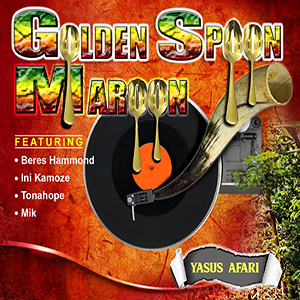
And now there is this new album, self-released, because what record company would venture into dub poetry today? With the emphasis on dub, because in fact Yasus Afari serves us only five new songs, with accompanying dub versions. He did manage to enlist some remarkable guests however. Beres Hammond sings along (more than Yasus talks poetry even) on 'Mama Africa We Love You', a tight remake of the time-honored I'm Still In Love With You riddim. In the spoken chorus, we hear a female second voice (the otherwise unknown to us Mik), which returns patchily in the echo-laden dub.
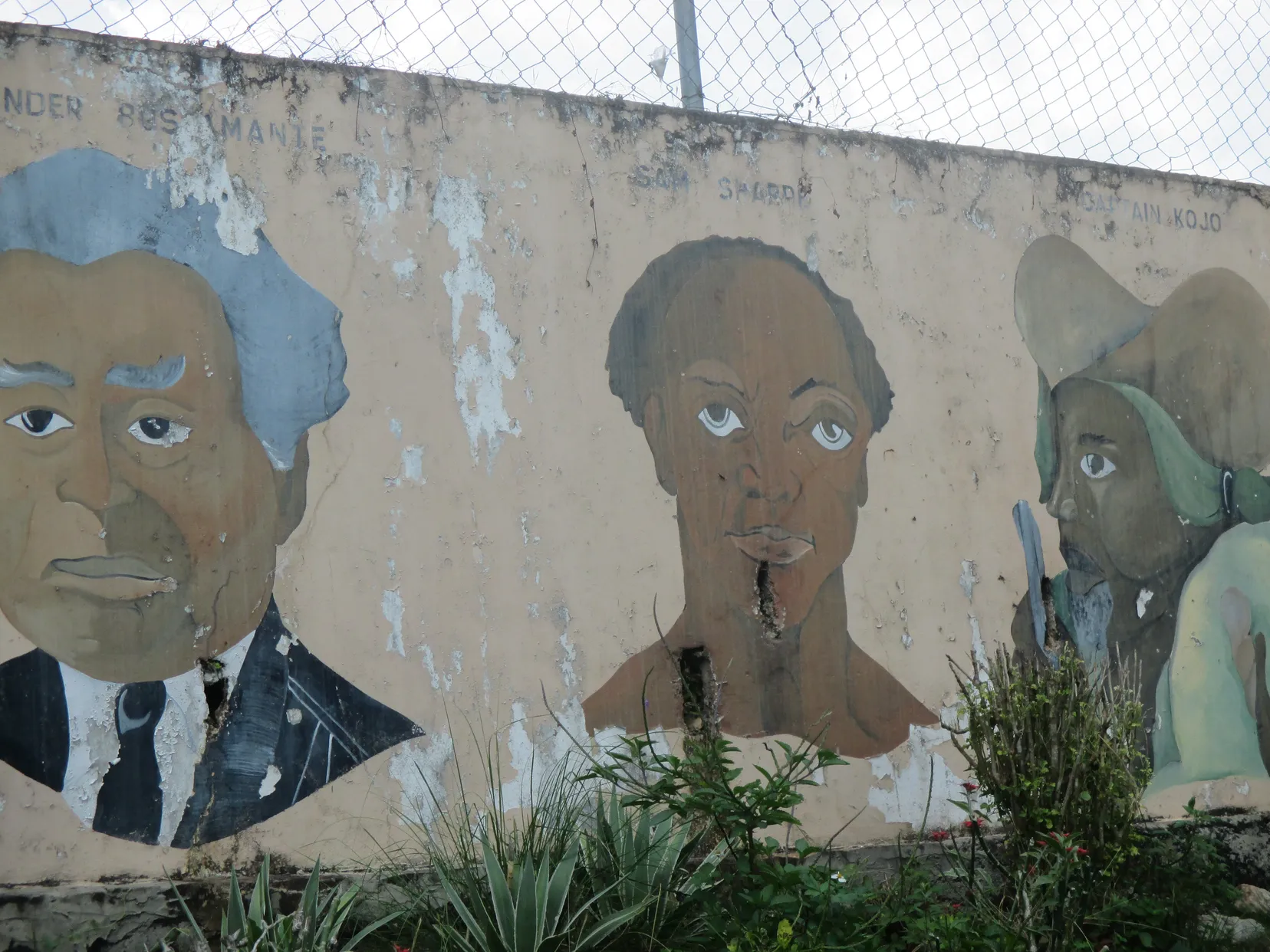
'Golden Spoon Maroon', the title track, floats on the nyahbinghi-like Heart Of Love riddim, and certainly in the 'Golden Dub' has something of Bob Marley's two nyahbinghi tunes, 'Time Will Tell' and 'Rastaman Chant'. "We need you Maroon...," declares Yasus Afari, an ode to the free-spirited people of warriors and breadfruit (also symbolic). Again, there are pleasant backing vocals.
'Plain And Simple' is almost drowning in synthesizers, but there is a very catchy tune in there, which is embellished in the dub with lots of special effects. Somewhere in the background the voice of a child resounds, in fine harmony with the staccato teachings of Yasus Afari. 'What A Sin Ting' is built around a variation of the ever-popular Stalag riddim, so in the dub it is rightly starring the bass. None other than Ini Kamoze got to sing the song, after which the dub poet got to work on it.
The jewel in the crown of this album is "Rise And Shine," cool roots reggae with another long sung piece, this time signed Tonahope. His abrasive vocals recall Philip Smart, but the lyrics linger on worn-out clichés like "China is for the Chinaman/England is for the Englishman." Yasus Aafari brags of "500 years of blood, sweat and tears" (half a century ago Peter Tosh was talking about 400 years), prompting us to "bun' down Babylon." To close with some pertinent questions, so typical of the genre of dub poetry: "Who are you? Where are you going? Where have you gone right? Where have you gone wrong?"
Yasus Afari has once again created an album out of category, comparable to nothing and no one. Mutabaruka and Bob Marley are, at best, nice references. I would say listen to it for yourself, love it or hate it, but certainly don't let it go unnoticed.











.Dl7BAwhJ_ZJXLLF.webp)