



.Dl7BAwhJ_ZJXLLF.webp)
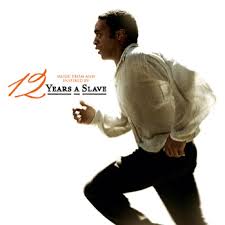
How do you mean, there's a lot of nauseating violence in this movie? People would leave the theatre crying, reviewers and interviewers call the director to account. Whereas in every action movie or television series there's plenty more violence, and Steve McQueen could have portrayed the suffering of slavery with much more crudity. That's how blind we here in the western world have always remained to this shameful episode in the history of mankind.
People of my generation have no excuses though. In 1977 'Roots' was shown on the telly, a series based on the book of the same name by Alex Haley. The story started in Africa, where Kunta Kinte was kidnapped and put on a ship heading for America. We followed him and his descendants for three to four generations. At the end of the second series we even witnessed the Haley character finally visiting his ancestors In Ghana. Rarely has a television series made a greater impression on me. It was a part of history that nobody had ever told me. I hadn't heard anything about it at school, where colonial wrongdoings were still a taboo back then. There was no one who linked our immeasurable wealth with the 400 years of slavery and looting that disrupted huge parts of the world for a very long time. Not one word about the social deprivation that African Americans had to tide over from birth and the discrimination that was their share. Martin Luther King: him we did know. But then he was someone who liked to quote from the bible. He preached peace and non-violent action. And yet even he was murdered, in a society that was far from done with the consequences of slavery.
It cannot be a coincidence that precisely in that period reggae also came into my life, and rastafari. Slavery was a dominant theme in those years, not only as a historical reference but also as a metaphor for the suppression that had never stopped. 'Every time I hear the crack of a whip, my blood runs cold.' In some versions of 'Slave Driver' you hear that crack too, a fierce, piercing drum beat. Bob Marley and Mikey Dread sang about mental slavery, Judy Mowatt about a 'Slave Queen'. Ever since then the topic has never entirely disappeared from reggae, or at least not for the artists who unequivocally chose to write conscious lyrics. My favourite 'slave song' is a three-part tune by Singers & Players (On U Sound) from 1984, featuring Bim Sherman and Prince Far-I. More recently Busy Signal re-iterated what it was all about in the strong track 'Modern Day Slavery'. The complete list of slavery tunes in my record collection can be found underneath this article. Feel free to add.
Nobody has cherished the memory of slavery and Africa so consciously and lovingly, and preserved it worldwide, as the rastas and the reggae singers/DJs. It is thanks to them that I started digging deeper, read books and watched movies that are impossible to find in the 'western' media circus. I never checked '12 Years A Slave', but even Steve McQueen hadn't heard of the book, and yet he had been toying with the plan of making a film about slavery for years. In the 18th and 19th century hundreds of testimonies of (ex-)slaves came out, but none of them later hit the shops in America, let alone made it to the recommended reading lists at school.McQueen chose this story because this way the viewer can still more or less identify with the main character, a 'free negro' with a respected position and family in Saratoga, in the state of New York, where slavery had then (1841) already been abolished. But in the south the system was still in existence, and some slave traders deemed it necessary to kidnap African American citizens in the northern states and then offer them for a lot of money on the southern plantations. Just try to imagine: one day you're enjoying life to the fullest, out on the town with your family, well-fed and well-off, and the next day you're chained up and you get mercilessly roughed up. You don' t have to be black to 'get' that.
The film has barely been going for ten minutes when Solomon Northup, the main character, gets severely beaten up. Then it takes almost two hours before there's another scene with explicit violence. Horrendous, don't you think, those floggings, and according to most reviewers far too long spun out and nearly unendurable, but that says more about them than about a possible error of judgement on the part of the director. Compared to the blood that splashes off the pages in some books, and as far as that is concerned also in 'Amistad', the brilliant Steven Spielberg movie, this is a rather tame account of the facts. I think it's incomprehensible that series like 'Dexter' and some crime movies are buried in superlatives without any reservations when it comes to violence and that McQueen would now have overstepped the mark. Please! In my view he has even shown restraint. A motion picture that would demonstrate the actual face of slavery, from the African coasts all the way to the American plantations, would most probably be deemed even more 'violent', like 'Apocalypto'. Truth hurts, and certainly in circles where they have never faced that truth.
All this does not take anything away from the fact that '12 Years A Slave' is a superb movie which paints a cracking picture of life in enslavement on the 19th-century plantations, a few years before the American Civil War would end this malicious system. We are introduced to real racists, rednecks who treat black people like inferior beings and cannot in a million years be convinced of their humanity (which, by the way, they themselves lack entirely). And yet there are also slave drivers and plantation owners who are a bit more intelligent, less harsh towards their slaves, but just as guilty of maintaining slavery.
Also listen to the songs sung by the slaves while at work, songs that would later be moulded into blues, jazz and pop. 'Roll Jordan Roll'! It's possibly the greatest legacy the slaves have left us. We see them entertain their white masters and mistresses with (square) dance and music, in the European tradition but with their own accents.
What is recognisable from reggae, but used here in a totally different context, are the bible quotes. The white people justify their racism and superiority by quoting from the bible, whereas the black people get hope and comfort from it. Indoctrinating the slaves with the misleading dogmas of their own holy book, that's quite a cunning trick by those masters.Steve McQueen makes it perfectly clear that both plantation owners and slave drivers are troubled by their conscience. But only one man actually calls Evil by its name: the character played by Brad Pitt, who's also the producer and financial backer of the picture. The critics tell us to forget Brad Pitt, yet he is actually the only white person who lets his conscience speak. Perhaps he, more than any other character, appeals to the feeling of guilt in all of us? He who was not blind to the abuse? And that is exactly what some people still can't bear, just as they can't stomach the sparse violence in the film. I think Brad Pitt was magnificent in his supporting role.
Be sure to go and watch this movie, and don't get put off by reports about excessive violence. In the trailers preceding the movie we saw more blood and dead bodies than in the whole of '12 Years A Slave' together.
01. Slave master (Flick Wilson)
02. Mental slavery (Mikey Dread)
03. Slavery days (Noel Philips)
04. Slave (Willi Williams)
05. Slave dub (Willi Williams)
06. Black slavery days mosh (Mos Def)
07. Black slavery days (Skulls)
08. Third World (Skulls)
09. Slavery days (Burning Spear)
10. More slavery (Joe Higgs)
11. Slavery dub (Skin, Flesh & Bones)
12. Slave driver dub (Sly & Robbie)
13. Slave driver (Gregory Isaacs
14. Slave driver (Dennis Brown)
15. Slave driver (Bob Marley & The Wailers)
16. 400 years (The Wailers)
17. 400 years (Bob Marley & The Wailers)
18. Slave queen (Judy Mowatt)
19. Old slaves (Stephen Marley)
20. Slave call (Ethiopians)
21. Too long in slavery (Culture)
22. Slave master (Gregory Isaacs)
23. Son of slaves (Junior Delgado)
24. Slaving(Lloyd Parkes)
25. Honesty (Big Youth)
26. Slave (Derrick Harriott)
27. Work all day (Barry Biggs)
28. Slave market (Gregory Isaacs)
29. Slavery let I go (Dr. Alimantado)
30. Mr Slave driver (U-Roy)
31. Slave ship (Congo Ashanti Waugh)
32. Debt is slavery (Amandla Band)
33. No more we slave (Jah Mason)
34. Modern day slavery (Busy Signal)
35. Dungeon/Merchant ship/Jah army band (Singers & Players)
Jah Shakespear has been listening to reggae music since 1977, started writing about the subject in the early nineteen eighties (for De Morgen, De Standaard, P-Magazine, Highlife and a number of other magazines) and founded this website in 2002. He's also the author of 'De Rasta Revelatie' (2008) and 'In Het Spoor Van De Keizer' (2016).
Jan 27, 2014