







.Dl7BAwhJ_ZJXLLF.webp)
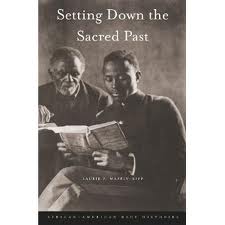
In the book 'Setting down the sacred past' professor of Religious Studies Laurie F. Maffly-Kipp explores how African Americans in the 18th and 19th century used the Bible to understand their own history. The first Rastas were the inheritors of a rich religious tradition.
This book is not about Rastafarian culture, nor is it about Jamaica. The only remote reference is a short passage about Marcus Garvey at the end. Around 1920, the rise of Garvey´s Universal Negro Improvement Association (UNIA) did not only receive scorn and revulsion among white Americans but also with black intellectuals like W.E.B. Du Bois, who looked upon the ceremonial attire of Garvey and his religious followers with high levels of disdain. Their colourful processions and accompanying music were even compared to comic opera´s. "But Garvey knew better than the power of the narrative that linked African Americans to a ceremonial lineage", writes Maffly-Kipp.
With 'ceremonial lineage ' she means the gradual mixing of African oral traditions with biblical stories that were passed onto slaves in America, especially in the church. Once a week this holy sanctuary provided a place where they were left alone by their masters. Here they were free to sing and dance, yell and scream, reason and listen to the teachings of the pastor. The main Afro-American religious communities at that time were the African Methodist Episcopal Church (AME) and the African Methodist Episcopal Zion Church (Amez), who in imitation of the white churches also built a network of organizations including publishing houses, schools, support programs for the poor ...
It was there, during those uplifting services, the pastors told their followers about a great African civilization, about black pharaohs in ancient Egypt and the deliverance of the children of Israel. In 1810 the Methodist Daniel Coker wrote a history of the African churches in the U.S. and described the Afro-Americans, in imitation of Peter ,"a chosen generation, royal priesthood, a holy nation". Others linked to the Babylonian exile, as much later The Melodians would do in 'Rivers of Babylon'.
Biblical stories were also enthusiastically proclaimed in the first African-American lodges. According to the black nationalist and Mason Martin Delany there was even a "mysterious and beautiful order" before the time of Moses: "Being a people of high order of intellect, and subject to erudite and profound thought, the Egyptians and Ethiopians were the first who came to the conclusion that man was created in the similitude of God". The founder of the Boston Lodge, Prince Hall, consistently referred to Psalm 68, verse 31, a text that all African Protestants knew by heart: "Princes Shall Come out of Egypt and Aethiopia Shall stretch forth her hands unto Me".
The first time I´ve heard that sentence was in the late 70´s - it was the title of a beautiful LP by Mighty Threes. In both the English and the Dutch translation of the Bible the name Ethiopia has been removed completely for some time. It´s original meaning, as in the St. James version, was altered as well. Or do you recognize this passage? "Let the ambassadors from Egypt arise, let the Nubians with gifts hasten to God". For over centuries the church has been trying to slowly cover this other side of history so it´s therefore a small miracleAfro-Americans were able to reconstruct their origin. Even if it´s based on a book given to them by white slavers was donated. The only book.
That sacred bond also ensured that Afro-Americans initially saw America as the Promised Land, just as the European settlers had done. Slavery was called to be the last ordeal for Africans. After that, freedom, justice and happiness awaited them, all in harmony with other races just as God had intended. One blood, one love. But when it became clear the fate of Afro-Americans didn´t improve when the slave trade (and later slavery itself) was abolished, they focused on other places such as Haiti, for example, the first independent black state in the Americas, and then Liberia, the first independent country in colonial Africa and refuge to the first Africans who actually repatriated to the black continent. Throughout time Ethiopia kept it´s magical significance, not only as the second name of the continent but also as the country with a glorious history, the cradle of all mankind.
This book is full of (Bible) quotes and references to ancient African civilizations which we know so well from Rastafarian songs and stories. A must read for those whoever wants to know what inspired Marcus Garvey and the first Rasta's, but also an eye-opener for anyone who thought that before 1900 there was no African-American historiography.
Jah Shakespear has been listening to reggae music since 1977, started writing about the subject in the early nineteen eighties (for De Morgen, De Standaard, P-Magazine, Highlife and a number of other magazines) and founded this website in 2002. He's also the author of 'De Rasta Revelatie' (2008) and 'In Het Spoor Van De Keizer' (2016).
Jan 17, 2013