





.Dl7BAwhJ_ZJXLLF.webp)
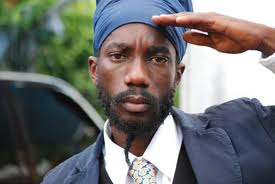
There was renewed outrage in the gay, lesbian and bisexual community concerning a reggae concert in Belgium. An orchestrated email campaign with letters to all aldermen, demanded the cancellation of the Sizzla concert in Ghent (on 4 April). To assuage tempers the organiser, Democrazy, had already moved from Vooruit to the Art Cube, but this was not enough for the pink activists. Sizzla won't be coming to Belgium. The following is the unanimous view of the Reggae.be editors.
On 19 March 2012, ??the President of Liberia, Ellen Johnson Sirleaf, defended her country's anti-homosexual laws. 'We want to retain our traditional values,' she said, at a press conference with Tony Blair. In 2009, Sirleaf received the Nobel Peace Prize, a just reward for her tireless efforts to democratise Liberia.
Peace and love: rastas preach this in their texts too. Since Bob Marley spread the message of rastafari worldwide through his music, reggae has stood for unity and solidarity, for resisting the injustice and inequality, which stand in the way of the peaceful coexistence of the people.
Mortal Sin
But Jamaica, where reggae originates, is not a western country. The revolutionary spirit of the rastas doesn't (yet) go hand in hand with the progressive ethics, which have permeated Europe and the United States over recent decades. Abortion, euthanasia and yes, homosexuality are still regarded as mortal sins there, with the Bible as the main source of advice. Rastas too, often invoke the Bible, even for justifying their Afro-centric vision of the world. In this aspect, they are not so different to many Americans in the so-called Bible Belt, or to fundamental Christians in our own land. Nor yet to our own parents and grandparents, when they were young and all homosexuals were still in the closet (or in a cloister).
Reggae is definitely not typical western pop music, especially not the text. Reggae has content and it views the world with a consistently critical eye. From time in memoriam, the lyrics have reflected social reality in Jamaica. In the 70s it was heavily political, resulting in militant and visionary songs, the "roots & culture" which to date have defined the image of the music. In the 80s, after the death of Bob Marley and the coming to power of a conservative parliament, sex (slackness) and entertainment dominated. Under the influence of American gangster rap, there then followed a wave of gun talk, bragging about weapons and violence in the ghettos. By this time, the roots fans had already lost interest and were holding on tight to a modest revival of rasta culture. However, the new rastas did have one thing in common with the bawlers of dancehall, (as that contemporary, digital variant of reggae is often referred to), and in fact with all Jamaicans: their disapproval of gays.
Bun Babylon
This homophobia was a hype in reggae for a few years halfway through the 90s; yet another of the numerous themes about which singers and deejays wanted to say their piece. Yes, at that time, they sang – and more often shouted - that all batty boys should be burned. In much the same way as rastas want to set light to everything they dislike: the Pope, the IMF, Babylon... It's a biblical metaphor, fire is a cleansing force. How were the Jamaicans to know that the emancipation of gays in the West had meanwhile progressed in leaps and bounds? The Internet didn't yet exist, and the voices of the conservative American preachers on TV were much louder than those of the gay movements.
The first artist to fall foul of this was Shabba Ranks, who, following an unconsidered pronouncement on British television, saw a lucrative record contract snatched from his grasp. It was the first time the gay movement had spoken, and since then opposition to homophobic reggae and dancehall has only increased. It is also becoming better organised, as large interest groups do. And of course all of these people are striving for a just cause. We in the West need to make no compromises when it comes to acquired rights, in the face of discrimination or incitement to hatred.
But how long can you 'punish' performers for their mistakes? Yes, Sizzla and numerous other Jamaican artists now and again in the 90s recorded songs, which called for all batty boys to be burnt. As banal and everyday as I write it here, this kind of statement did and does exist even in Jamaica. Of course they must not repeat such things here, even if no-one except the reggae community understands their texts. Indeed, they have meanwhile learnt their lesson in this area. Big names like Beenie Man, Buju Banton and Sizzla have suffered massive losses due to cancelled tours, and if there's anything closer to a Jamaican's heart than gay-hate, it's their wallet. In recent years they have signed special contracts in which they promise not to deliver homophobic texts, without demur. None of them has recorded suchlike numbers over the past ten (!) years, the protest focuses on a few sentences from a few songs from long ago.
But they keep bringing them up, albeit unsystematically. Over past years Sizzla was able to perform in Brussels and Antwerp without any problem. There was no protest at the time, nor were any complaints submitted afterwards. The latter of course makes sense, because none of the thousands of people protesting had ever been to see Sizzla, or ever heard one of his records, let alone bought one. They blindly follow their leaders call for action. A standard email is just forwarded on. Why bother to think critically if others claim to be doing it for you?
400 Years
Reggae is an easy target: underground music, 'drug-related', and virtually incomprehensible to the outside world. I invite all gays and gay movements to go and see Sizzla sometime, and above all to listen. There will be enough people around to translate the patois for you. You will scarcely recognise his music as reggae, you will wonder whether he's singing out of tune or being experimental, but you won't catch him making homophobic pronouncements. Perhaps you will in Jamaica, but they apply different ethical standards to us, no matter how much we would like to stop them. There Sizzla would be prosecuted for defending gay rights.
Indeed, many Jamaicans wonder how we dare moralize. We, who plundered Africa (their country of origin), and forced the population into slavery. It took 400 years for us to call a halt to such crimes. Tens of generations were physically, mentally and sexually abused their whole life long, traumas which to date permeate the collective consciousness. Need it really take as long for us to forgive Sizzla for expressing himself incorrectly a few times, at that time, (and moreover only in our emancipated eyes)?
This is not a new issue, and I have not always unconditionally supported the reggae performers. In 2002, I was the first journalist to flag up those homophobic pronouncements of Sizzla, on stage at Couleur Café. In 2005, I brought the wrath of a large part of the reggae scene upon myself by writing an article that criticised T.O.K. at the Reggae Geel festival. In addition, in 2010, I wrote that Beenie Man did not belong in Couleur Café, once more to the great dissatisfaction of the community I know so well and love so much.
But enough is enough. Everyone has made their point, and protest should not become a routine. I am a forgiving person, and I hope that you are too.
Post Script
In the Summer of 2011 Sizzla was involved in a serious motorcycle accident. Since then he has become a great benefactor, working to support all sorts of social and educational projects. None of those well-meaning protesting citizens know this, because reggae and Jamaica do not interest them. Just as they once suffered stigmatisation and discrimination, they themselves are now stigmatising and discriminating against other sections of the population, despite being well aware that they don't (yet) know any better.
Jah Shakespear has been listening to reggae music since 1977, started writing about the subject in the early nineteen eighties (for De Morgen, De Standaard, P-Magazine, Highlife and a number of other magazines) and founded this website in 2002. He's also the author of 'De Rasta Revelatie' (2008) and 'In Het Spoor Van De Keizer' (2016).
Apr 01, 2012