
.Dl7BAwhJ_ZJXLLF.webp)
Peter Tosh Day! Or maybe not? We are breakfasting on the terrace of the Prestige Hotel in Sandhurst Crescent, the place to be for well-off European musicians coming to record in Kingston. We have met the boys from a Swiss roots group, which is working together with Leroy 'Horsemouth' Wallace. They meet every day at the Prestige, before setting off to the studio.
Our Man in Jamaica is Commander Shad, and he has bad and reasonably improbable news. The Peter Tosh Memorial in Belmont, with Mutabaruka in the main role, is already well underway. It wasn't '6 to 12 pm' as we thought we heard all week on Irie FM, but '6 to 12 am'! So that's why Muta ordered everyone to be here yesterday evening or last night. The most famous name was Warrior King, but the main focus was nyabinghi.
Belmont is over three hours' drive away. There's no point setting off now, even if the cornmeal porridge, like every other dish served at the Prestige, is taking quite a while to arrive. But you do get good, freshly-prepared food, and its always worth the wait. We are no longer in a hurry, (it's a redundant concept in Jamaica anyway). The only event we had actually planned, will not be taking place, not for us any way. So it go.We decide to go to Harry J, the famous studio on Roosevelt Avenue. Sam Clayton Jr, the son of Brother Sam (the longtime voice and spiritual leader of Mystic Revelation of Rastafari), is recording a record with the French group Brossaï. Everywhere you go in Kingston you meet reggae-singers, DJs and musicians from Europe. They are searching for the sound, vibes and often the artists to make their dreams come true. And that isn't easy, in a country where the new music is compressed into digital beats, and musicians barely feature. You might even wonder whether it's still worth the effort going to Jamaica, but I know from my own experience that the mere reality of the country is sufficient to stimulate creativity and strengthen the feel for reggae and its culture.
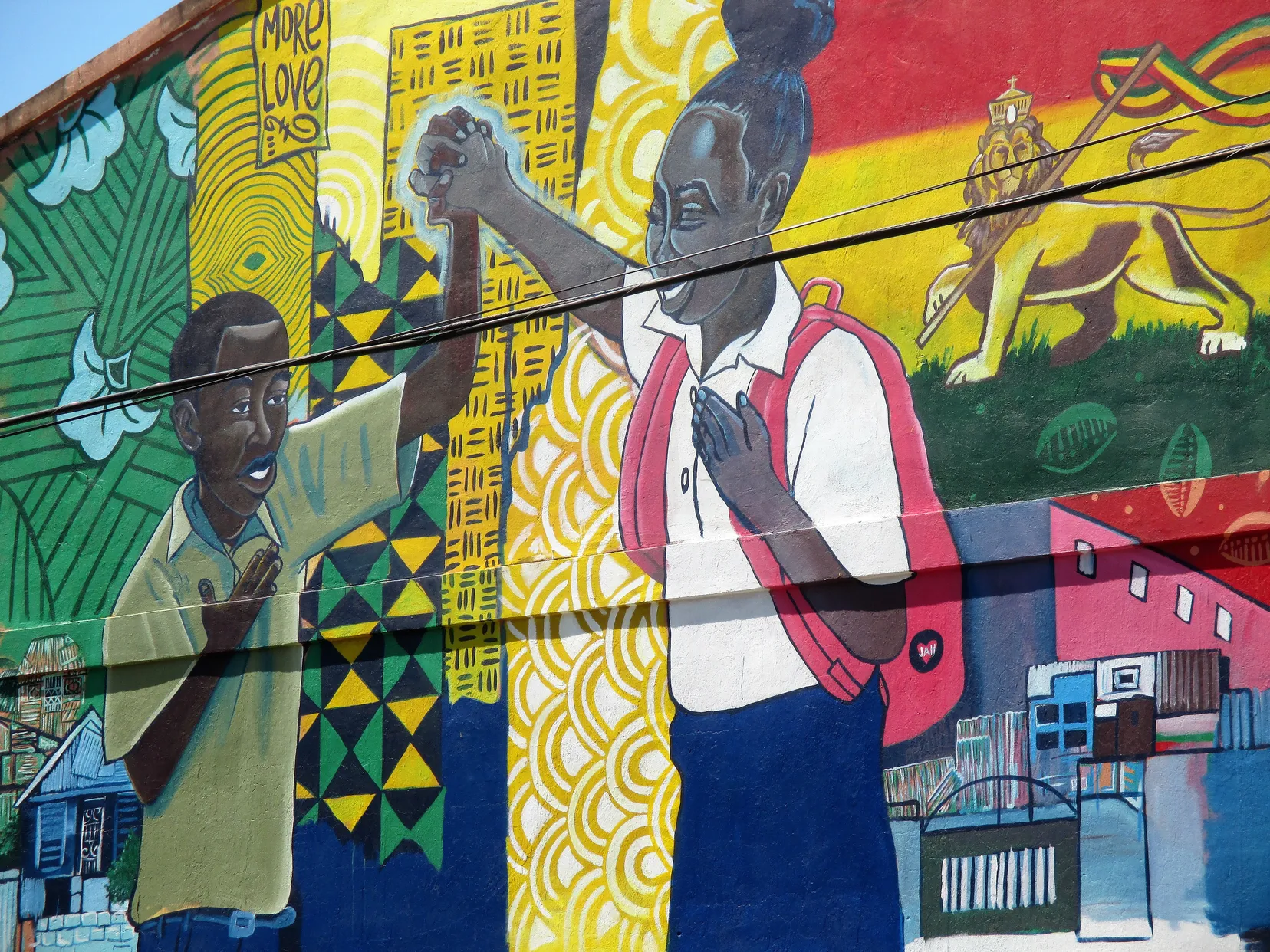
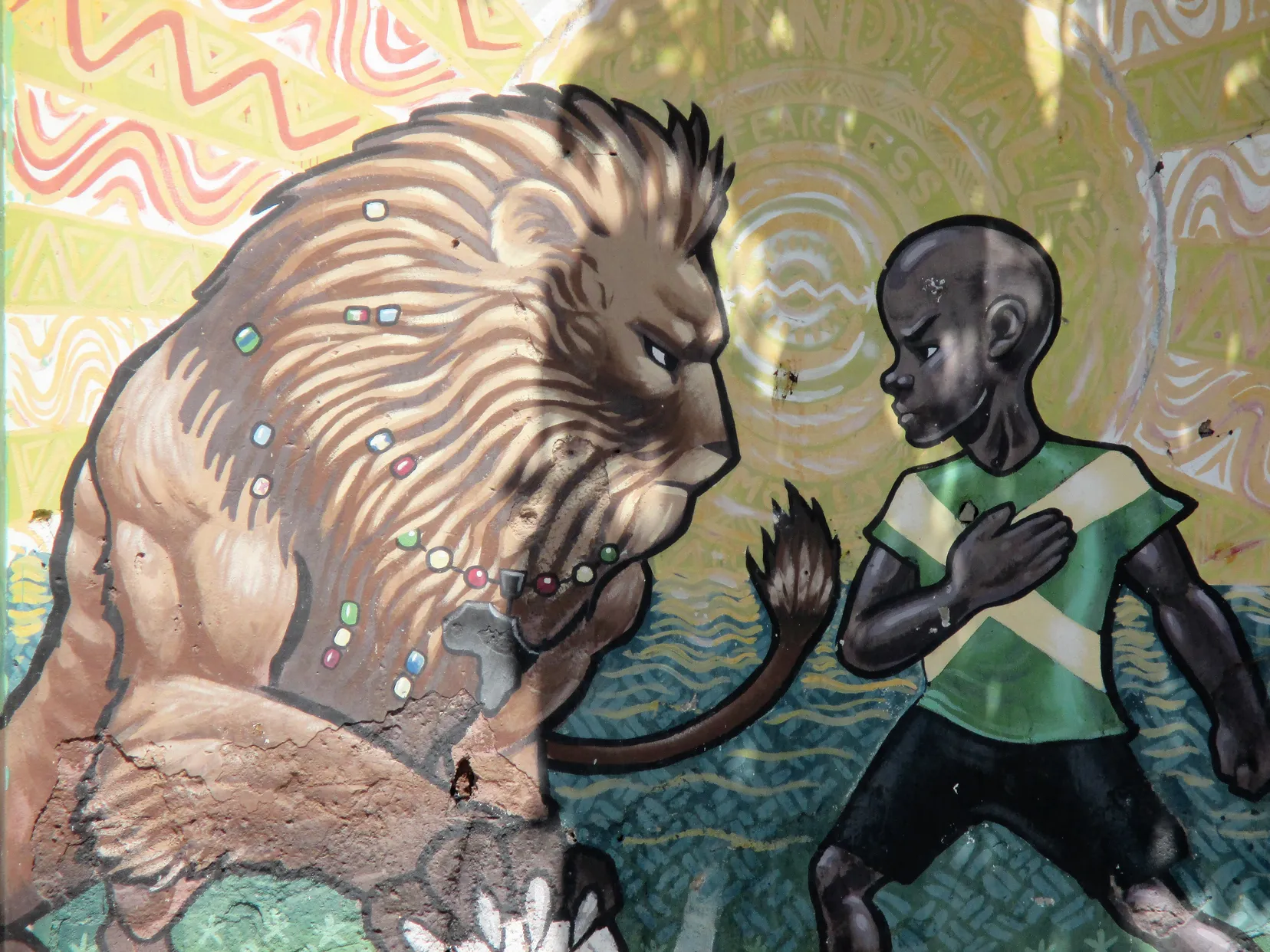
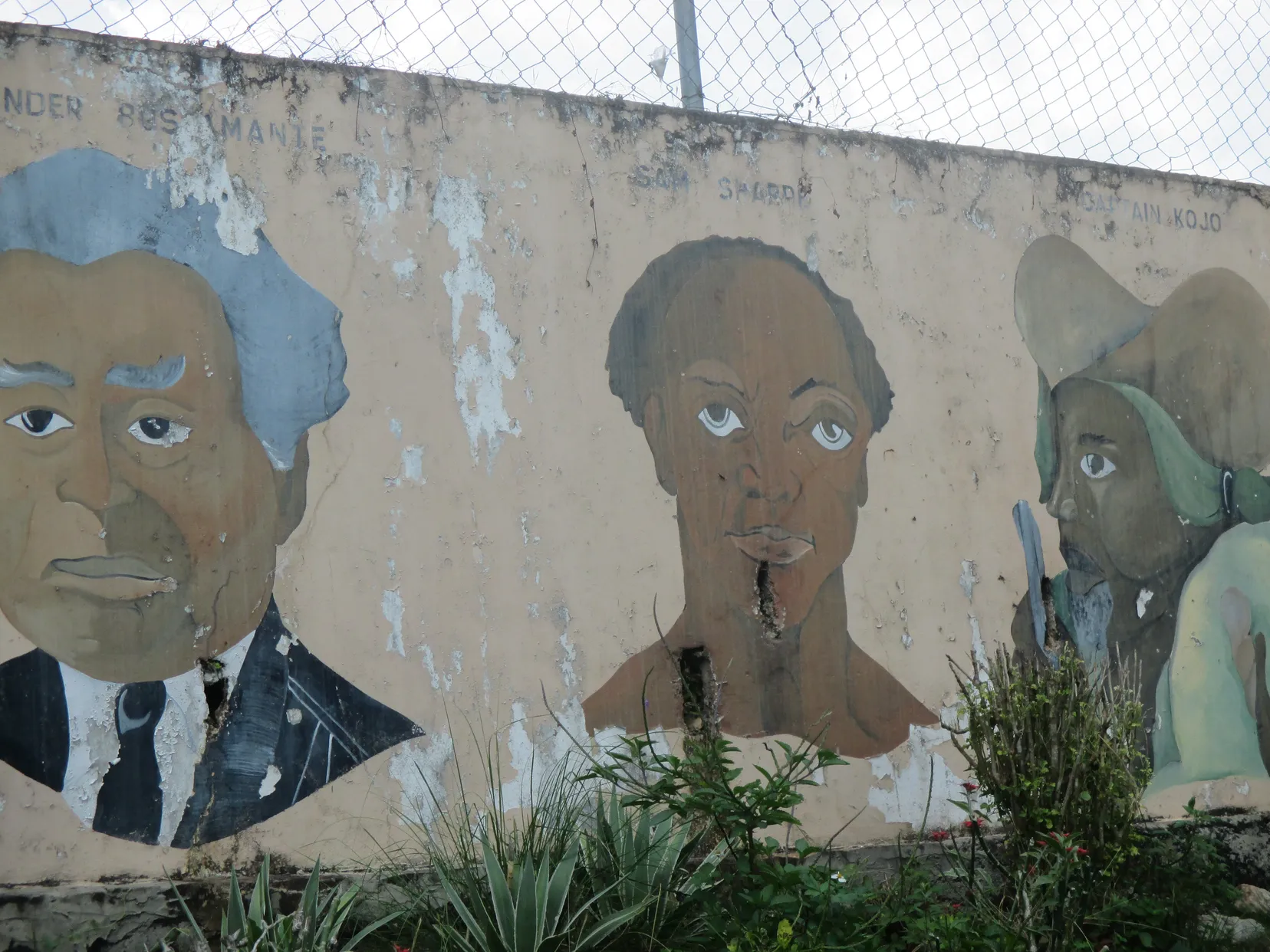
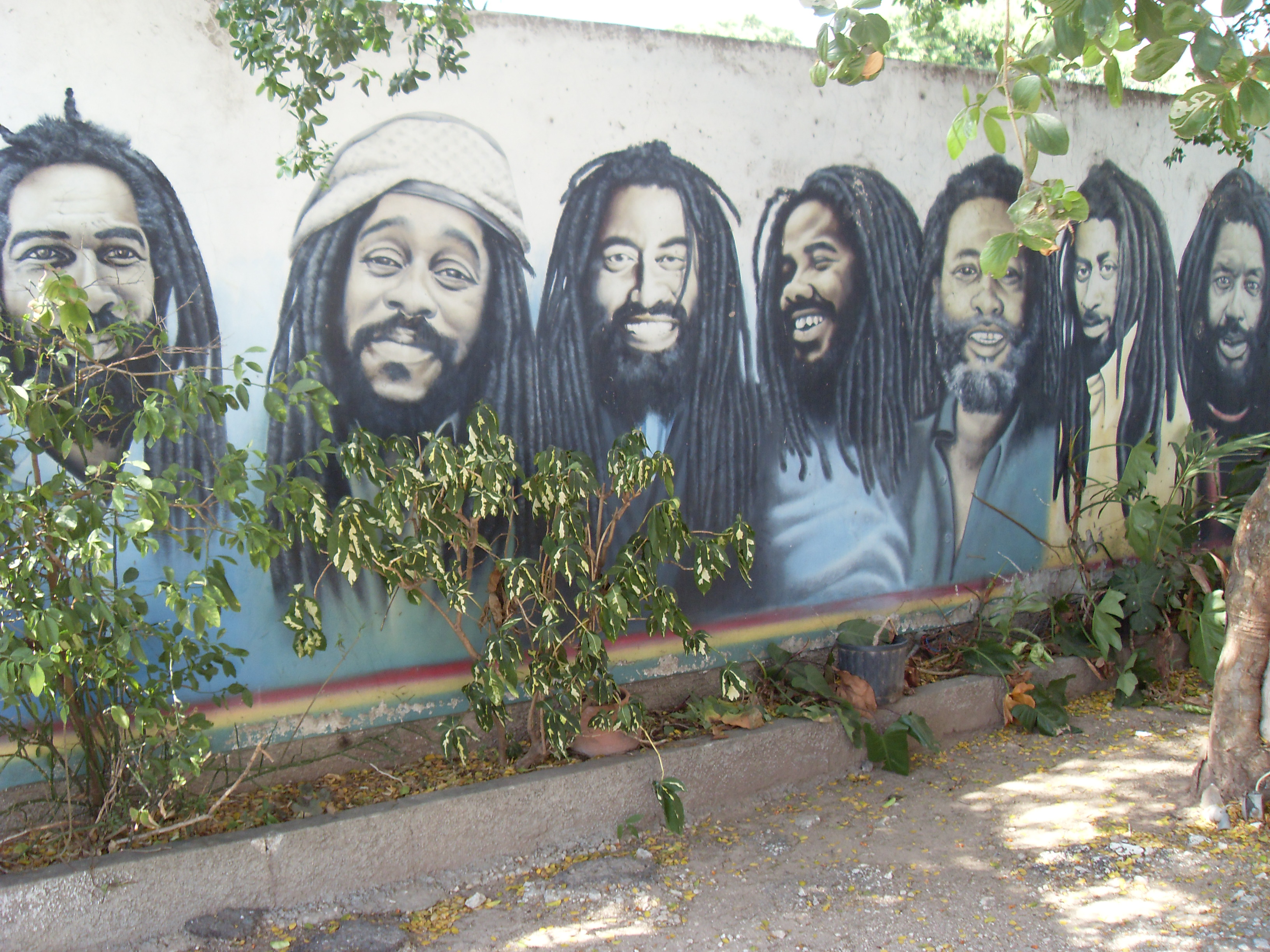
The carpark at Harry J exudes the 70s. The murals remain untouched since that time, and now have an irresistble retro-charm. We recognise the heads (and dreadlocks) of Bob Marley, Dennis Brown, Jacob Miller, Bunny Wailer, Burning Spear, Ken Boothe (work in progress) and the I-Threes (irrecognisable), all in their hayday. Hidden in a corner, behind a tree, stands the famous logo of Harry J, even paler than in days of yore. The memory of the golden years is also cultivated in the studio itself. Here hang gold discs for Catch a fire, Rastaman Vibration and Natty Dread, the first albums Bob Marley & The Wailers made for Island Records, and which were mainly recorded here. Later Harry J(ohnson) went on to welcome into his studio The Heptones, Augustus Pablo, Ken Boothe and Sheila Hylton, plus many other artists. An old flight case belonging to Bob still stands in the recording area, and the studio layout and fittings have scarcely altered. Harry J looked just the same in the film Rockers (1977).
In the old days, Sid Bucknor or Sylvan Morris sat behind the controls. These days, Stephen Stewart, the man Harry J started using again in 2000, performs the honours. Countless great names have (re)discovered Roosevelt Avenue, (Toots, Burning Spear, Shaggy, Luciano, Sizzla, Shakira…) and increasing numbers of European reggae musicians find themselves unable to ignore the call of Harry J, not just because of the state-of-the-art technology and top engineer, but because they want to bring back the sound of the seventies, the sound of the large roots groups (and much more than the Jamaicans). Broussaï makes French-language songs in that classic tradition. They sing and play music themselves, but they have invited Sticky Thompson to provide the percussion. Sticky Thompson! I must have a thousand records he's played on, everything by The Revolutionaries/Sly & Robbie, for a start. I've already seen him live several times, but this a further astonishing demonstration of his organic talent.
Sticky has brought with him a large box full of sounds, ranging from familiar African percussion instruments to plastic ducks and weird whistles. For each number played to him, after a couple of bars he selects one specific instrument, has the band start again, and lays down his track in one take, perfectly in time and yet never predictable. If he thinks a second sound will fit in, he repeats the same musical ritual. It's magic. And an excellent way, after all these years, to reap profit from all the poorly paid work of that earlier time. The Broussaï boys, all seven of them bearing dreadlocks, are happy too. Sticky Thompon has seasoned their rich, solid sound with an inimitable Jamaican flavour. Next month in Brussels, supporting act to Groundation.
It's quiet in Kingston. All of the shops are closed, and only KFC is still serving customers. On Irie FM Bob Clarke is playing four hours of ol' hits, just like in the old days. At one time you only heard tunes from the 60s and 70s, but Bob has not stood still. The eighties and nineties have meanwhile also become 'long ago', and are therefore given airtime. For the rest, you seldom or never hear music from after 2000 on Irie FM. Yes, Ron Muschette plays one Bob Marley every day, and Elise Kelly sometimes dusts off an old classic, but otherwise Jamaica (and certainly Irie FM listeners) seem to be caught up in the music of today. The rich history of reggae, so lovingly embraced and honoured by the rest of the world, appears to have been forgotten here. Nobody remembers Israel Vibration or The Congos here. Lee Perry? Is he still alive?
Where does one go on a spare Sunday afternoon? Commander Chad suggests Port Royal, and that sounds nice. A pleasant drive across Windward Road, which is sometimes gridlocked on working days, past Rockfort, right towards Norman Manley Airport, and onto the peninsula formed here by the earthquake in 1692. Port Royal is a different world, a sleeply fishing village where everyone knows everyone else, and which, according to Commander, has 'zero' crime. And that's quite an achievement in Jamaica. It 's hard to imagine that this was once a wicked pirate town, (the local yacht club is named after Henry Morgan), and the first English capital of Jamaica. We visit the local fort, (after closing time, but a few hundred Js is enough to persuade the security man), where the major attraction is a tilted house sunk into the sand. We stroll through the streets, are looked at by appraising eyes, (they don't see many whites here), and decide to eat fish at Gloria's. We've just been watching some women singing cheerfully as they cleaned the freshly caught fish, and there's a delicious smell in the street. There are about twenty small tables outside, and one hundred people are sitting eating, many are families with children. We wait a long time before the red snapper is finally served, but we were well-trained at the Prestige. And hunger is the best sauce. The fish, with vegetables and yam tastes delicious. Port Royal makes a truly lovely Sunday excursion.
Jah Shakespear has been listening to reggae music since 1977, started writing about the subject in the early nineteen eighties (for De Morgen, De Standaard, P-Magazine, Highlife and a number of other magazines) and founded this website in 2002. He's also the author of 'De Rasta Revelatie' (2008) and 'In Het Spoor Van De Keizer' (2016).
Mar 13, 2012