








.Dl7BAwhJ_ZJXLLF.webp)
Stephen Marley has been involved in music for 30 years, but has only just released his second solo album. It is an instant classic, and the ultimate confirmation of the talent, which for so long he set to work for his, seemingly, much more successful brothers.
The first time I heard his voice was on Play the Game Right, the debut record of The Melody Makers "featuring Ziggy Marley". Stephen was still a freshfaced boy, but could already toast with the best of them: more powerful
and mature than Billy Boyo, Junior Pumpkin and other children who cropped up now and again in reggae.
And then his voice changed. We already thought that Ziggy sounded like Bob, but Stephen Marley bore an even closer resemblance. Especially when he sang, which he suddenly appeared to do excellently. Moreover, the best numbers on the records of (what was now) Ziggy Marley & The Melody Makers were penned by him, sometimes in cooperation with his big brother: A Who a Seh on the hit album Conscious Party (1988), Black My Story on Bright Day (1989), Raw Riddim and Good Time on the ground-breaking Jahmekya (1991); the visionary Water and Oil and the unequivocal protest songs Hand to Mouth and Keep On on the underrated Free Like We Want 2 Be; Everyone Wants to Be (featuring Wyclef), Postman, Born to Be Lively and the exquisite Jah Bless on Fallen is Babylon (1997).
But that was just a prelude. Fine upstanding familyman that he is, in the mid-90s Stephen decided it was time involve the younger Marleys too. He produced the first albums of Damian (Mr Marley, 1996) and Julian Marley (Lion in the Morning, 1996), and was the brains behind the worldwide success of Welcome to Jamrock, the hit song and album. If the 80s and 90s belonged to Ziggy, (after the 70s of his father), the 00s were for Damian.
Via Wyclef and Lauryn Hill (now married to Rohan Marley) of the Fugees, Stephen was also introduced into hip hop circles. He wrote duets with the Fugees, (a version of No Woman, No Cry on the (Refugee Camp) Bootleg Versions), Erykah Badu, Mr Cheeks and Nelly. Chant Down Babylon was a daring hip hop mash-up of Bob's music, with well-known guests such as Steven Tyler, Guru, Rakim, The Roots and Busta Rhymes. - Not a resounding success, but a convincing demonstration of Stephen's creativity and production talent.
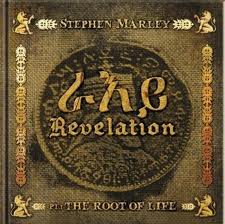
It took Stephen Marley until 2007 to release his first solo album. In that year, Mind Control rightfully won the Grammy for the best reggae album. On the ambitiously titled Revelation Part 1 – The Root of Life, Stephen continues to explore his contemporary roots reggae. This could well turn out to be his Sergeant Pepper, or Exodus - his father's pièce de résistance.
Made in Africa begins as meditative nyahbinghi jazz, embellished with old news clips about Haile Selassie. Stephen Marley sings the heart-rending story of slavery in unusually poetic language, backed by the choir from the musical Fela (about the life of Fela Kuti). Half way through the tune the Amerikaanse rapper, Wale, raises
the tempo and suddenly we are listening to an out-take from Distant Relatives (Nas & Damian Marley). Featuring that old fox Bongo Herman.
False Friends could just as easily have featured on Mind Control, alongside Chase Dem, another a classic one drop in the tradition of Bob. Featuring Aston Barrett Junior on drums, just as slick as his father who is still bass guitarist with The Wailers. On all other tracks we hear the drumming of Wilburn Cole, the mainstay of the Melody Makers. Break Us Apart maintains that great slow roots beat. Sticky Thompson sprinkles some fine percussion on top, Capleton pulls out to corrupted forces around the world. Stephen sings better than he ever did.
Time to pick up the pace a little with Can't Keep I Down, a frolicking rhythm with a tingling harmonica hard on its heels.
No Cigarette Smoking in my Room is a thinly-disguised ganja tune: 'No cigarette smoking in my room/No alcoholic beverage in my room/Juju gave me a boom draw this afternoon/And I am gonna get a next portion real soon/l'll be gone for a while/Keep that perfect smile/Do your very best.' But it is also lovers rock, with a certain Melanie Fiona providing the seductive guest vocal.
Freedom Time: "written by Bob Marley", which, by the way, I had never heard. A quick check on Youtube, and sure enough: an old Studio One 7". Vaguely remniscent of Rude boy, like Stephen's cover. Amazing song, in both versions.
I heard Jah Army for the first time in February this year at David Rodigan at Hotel Jamaica. A version of General Penitentiary (Black Uhuru, or actually Sly & Robbie – has a Marley ever used a Sly & Robbie riddim before?), with Damian Marley in the main toasting role. Buju Banton did not feature in the first single version or in the video, but suddenly turns up screaming out about his powerlessness at his arrest, and why he is so grateful to Stephen Marley. Another great tune.
In Old Slaves we literally hear the chains and the rhythmic work choirs of the slaves. This is a theme that seems to preoccupy Stephen as deeply as the first generations of rastas. Pale Moonlight (How Many Times?) is unadulterated lovers rock, or should that be doo wop reggae - country style? She Knows How dims the light a little lower, and teeters on the brink of siropy R 'n B, (but just manages to hold back).
The most surprising version is The Chapel. In the late 60s explicitly entitled by Bob: Selassie is the Chapel (on Studio One), it is in fact a cover of Crying in the Chapel, that languorous world hit of Elvis Presley. Rhythmically nyahbinghi, textually profoundly religious.
In the nearly equally biblical Tight Ship, Damian Marley again pays his respects, and settles scores with the criticasters of the Marleys. 'Nuff a dem a get bad mind and saying those arrogant Marleys/Them say who Jah bless, no man curse, Babylon is harmless/Alright now nuff a dem hard at work, them watching who's working the hardest/Grass hopper jump at anything that scrufflein the grasses/Lion dem never yet grudge the other.' Another one drop tune.
Working Ways starts off as a new hit by Luciano, with Nicolas Laraque (and not Dean Frazer) on saxophone. Spragga Benz, (a regular on the Marmey's Jamaican Ghetto Youths label), disturbs the serenity and
harmonious part-song with a brutal parlando, good for him.
Finally, Now I Know is a nugget of accoustic self-reflection by a singer-songwriter who completely does justice to the reputation of his father and brothers. Perhaps the 2010s will be his years.
Jah Shakespear has been listening to reggae music since 1977, started writing about the subject in the early nineteen eighties (for De Morgen, De Standaard, P-Magazine, Highlife and a number of other magazines) and founded this website in 2002. He's also the author of 'De Rasta Revelatie' (2008) and 'In Het Spoor Van De Keizer' (2016).
Jun 04, 2011