



.Dl7BAwhJ_bSbwe.webp)
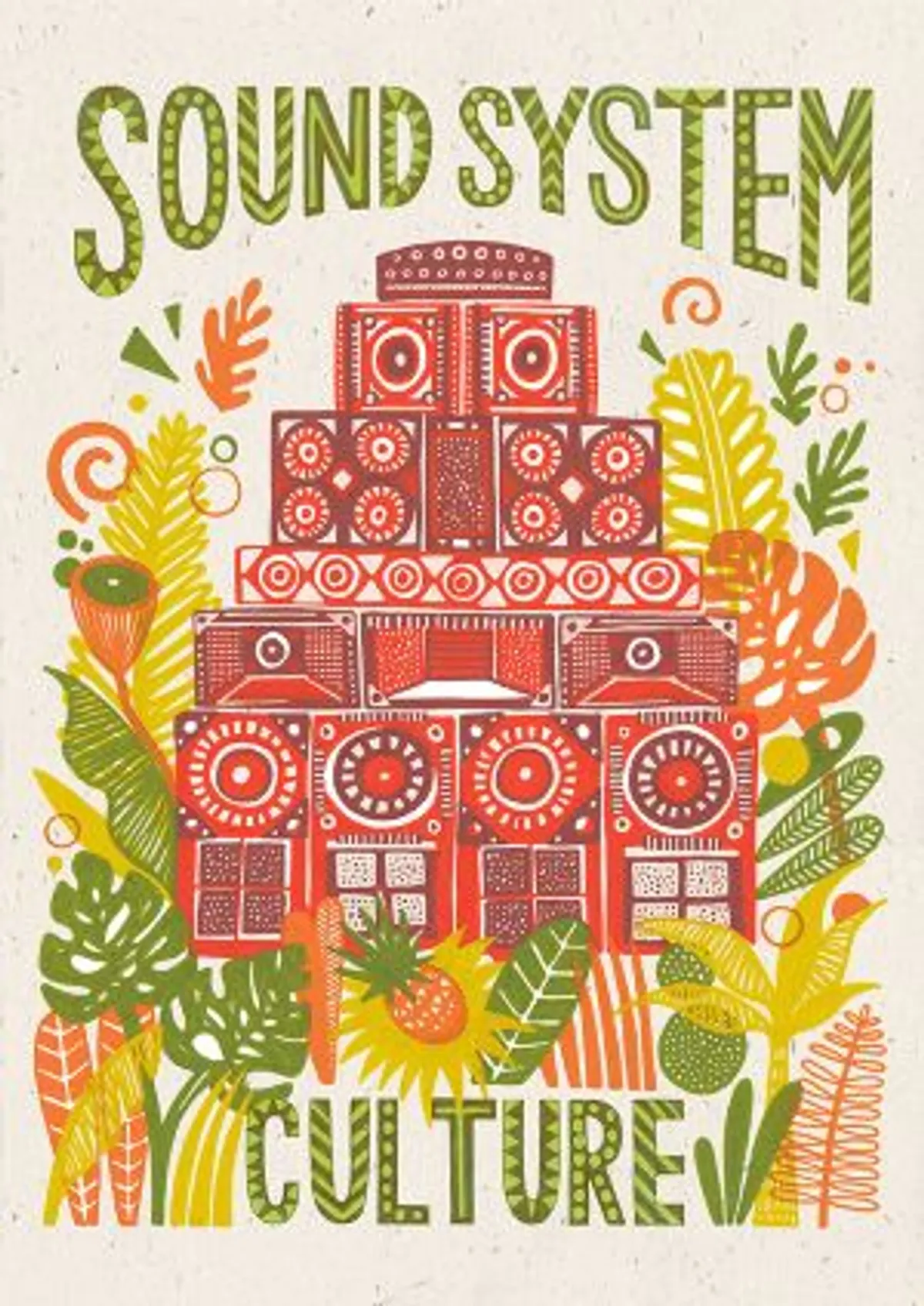
Sound system culture is alive and kicking, and that should make us all glad!
In his widely read opinion piece, Dries Talloen displays all the hallmarks of an ageing reggae fan. Things used to be better. Bring back roots and culture. Dub is ours. These are the same old refrains we've heard time and again.
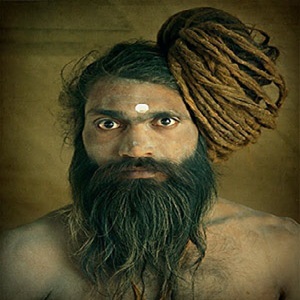
Unlike Dries Talloen, I've never had dreadlocks. Back in the late 1970s, that wasn't even an option. Back then, only Rastas and Indian sadhus wore dreadlocks – as an expression of a religious or spiritual belief that was, moreover, a world away from our own lives. It seemed unthinkable that we, pale-faced folk, could ever have such sacred hair, if only because our thin, straight hair wasn't suited to it – or so we assumed. Real dreadlocks weren't a stylized look either, let alone a kind of hairstyle. The oldest Rastafarians had real clumps of matted, unbrushed hair that actually looked "dread" (frightening), because that was the intention when those wild, organic sculptures caused a sensation in the Rastafari movement in the 1950s. Until then, followers of Rastafari were often still called "blackbeards" or "beardsmen", because they initially let their beards grow, as a biblical commandment required them to do.
Reggae singer with a Bo Derek hairstyle
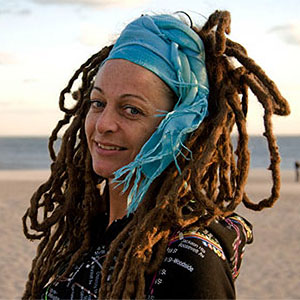
Perhaps The Slits were the first Western artists to culturally appropriate dreadlocks, and as far as I'm concerned, they were perfectly entitled to do so. It suited their rebellious punk dub perfectly. Ari Up (Ariana Forster – her mother married Johnny Rotten/Lydon in 1979, who was also a huge reggae fan) was, in her own way, a Rasta queen, and that's how she skanked too. Ari Up's locks looked very authentic, just as thick and unkempt as those of the old-school Rastas. It wasn't a fashion statement but an act of resistance and recognition.
Not long after, Bob Marley died. 'Reggae singer with Bo Derek hairstyle dies', read the headline in a Flemish newspaper. As if Derek's artfully draped braids in the rubbish film 'Ten' had anything to do with Rastafarianism. But she did turn dreadlocks (or what passes for them, in all their possible variations) into a fashion statement, a hairstyle that's now an integral part of the street scene. Were Bo Derek's braids any less acceptable than Ari Up's?
All real hippies are now Rastafarians
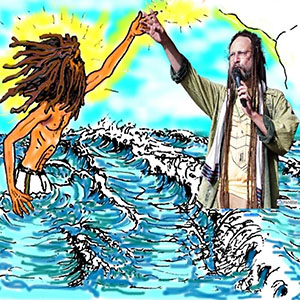
I've never followed fashion and had absolutely no desire to grow locks. I preferred to express my love for reggae and Rastafari in words. But I did admire the first generation of white Rastas, men and women who wore their dreadlocks just as proudly as the Jamaicans, and with the same convictions too. "Peace and love is an illusion." writes Dries Talloen. Fair enough, but that doesn't mean you can't strive for it, and set a good example yourself. That's what many of those original Rastas did. "My dreadlocks remind me everywhere I go that, as a Rasta, I serve as a role model." said Ras Feel (Filip Wauters) in 2012 in De Standaard: "By coming out, I have to live up to my ideals. To quote Bunny Wailer: "All real hippies are now Rastafarians!" For me, it began with a fascination for the exotic and for rhythmic music, and with the urge to let my hair grow longer than my parents would have liked. I was looking for an alternative way of life, and for me that became Rastafari: a way of life centred on solidarity and equality. For example, I'm involved in a residents' association in a social housing estate: for me, that's Rastafari – giving a voice to the oppressed."
One love
Does that mean I think everyone with dreadlocks has to be an activist, or a social worker, a carer or an artist? Not at all. I've never judged or categorised people based on their outward appearance. I think I look quite middle-class myself, but that's never stopped me from mixing with punks, hippies, rockers and Rastas. I hold them all dear to my heart, if only because they experience their music so freely and intensely. And isn't it fantastic that the hairstyle of a minority that was once persecuted and demonised is now a household name worldwide? Was it perhaps the intention that dreadlocks should remain exclusively Rastafari, or at best Jamaican? It has always delighted me that the words, values and symbols of Rastafari have found their way to the masses. One love,Back when I smoked my first spliff, I simply preferred it to alcohol, and I've carried on doing it ever since. It had nothing to do with peer pressure or conforming. If only more people would consume ganja, and a bit less alcohol. Are we all supposed to turn to synthetic drugs, just because they're 'from here', from 'our' culture? Haven't the Jamaicans already adopted enough bad Western habits and customs over the past centuries? And why should we cling to them when Jamaicans and other conscious people are offering us better alternatives? A way of life that is more in line with our own vision of humanity and the world than the system in which we are forced to live.
Ark of the Covenant
This also applies to the historical narrative behind Rastafari. For me, it has shed new light not only on the Bible but on the entire history of Africa and Christianity. Anyone wishing to understand the foundational imagery of the Rastas (from Alpha to Omega, from Zion to Melchizedek, from Solomon to Emmanuel) should delve not only into "our" holy book but also into the Kebra Nagast or the speeches of Haile Selassie. Never have I felt closer to the Ark of the Covenant than in Aksum, where the legendary treasure is said to be kept. It is a fascinating world that overturns many "white" certainties, and is worth studying for that reason alone.But even if none of that interests you in the slightest, as far as I'm concerned, feel free to join in the chant. Jah! Rastafari! That's just a variation on "Everybody happy?", isn't it? I'd say don't read too much into it. Again: who are we to judge which people have the right to say something like that? It's just as much a feel-good chant that brings people together.
Bob Marley's betrayal
It's not the first time that ageing fans have got a bit grumpy when reggae has once again transformed into a new form. Bob Marley was the first artist to be accused of selling his soul to the devil of commerce. His reggae no longer had the homegrown sound of the sound systems, they said. The inclusion of rock guitars wasn't authentically Jamaican. Big hits like 'Could You Be Loved' or 'Buffalo Soldier' leaned more towards pop and disco than towards the dub and rockers that dominated the dancehall in the late 1970s.But that was just our opinion, and that of a few others. The rest of the world barely knew what reggae was, and Bob Marley had, after all, opened our ears to that new genre. Not to mention the many classic albums that saw the light of day during that period, financed by major (predominantly) British record labels such as Island and Virgin. They had suddenly discovered a gap in the market, and groups such as Burning Spear, Culture, Twinkle Brothers, The Gladiators, Third World and Steel Pulse, alongside singers Ijahman Levi, Gregory Isaacs, Lee Perry and Pablo Moses, were given substantial budgets so that they could recorded in the best possible conditions, with the finest musicians. The result of that first "betrayal" of reggae (the involvement of major record labels) was a collection of timeless albums, a brilliant reflection of the golden years of roots reggae. Without Bob Marley's commercial success and crossover sound, those other names would never have resonated so strongly.
Grace Jamaican Ketchup
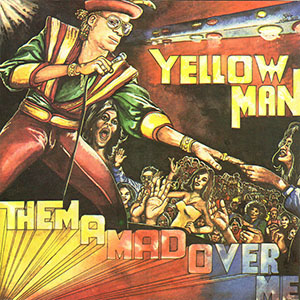
The first time I myself had doubts about the future of reggae was sometime in 1981. I was in the car with Ranking Dirk and Ras Antonius, the creators of 'This Station Rules The Nation', one of the very first reggae programmes on (independent) radio. Dirk had brought along a cassette by the latest sensation in Jamaica, a man who was selling more records there than any other artist (including Bob Marley). He wasn't singing about the emperor or Babylon, but was belting out that he was mad about Grace Jamaican Ketchup. Dirk and Antonius thought it was absolutely hilarious, but as a student I was still very much in my serious phase. I pretty much equated reggae with Rastas and rebels, with music of resistance and revolution. Toasters like Big Youth and U-Roy had ridden that wave nicely in recent years. I expected militant and spiritual lyrics from them too, just as had become commonplace in sung roots reggae.
But this artist hadn't seen it that way. Yellowman rattled on about everyday life, in a much lighter style than his predecessors. The big dreams and stories of the Rastas, and the accompanying biblical lyricism, held no appeal for him. In Jamaica, the Conservative Party had won the elections, Bob Marley had died, and for some, cocaine had replaced ganja as the drug of choice. It was a new era, and it was given a new soundtrack.
The death of reggae
More than ever, dub and toasters defined the sound of reggae, not least because, following Marley's passing, the record companies no longer saw any commercial potential in the genre. Or at least not in the lavishly arranged and produced roots music of a few years earlier. Yellowman did secure a contract with the American major label Colombia Records, but they saw, above all (and quite rightly), a kinship with the burgeoning rap scene. And, just like Yellowman's rub-a-dub, rap needed little more than riddims – later known as beats. He was the first Jamaican "rapper" (we still called them "toasters") to make a name for himself on the American market, thereby influencing a whole generation of local talent. Think of pioneers such as KRS One, Queen Latifah and EPMD, who incorporated quite a bit of reggae into their tracks in the late 1980s.'The Death Of Reggae' was the headline in the then-leading British magazine Blitz in 1986. A year earlier, 'Under Mi Sleng Teng' had been released, marking the definitive start of the digital era in the history of Jamaican pop music. For me, too, it was the biggest shift I've ever experienced in the reggae landscape. Back then, many first-generation fans lost interest, firmly convinced that you could never create a warm, authentic sound without live bass and drums. I remember that Sly & Robbie's LP 'Unmetered Taxi' also had a very disconcerting effect on us, with that new, semi-electronic sound and synth drums. But at least the Taxi Gang were still playing recognisable riddims. Sleng Teng was just a brutal, digital beat – "music for cokeheads", I thought at first.
A typically Western perspective
But I did buy Wayne Smith's 12-inch, as well as a handful of Sleng Teng riddim LPs, which were still a relatively new phenomenon back then. As a DJ, you simply couldn't ignore it, and it was a pleasure to finally see the dance floor go wild, after all those years of slow and gentle skanking. My favourite riddim that year was the revamp of 'Stalag', but I realised that, after ska, rocksteady, roots and rub-a-dub, yet another new phase was dawning. Dancehall was the new reggae, and would, if possible, have an even greater influence than the previous rhythms and styles.But that wasn't how Blitz saw it. It was a typically Western view of Black music, as if it were set in stone forever. Just like here, local Jamaican music is constantly evolving, and new generations are breaking away from old patterns. Just as in the past, financial constraints forced studios and artists in the 1980s to get creative, and a little Casio was simply a lot cheaper than a band of real musicians.
Yes, a great deal of traditional musical craftsmanship was lost back then, and to this day I miss the refined productions of the past. I still much prefer to hear Dennis Brown sing rather than Buju Banton bellow. But dancehall has since taken the world by storm, far more so than reggae ever did. From jungle to drum & bass and dubstep, from Ed Sheeran to Burna Boy: they all owe a debt to dancehall and the hybrid reggaeton that has been so popular on the dance floor since the 1990s. It was in a Jamaican dancehall that I first saw girls twerking. It was Jamaicans who first introduced me to gun talk, before the rise of gangster rap. Slackness has always been there on the island but came to the fore more than ever through the dancehall. Whatever you may think of it, these are all Jamaican phenomena that have set a global trend, and I can only be happy about that.
Deejays speaking Patois with a Flemish accent
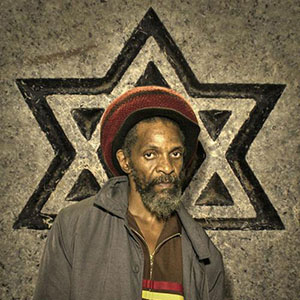
And I haven't even mentioned dub yet, even though it's my favourite version of reggae. In the shadow of dancehall, the spirits of King Tubby and Lee Perry made their way into the studios of Massive Attack, Dreadzone and The Orb in the nineties, to name but a few. Thanks to them, roots singers like Horace Andy, Earl 16 and Max Romeo (The Prodigy!) finally received the respect they deserved. Trip-hop, too, was simply reggae to me – a sort of orchestral dub.
"Real" Jamaican (and, to a lesser extent, British) dub faded somewhat from the limelight in the 1990s, and was hardly being produced at all. Fortunately, Jah Shaka and a few of his contemporaries had always kept the roots fire burning; a whole host of millennials became hooked on dub, and in its wake on the original sung versions – often unadulterated roots tracks. Following on from the dancehall crews of previous decades (Civalizee, High Grade, Far West, Boombastic…), between 2010 and 2020 it was mainly dub sound systems that experienced a meteoric rise in our country, often with homemade speakers and equipment, modelled on the great Jamaican sounds of the past. And they don't just play new tunes; they also delve into the roots archives of the golden '70s. If I want to hear good new and old roots reggae, I no longer need to be in Jamaica. The only thing that sometimes annoys me – whilst we're on the subject of cultural appropriation – is deejays who speak Jamaican patois with a Flemish or French accent, but that doesn't seem to bother most people, so I'm not going to make a fuss about it either.
Noisy racket
Nor should we do so when it comes to the so-called "commercialisation" of sound systems. As if there were even a single crew in Belgium that could make a living from the sound system. And isn't it brilliant that more and more major festivals are featuring a dub stage? That our favourite music no longer resonates exclusively amongst our ownThat our favourite music is no longer heard exclusively by our own little circle? For those who really want to keep it all underground, there are hundreds of small-scale sessions throughout the year. Anyone who draws a distinction between "real" sound systems that provide "responsible entertainment" and "hippity-hoppity" (in Dries's words) is guilty of the very same discrimination that reggae as a whole has suffered for years. "Noisy racket" is what they called it in the early days, and you wouldn't believe how often friends, acquaintances and colleagues have asked me what on earth I find so good about reggae (or so interesting about Rastafari). I, too, prefer original roots reggae to digital dub, but I'm just as delighted that reggae keeps reinventing itself, thereby appealing to new generations. Who, in turn, then set out in search of the roots of that music.
Around 2014, it felt to me as though we'd come full circle, with the emergence of a new roots generation (Protoje, Chronixx, Dre Island, Raging Fyah…). I'll never forget driving through the Jamaican countryside and hearing 'Who Knows' on Irie FM every few minutes. By then, I'd seen Protoje live in the yard of Twelve Tribes of Israel, and Chronixx at Petrol – a memorable show. Both singers took reggae and dancehall to a new, contemporary level. Roots had triumphed; down with dancehall.
Misplaced observation
But of course, that too was yet another misplaced, biased observation. Why would that circle ever be complete? When we were in Jamaica in early 2019, Irie FM sounded completely different again. More autotune than ever, more reality-based lyrics, and above all, more reggaeton- and r&b-style beats. It's known as trap dancehall, quite similar to the dance music that's so popular in America. Jamaican artists have always looked to the United States to break through, gain recognition and (let's not beat about the bush) get rich. If Protoje can record a track today that stands a better chance of success in America than in roots-friendly Europe, he won't pass it up. Bob Marley already dreamt of making it into the Top 100; Yellowman suddenly called himself King when he broke through in the States. The young dancehall stars would rather lean into hip-hop and r&b than fall back on that old-fashioned reggae.And so it is that our favourite reggae and dub are now being made in Europe. By the Spanish roots artist Roberto Sanchez, for example. Back home, producers such as Pura Vida and Kingston Echo have meanwhile released fully-fledged roots albums, entirely in the spirit and tradition of the golden seventies. It's music you haven't heard in Jamaica for a long time. Artists such as Unlisted Fanatic, Crucial Alphonso and Jahmbassador are taking British steppers dub to new depths and venturing where no one has gone before. As far as I'm concerned, roots and Rastafari are very much alive, even though there aren't any Jamaicans involved anymore.
Finally: who are we, really, to decide what constitutes good or bad reggae or dub? Which sound systems are any good and which aren't? Who has real dreadlocks and who has fake braids? Who faces the speaker and who faces the deejay? It all sounds rather colonial to me, but of course that applies just as much to this piece. I'm going to put on an old dub LP.
Lead photo: © Sophie Bass
About the author
Jah ShakespearMore Less
Jah Shakespear has been listening to reggae music since 1977, started writing about the subject in the early nineteen eighties (for De Morgen, De Standaard, P-Magazine, Highlife and a number of other magazines) and founded this website in 2002. He's also the author of 'De Rasta Revelatie' (2008) and 'In Het Spoor Van De Keizer' (2016).
Genres
Published
August 11, 2026