







.Dl7BAwhJ_ZJXLLF.webp)
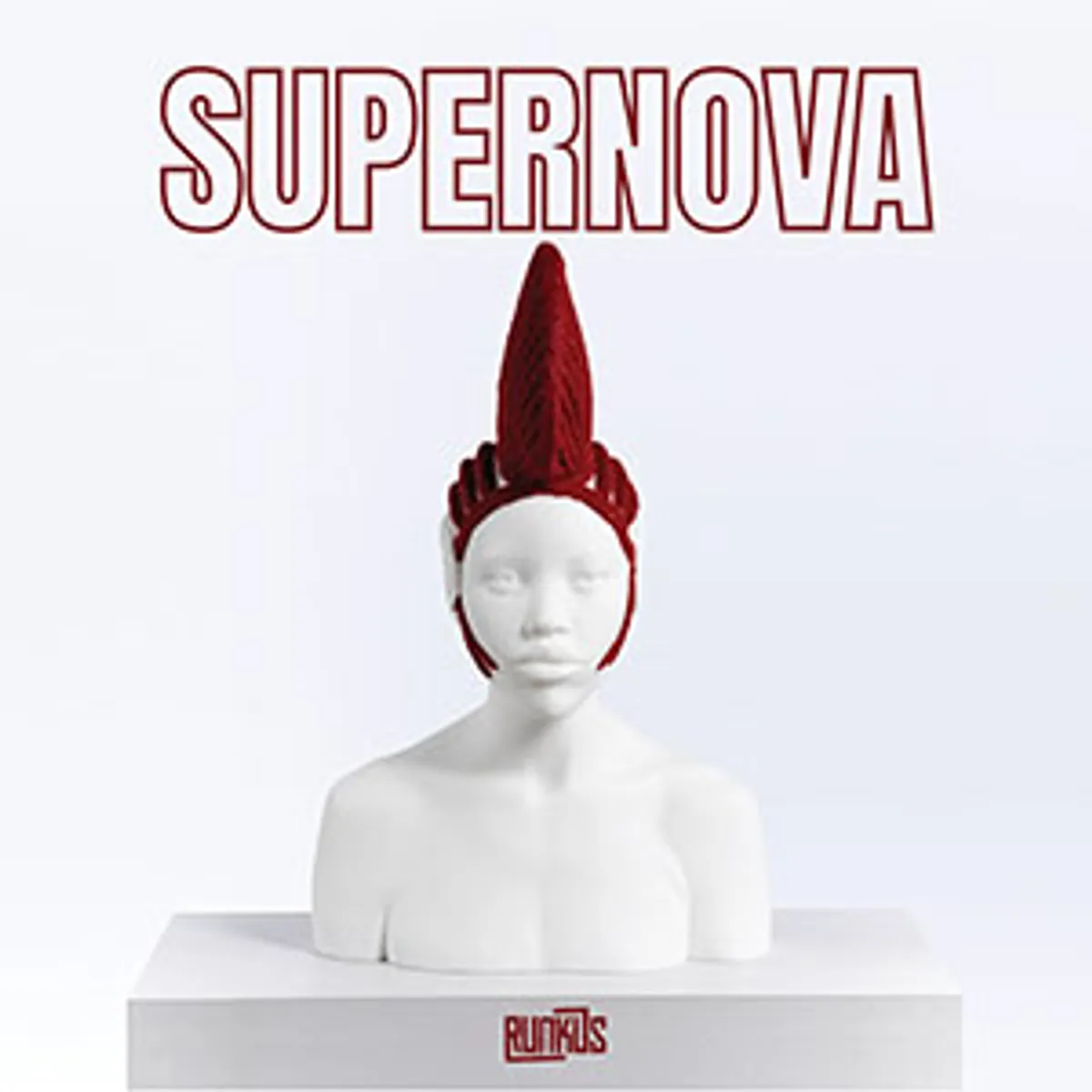
After 'IN:SIDE', which we described as "the very first COVID-19 concept album" (and which in fact forms a diptych with 2022's 'OUT:SIDE'), comes the ambitious 'SUPERNOVA', for which Runkus joined forces with Bahamian artist Tavares Strachan.
In doing so, Runkus places himself in a lineage of notable collaborations between musicians and visual artists, such as The Velvet Underground and Andy Warhol, Grace Jones and Jean-Paul Goude, David Bowie and Brian Duffy, or Bob Marley & The Wailers and Neville Garrick.
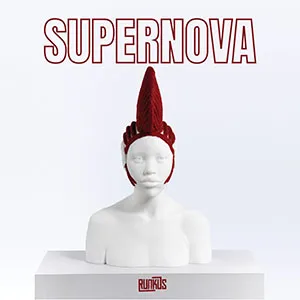
Both the title and artwork of the album draw directly from Strachan's work. 'SUPERNOVAS' was the title of an exhibition of Tavares' work held at the Kunsthalle Mannheim from April to August 2025. For the cover of 'SUPERNOVA', Runkus selected Strachan's piece 'A Map of the Crown', which was also featured in that exhibition. On the opening title track 'Supernova' - a fast-paced dancehall cut over the Punanny riddim - excerpts can be heard from a conversation between Strachan and American interviewer, curator and writer Paul Holdengräber, a dialogue that briefly resurfaces again on closing track 'The Boy Who Cried Wolf'.
'Every Ghetto Youth Is A Star' opens rather unexpectedly with a fragment of Cuban son, sampling 'Perdoname', a song by Cuban artist Panchito Riset. For the soulful 'Please Don't Come To Mars', Runkus turns to 'Darling I Love You', a track by soul duo Gene & Eddie, while 'Ego Death' leans even further into soul territory, incorporating fragments of the obscure 'Take Me Back Again' by the Fred Martin Revue.
But Runkus does not always dig that deep for inspiration. '3310' refers to the iconic Nokia mobile phones of the same name, and fittingly, Runkus built the riddim around the instantly recognisable ringtone of those devices.
Reggae lovers, meanwhile, will want to check out the irresistibly catchy 'Sure As The Sun', a duet with Sean Paul for which Runkus revisits the Party Time riddim. 'A Believer', not coincidentally an ode to the power of reggae and music in the broader sense, is another track that should firmly appeal to fans of the genre.
For 'Sheep', Runkus draws on excerpts from a speech given by Peter Tosh at the 1982 Jamaican World Music Festival: "I know there are many imposters look like I, but learn say, he's the agent of Lucifer. Wolf in sheep clothing!". In this track, Runkus starts exploring the imagery of wolves and sheep for the first time: "It was surreal that I came upon the quote which he said "wolf in sheep clothing" while I was writing 'Sheep', so it only made sense to try and put it within the tune. The whole tune just formulated around it and around those concepts of us having two beasts within us. You know they say that we have two beasts within us, and we become the one we feed the most. So, are you feeding the sheep or are you feeding the wolf?"
However, the pièce de résistance of 'SUPERNOVA' is the sprawling eight-minute closer 'The Boy Who Cried Wolf', on which Runkus pays moving tribute to his late father Determine by sampling his song 'Don't Know Rastafari', while once again revisiting wolf imagery.
Much like 'IN:SIDE', 'SUPERNOVA' is not an album for reggae purists, but it is one that at the very least deserves your attention!
Listen
About the author
Jah RebelMore Less
Together with Jah Shakespear, one of the founders of Reggae.be, he first started as a critic and a reporter before in the end of 2014 becoming editor in chief. Divides his time between his two passions: music and Haile Selassie.
Genres
Published
May 25, 2026