


.Dl7BAwhJ_ZJXLLF.webp)

September 6, 2026 marks exactly 120 years since Belgium and Ethiopia signed their first trade treaty; an anniversary we naturally do not wish to let pass unnoticed.Your humble servant has spent the past months buried deep in various Belgian archives, resulting in a fascinating retrospective that we are delighted to share with you here in several instalments.
The relations between Ethiopia and Belgium now span over a century and represent a remarkable yet often overlooked chapter in Belgian diplomatic history. What began as a modest commercial and diplomatic understanding at the start of the twentieth century developed over the following decades into a network of official contacts, economic initiatives, and high-level mutual visits.
Within this broader history, we focus here particularly on the personal bond between Emperor Haile Selassie and King Baudouin, a friendship that unfolded against the backdrop of state visits, diplomatic exchanges, and mutual symbolism. Their meetings exemplify how Belgian-Ethiopian relations in the twentieth century were shaped not only by institutions and treaties but also by individual contacts and mutual respect.
From Expedition to Legation: Early Belgian-Ethiopian Contacts (1840-1923)
The Abyssinian Expedition of Edouard Blondeel under Leopold I
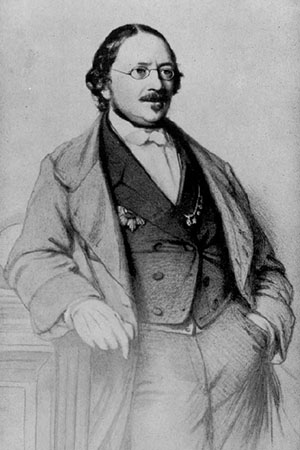
Belgium's colonial ambitions in the nineteenth century extended further than is commonly remembered.
Edouard Blondeel Van Ceulebroeck was a Belgian diplomat and explorer, appointed in 1837 by King Leopold I as consul in Alexandria, and later as consul-general. From this position, he developed ambitious plans to expand Belgian presence in Northeast Africa.
Between 1840 and 1842, he led, with the king's support, a large-scale expedition to Abyssinia (modern-day Ethiopia). His goal was to explore the region's commercial possibilities and establish a permanent Belgian trading settlement. During this journey, he traversed the regions of Shewa, Tigray, and Gojjam, even reaching the then-capital, Gondar.
During his long absence, it was feared in Belgium that Van Ceulebroeck had perished on his journey. To everyone's surprise, he returned alive in 1844. In a report prepared after his return, Van Ceulebroeck advocated for a Belgian colony in the Bay of Anfila (Eritrea). Although the plan was ultimately never implemented, Blondeel's expedition remained an important reference point in Belgian thinking on colonial expansion.
Leopold II's Ambitions and Menelik II's Caution
From the beginning of his reign, Leopold II showed interest in Ethiopia, seeing it as an area for personal rather than national expansion. Upon becoming sovereign of the Independent Congo State, Leopold devised a plan to join forces with Ethiopia and form a dual empire with Emperor Menelik II to dominate Africa.A Congolese mission was to be sent to Addis Ababa to discuss the project, led either by Colonel Haneuse, a confidant of the king, or by Monsignor Van den Branden de Reeth, an old acquaintance of Menelik II. Although Colonel Haneuse visited both Ethiopia and Eritrea in July 1892 and February 1893, the entire plan eventually came to nothing.
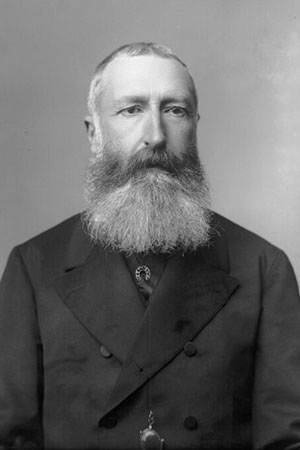
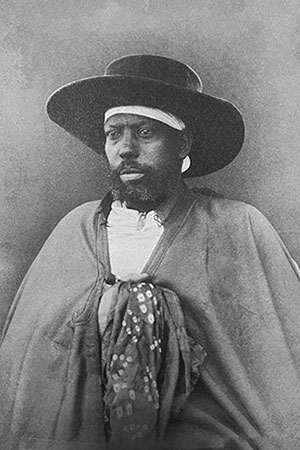
After Ethiopia's victory over the Italian forces of King Umberto I at the Battle of Adwa [1] in 1896, King Leopold II remained fascinated by Ethiopia and Emperor Menelik II. He saw the country as a potential ally and a gateway for extending his influence in Africa. Through his envoy, the Brussels lawyer and politician Sam Wiener, he investigated in Rome and Eritrea whether a Belgian company, the Société de la Colonisation et d'Exploitation, could temporarily manage the region.
From Eritrea, Leopold aimed to organize an expedition against the Mahdists [2] to open a corridor between Sudan and the Congo Free State. This plan aligned with his ambitions regarding the Lado Enclave, a strategic area along the upper Nile (in present-day South Sudan and Northern Uganda) under his personal authority. The enclave gave the Congo Free State access to the White Nile and formed a potential link to Northeast Africa, precisely the direction in which Leopold wanted to expand his influence.
The project envisioned a vast African empire in which Leopold II and Menelik II would act as "high patrons" over Congo, Ethiopia, Sudan, and Egypt. Leopold hoped to overcome Menelik's caution by proposing a merger of the Italian and Congolese colonial companies, while enticing Germany's support through economic concessions.
No party took the project seriously, but Leopold did not abandon his ambitions. He later even proposed governing Eritrea with Congolese troops under the Italian flag. This idea was also rejected, although he remained actively interested in Ethiopia and maintained personal contacts with figures from Menelik's circle until the end of the century.
A Belgian Legation in Ethiopia
While several prior exploratory contacts occurred, the first formal milestones in Belgian-Ethiopian relations are usually considered the trade agreement signed on 6 September 1906 in Addis Ababa by Emperor Menelik II and Honorary Consul Hector Henin [3], representing His Majesty King Leopold II, and the establishment of a Belgian legation in Addis Ababa in 1923.Following the signing of the trade agreement, Henin was instructed by Brussels not only to maintain official relations with the Ethiopian court but also to create as complete a picture as possible of the country. In his extensive travel diaries, he meticulously documented Ethiopia's geography, infrastructure, economic potential, administrative structures, local customs, and the political tensions and rivalries between European powers active in the region.
He observed how France, Great Britain, and Italy had divided the country into spheres of economic influence, with agreements on railways, trade routes, and access to the Red Sea. Belgium, lacking direct territorial ambitions, confined itself to an observer role, also considering possible repercussions for the northeast of the Congo State.
In this context, Henin undertook long expeditions outside Addis Ababa, including a journey of more than a thousand kilometres towards Dire Dawa. Along the way, he visited local rulers, including Dejazmach [4] Balcha Safo, governor of Sidamo, and Ras Welde Giyorgis Aboye. Regarding his visit to the latter, Henin noted in one of his travel diaries:
On 16 November we visited Ras Welde Giyorgis, who received us with great pomp. Two rows of soldiers were lined up all the way to the first gate of the Gebbi. I conferred upon him the decoration of the Order of Leopold and presented him with my latest Browning as a gift. He read the emperor's letters himself, standing, and referred back to mine for another glance. He told us that had we informed him of our arrival in advance, he would have had the elephant hunted for us.
In 'L'Empire D'Éthiopie: Le Miroir De L'Éthiopie Moderne 1906-1935' by Adrien Zervos (1936), we also found the full text of the trade agreement negotiated by Hector Henin:
His Majesty Leopold II, King of the Belgians, and His Majesty Menelik II, King of Kings of Ethiopia, wishing to regulate and develop commercial relations between Belgium and Ethiopia, His Majesty the King of the Belgians, represented by his plenipotentiary, Mr. H. Henin, Knight of the Order of Leopold, etc., Consul General of Belgium, charged with a mission to Ethiopia, whose full powers have been duly recognized, and His Majesty Menelik II, in his own name, acting as King of Kings of Ethiopia, have agreed as follows:
Art. 1. The subjects and products of each of the two countries shall enjoy reciprocally in the other, the same treatment and advantages in matters of settlement, commerce, and customs as those currently granted or that may in the future be granted to the subjects and products of the most favoured nation.
Art. 2. This treaty shall remain in force for ten years, commencing two months after the day of its ratification by His Majesty the King of Kings of Ethiopia. Should neither contracting party notify, one year before the end of said ten-year period, its intention to terminate the treaty, it shall remain binding until the expiration of one year from the day on which either contracting party has denounced it.
In witness whereof this treaty has been drawn up in two identical copies in French and Amharic, on the one hand in the name of His Majesty the King of the Belgians, by his representative named above, and on the other hand, in his own name as King of Kings of Ethiopia, by His Majesty Emperor Menelik II.
Done at Addis Ababa, 6 September 1906.
The same book also provides details about the Belgian legation and Belgian presence in Ethiopia at the beginning of the twentieth century:
Until Mr. Maxime Gerard, Belgium was represented by a vice-consulate, whose functions were fulfilled by the director of the European Trading House, a Belgian company.
Mr. Gerard, who returned to Ethiopia to represent H.M. King Albert I at the Coronation of Emperor Haile Selassie I, founded the Belgian Legation and became its first Minister in June 1923.
The Belgian Legation is housed in the former building of the Russian Legation.
In addition to the aforementioned Minister, it includes the posts of vice-consul, an honorary position awarded for services rendered, held by Mr. Edmond Beckers, current director of the European Trading House, and the post of secretary, held by Mr. Ato Bekala Kyros.
Belgian nationals residing in Ethiopia were not numerous. Aside from members of the military mission, the staff of the European Trading House, and agents of the S.A. de Plantations d'Abyssinie, a few Belgians engaged in commerce or industrial professions in Ethiopia. For information, the monopoly of alcohols and spirits was granted to a Belgian company, RIALET.
The Plantations d'Abyssinie of Marcel Dupret
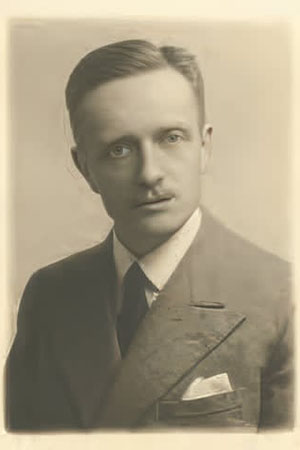
After a period in the Dutch East Indies, Marcel Dupret, a Belgian mining engineer passionate about exploring new horizons and exotic destinations, arrived in Ethiopia just before the First World War. He became involved in coffee cultivation through the Société Générale de Cultures, a company that from 1912 had ambitious plans in the Arsi region [5] of southern Ethiopia.
Local management was entrusted to Count Raymond de Kergariou [6], who imported and planted over 100,000 Arabica shrubs from Java. However, in February 1917, the young plantation was entirely plundered by the troops of Ras Tafari Makonnen, the future Haile Selassie, who at the time acted as regent [7]. The destruction wiped out five years of work in one fell swoop. Dupret, furious about the damage and the helplessness imposed by political unrest in Ethiopia, decided to suspend operations until the Ethiopian government granted full compensation.
After the First World War, in the winter of 1920, he travelled to Ethiopia to negotiate precisely that. During this trip, he was entrusted by the Belgian government to present honours to the Empress and the Regent, ensuring he was received as an official envoy.
In the Archives of the Federal Public Service Foreign Affairs in Brussels, we found the following letter from King Albert I:
ALBERT, KING OF THE BELGIANS, TO HER MAJESTY EMPRESS ZAOUDITOU, QUEEN OF KINGS OF ETHIOPIA, OUR SINCERE FRIEND, CORDIAL GREETINGS!
The deep desire We feel to offer Your Imperial Majesty a testimony of Our sincere friendship and profound esteem leads Us to confer upon Her the Grand Cross of the Order of the Crown and upon His Imperial Highness Ras Taffari Makonnen, Prince Regent of the Empire, the Grand Cross of the Order of Leopold II. We hope that this mark of Our good sentiments will contribute to strengthening ever more the bonds of friendship uniting Our two countries. We pray Your Majesty to accept the wishes We form for Her personal happiness and for the prosperity of Ethiopia. In these dispositions, We commend Your Imperial Majesty to the protection of divine Providence.
Your Sincere Friend,
Albert
Dupret ultimately obtained the compensation he sought and additionally received a mule, Din-Din, named after the valley where the company had established a new plantation, as a gift from Empress Zauditu.
The Ethiopian authorities remained favourably disposed toward Dupret thereafter. His journey strengthened not only his personal connection with the country but also his relationship with Ras Tafari. This rapport would later lead to warm contacts during Haile Selassie's visits to Belgium, including during his historic diplomatic journey of 1924.
In 1923, a second company was founded, the Plantations d'Abyssinie, with which Dupret was again associated. He returned to Ethiopia, travelled by caravan to Min?, and inspected possible expansions of coffee production for weeks. Despite the primitive conditions, lack of roads, and slow administrative processes, he remained fascinated by the country's potential.
By early March 1927, Marcel Dupret was again in Addis Ababa to inspect the Arsi plantations. Around this time, the Société Générale de Cultures was about to transfer its coffee concession strips to the Plantations d'Abyssinie, a decision realized in 1928. This collaboration finally allowed for improvements in transport infrastructure: a roughly 150-kilometer track was constructed connecting the plantation areas directly to Arba station.
In 1931, the company achieved a major milestone: a total of 1,402 hectares were exploited, spread across the valleys of Bekeksa, Min?, and Gololcha, in the heart of the Arsi region.
After this transfer, Dupret was appointed director of the Plantations d'Abyssinie, a mandate reconfirmed in February 1935. However, a few months later, the company faced the Italian invasion of Ethiopia. The occupation caused significant damage to the plantations between May and December 1936, after which the company had to relinquish its entire operational area - then approximately 1,600 hectares - to the Italian parastatal enterprise Sane.
After the Second World War, attempts were made to obtain compensation and clear conditions for a possible restart from the Ethiopian government, but the imposed demands proved extremely difficult to accept. The prospect of resuming activities therefore became increasingly unlikely. Ultimately, the company was liquidated in 1952, bringing a definitive end to all operations in Ethiopia.
Meanwhile, Dupret himself had assumed an increasingly important diplomatic role. He became Honorary Consul of Ethiopia in Belgium, and in that capacity, Ras Tafari delivered a letter to him in April 1929 in which he requested that the Belgian government draft a plan to send a military mission to Ethiopia; a significant moment in Belgian-Ethiopian relations, to which we will return later in greater detail.
An Early Ethiopian Mission: Belgium and Abyssinia after the Great War
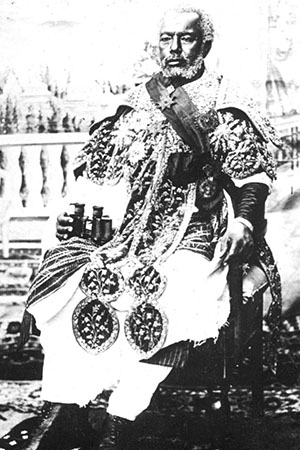
Little can be found about the visit of the Ethiopian delegation to Belgium in June 1919. The mission, consisting of Dejazmach Shibeshi, Dejazmach Wolde Gabriel, and Negadras [8] Zewge, had travelled to Europe to congratulate allies such as France and Belgium on their victory over the Central Powers during the First World War.
The trio arrived in Brussels on Sunday, 8 June, and during their stay in Belgium, they were assisted by Marcel Dupret.
Some newspapers erroneously reported that Zauditu, daughter of Emperor Menelik II, who was already reigning as Empress at the time, was also part of the delegation. For example, the edition of Ons Vaderland of 13 June 1919 reads:
The Abyssinian mission was received Wednesday morning by Mayor De Vos and Alderman Strauss. A female delegate Zeodita (sic), daughter of Emperor Menelik, was also part of it. In women's emancipation, the Abyssinians are ahead of us!
The program of the three-day visit somewhat foreshadowed that of Prince-Regent Ras Tafari in 1924, to which we will return shortly.
After a reception by King Albert I at the Royal Palace of Brussels, where they presented letters of credence from Empress Zauditu and Prince-Regent Ras Tafari, the king took the opportunity to honour Empress Zauditu and Prince-Regent Ras Tafari with high Belgian decorations: the Grand Cross of the Order of the Crown for the Empress, and the Grand Cross of the Order of Leopold II for the Prince-Regent. The physical presentation of these honours, however, would only take place the following year when Marcel Dupret personally delivered them during his mission to Ethiopia in 1920 [9].
On Monday afternoon, the delegation visited Tervuren, where they toured the Museum of the Belgian Congo.
On Tuesday, a visit to Charleroi and the Mariemont coal mine was planned. In the late afternoon, the delegation returned to Brussels to be received at the City Hall by Mayor Adolphe Max.
In Antwerp, the trio was received on Wednesday, 11 June, by Mayor Jan De Vos. On board the torpedo boat A1 Prince Leopold, they toured the port, with additional visits including a diamond workshop and the zoo.
The Ethiopian delegation concluded its tour of Belgium with a dinner hosted by Prime Minister Léon Delacroix.
The Plantations d'Hassan-Osman of Camille Van Billoen
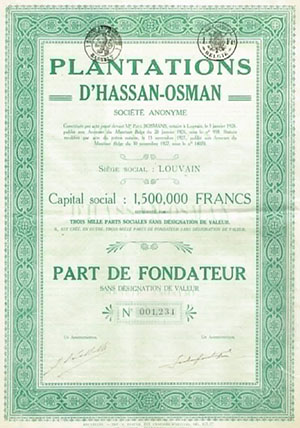
Camille Van Billoen, born in Neerijse, Flemish Brabant, was also active in coffee cultivation in Ethiopia. Initially employed by Marcel Dupret's Plantations d'Abyssinie, he soon established, together with his brother Justin, the Plantations d'Hassan-Osman.
As he primarily employed Ethiopian Christians in a predominantly Muslim part of Ethiopia, Van Billoen built the Medhane Alem Church in Kela near Ticho [10].
When Mussolini's fascist troops invaded Ethiopia in 1936, Camille joined the resistance, supplying it with weapons. After the Allies, led by the British, defeated the Italians, Van Billoen was, in recognition of his services, briefly appointed interim governor of Ticho.
Camille Van Billoen remained active in coffee cultivation until his death and was buried in November 1964 at the cemetery of the Catholic Chapel of Saints Peter and Paul in Addis Ababa.
After Camille's death, his son George briefly continued the coffee activities, but when the Derg [11] seized power in Ethiopia in 1974, the lands were nationalized, bringing an end to the Plantations d'Hassan-Osman.
To be continued...
[1] The Treaty of Wuchale, concluded on 2 May 1889 between the Ethiopian Empire under Emperor Menelik II and the Kingdom of Italy, was intended to promote friendship and trade, but fundamental discrepancies between the Amharic and Italian versions—particularly concerning Article 17—led to a dispute over the alleged establishment of an Italian protectorate. After Menelik II denounced the treaty in 1893, Italy sought to enforce its claims by force, resulting in the First Italo-Ethiopian War. This conflict culminated in the Battle of Adwa on 1 March 1896, where Ethiopia defeated the Italian colonial army under Oreste Baratieri. The defeat compelled Italy, in the Treaty of Addis Ababa, to recognize Ethiopian sovereignty, allowing Ethiopia to remain one of the few independent states during the Scramble for Africa; Adwa subsequently became a powerful symbol of Pan-Africanism and secured Ethiopian independence until the Second Italo-Ethiopian War forty years later.
[2] The Mahdist State, also known as Mahdist Sudan or the Sudanese Mahdiyya, was a state founded upon a religious and political movement launched in 1881 by Muhammad Ahmad (later Muhammad al-Mahdi) against the Khedivate of Egypt, which had controlled Sudan since 1821. After four years of struggle, the Mahdist rebels expelled the Turco-Egyptian administration and established their own Islamic and national government, with its capital at Omdurman. From 1885 onward, the Mahdist regime thus maintained sovereignty and control over the Sudanese territories until its existence was brought to an end in 1898 by Anglo-Egyptian forces.
[3] The Belgian diplomat Hector Hénin was born in Senenne, near Anhée in the province of Namur, as the second child in a farming family of ten. After studying commercial sciences, he began a diplomatic career in 1892 with an appointment as a consular agent in Tehran. He was also active, among other postings, in Ethiopia and eventually attained the rank of Belgian minister in Central America, with his residence in Guatemala. He died in Guatemala on 8 April 1918 and was buried there, together with his wife Marie Boone, at the Cementerio de la Ciudad de Guatemala.
[4] Abbreviation of dejenazmach, literally "commander of the field", a military title referring to the officer commanding the central division of a traditional Ethiopian army formation. The rank was comparable in status to that of a count.
[5] Arsi is a former province of Ethiopia. Its capital was Asella. In 1995, the province was incorporated into the Arsi Zone of the Oromia Region. Both the zone and the former province are named after a subgroup of the Oromo people, who inhabit the former provinces of Bale and Arsi.
[6] Count Raymond de Kergariou (1875 - 1918) was a French adventurer who had already visited Abyssinia in 1902 and, from 1904 onward, was active as the director of a rubber plantation on Java. It was most likely through this connection that Marcel made his acquaintance.
[7] After his death in 1913, Menelik II was succeeded by his grandson Lij Iyasu, a young and inexperienced ruler who sought to introduce reforms and to forge closer ties with Muslim communities in southern and eastern Ethiopia. His policies met with fierce opposition from the traditional Amhara elite and from the leaders of the Ethiopian Orthodox Church, who saw their political and religious influence threatened. In 1916, Lij Iyasu was deposed in a coup; the conspirators placed Zauditu, the daughter of Menelik II, on the throne and appointed Ras Tafari Makonnen as regent. The looting of the plantation in February 1917 must be understood against this backdrop of political unrest: the forces of Ras Tafari were consolidating their authority, suppressing potential rivals, and securing strategic resources, with foreign-owned properties such as the young coffee plantation at times becoming targets of military action.
[8] The former Ethiopian equivalent of a Minister of Trade.
[9] See The Plantations d'Abyssinie of Marcel Dupret
[10] Today serving as the administrative centre of the Tena woreda, or district, in the Arsi Region of Ethiopia.
[11] The Derg, officially the Provisional Military Administrative Council (PMAC), was the military junta that ruled Ethiopia, including present-day Eritrea, from 1974 to 1987. The Derg was established on 21 June 1974 as the Coordinating Committee of the Armed Forces, Police, and Territorial Army by officers of the Imperial Ethiopian Army and members of the police. On 12 September 1974, the Derg deposed the government of the Ethiopian Empire and Emperor Haile Selassie I, and three days later formally renamed itself the Provisional Military Administrative Council. In March 1975, the Derg abolished the monarchy and established Ethiopia as a communist state under a provisional, army-led government.

About the author
Jah RebelMore Less
Together with Jah Shakespear, one of the founders of Reggae.be, he first started as a critic and a reporter before in the end of 2014 becoming editor in chief. Divides his time between his two passions: music and Haile Selassie.
Published
May 24, 2026