

.Dl7BAwhJ_bSbwe.webp)
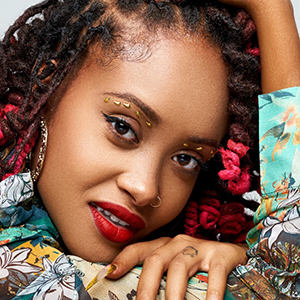
Xana, as the daughter of a reggae legend like Max Romeo, would you say you were destined for a career in music, or was there a period in your life where you considered other options?
Xana Romeo: "Well, of course I've been influenced and surrounded by music from a very tender age, but when I was younger, I still pursued different interests none the less. I had aspirations to become an architect and design beautiful buildings. That never really went away, but as I grew older, I discovered I had this musical talent and my father already having created this great platform, I just decided to give it a chance. Let's just say with the surroundings I grew up in, in the end it made more sense to explore my musical talent, then pursue a dream of becoming an architect."
It all started with your first single, 'Righteous Path'. With a song title like that, I have to ask… Is music more than just a career path for you? Do you consider it a sort of mission?
Xana Romeo: "I absolutely feel I'm here, not just to sing and entertain, but to fulfil a certain purpose. I don't necessarily want to describe it as "spreading the message", but I do speak up and allow the divine to use me to deliver messages to the people listening to my songs. A lot of the time my songs actually contain messages to myself; my music is very personal. Most of the things I sing about are things that are going on in my head, but when I process these thoughts and mould them into songs, they become messages that can be useful for others as well. Without wanting to sound too spiritual, music definitely is calling for me. As an artist you also have the opportunity to say things that other people also want to, but might be afraid or unable to. I always say that music says things that our mouths cannot speak and it also has the ability to connect people on a spiritual level. Basically, I'm just here trying to use my voice to speak up for others."
Before your new album, 'The Roots Of X', was released, VP Records expressed interest in distributing it, but you decided not to take the deal after they clearly expressed not to be interested in releasing a roots themed album.
Xana Romeo: "We definitely had a difference of opinion… (laughs) When I'd finished the album and submitted it to the representative of VP Records I was dealing with, they basically informed me this wasn't the type of album they were looking for and were hoping I'd doing something more modern and nu-soul influenced. I won't sit here and say I wasn't disappointed, because I see myself as one of the few artists from my generation who still do roots reggae music in its authentic form. Telling me to water that down or change it to fit a certain selling model, really felt like a slap in my face. I really poured my heart and soul into this album, so I wasn't pleased with what I was told and immediately decided to be open and honest about what had transpired. A lot of artists would have been afraid to ruin their reputations, but the truth needs to be spoken. It wasn't even just VP Records, I was given the same "advice" by a lot of friends and colleagues in the music business, and by releasing and promoting this album, I clearly want to state roots reggae music is not dead!"
The album kicks off with 'Holy', immediately on of the absolute highlights from the track list. How did that song come about?
Xana Romeo: "I think 'Holy' was the first, or one of the first songs, I wrote for the album. When I was working on that song, I felt under pressure by the music industry to change myself, create a sound that felt more commercial; basically to become a product for them to be able to sell. However, I'm a product of my parents and the things I've been through, so when I wrote 'Holy', to me it was a statement telling people: "This is who I am!""
You also did a combination tune with your dad, 'Youth First'.
Xana Romeo: "Well, let me start by explaining why I wrote 'Youth First'… I had a son at the very tender age, having become pregnant at the age of sixteen. I am what people would describe as a victim of the system. Having a child at such a young age, I looked to older people for guidance and council, but over the years I started to realize that the ways I was told or taught to parent my son, wasn't necessarily the way I wanted to do it. 'Born In Sin' and 'Youth First' were written in the same period, with me being in the same mind frame. In both songs I'm trying to express my feelings about what we are doing wrong as parents, as family members, as members of the community, in raising our youths. The way I feel we should move forward in the future is by putting them first. We have to realize that we as adults often act out of pure selfishness. At the same time everything we create will one day be left to our progeny. When we create problems, it's our children who inherit them! The majority of the things I was blamed for by the system as a child, as a youth, and even as an adult, I was taught. I was taught this by my parents, in school, on television, and in the music I listened to. We're all a product of the society we're raised in, but it's like we're stuck in a loop repeating the same patterns over and over again without wanting to take into account how much this affects the lives and futures of our youths. No disrespect to our elders, but with 'Youth First' I'm really stating we urgently have to shift our focus to our youths. I firmly believe that my son can teach me way more than my father can. I have a profound respect for my father and my parents in general, but at the same time I'm not living my life just to please them, I'm doing the things I do for my children. One of the main reasons I'm the type of artist that I am, is because I want my children to be able to listen to my music and learn something. So, I can't just write songs about enjoying yourself and having a good time, and it's one of the main reasons why I don't appreciate dancehall music. You have to realize that in Jamaica music is life, but at the same time the whole music industry has become so nasty, dirty and corrupt, it the entire nation seems to have become obsessed with sex, crime and greed. You won't hear my music or the type of music I'm doing being played on the radio in Jamaica anymore, even a Bob Marley tune has become somewhat of a rarity, so I try to steer my children away from all that. The majority of the youths in Jamaica don't even remember who people like Stranger Cole, Twinkle Brothers or Derrick Morgan are, for them everything started with people like Beenie Man and Bounty Killer!"
In recent years the path to the legalization of marihuana seems to have taken great strides, even in Jamaica, but in 'Marihuana Culture' you express your dissatisfaction with how this process of change has been handled.
Xana Romeo: "I haven't been a user for all that long, I only started a couple of years back, but I grew up surrounded by Rastafari. We all know that even though it were the Indians who brought cannabis to Jamaica, it was really the Rasta's who put it on the map. I'm happy they finally decided to decriminalize marihuana in Jamaica, but I couldn't help but noticing this process had little or nothing to do with the Rasta community who had been victimized, oppressed and pursued for so long for using it. The licenses to open a legal dispensary in Jamaica are very expensive, so are only an option for the wealthy and the little ganja farmers are left behind. These people often have been growing herb for generations and yet again are victimized and criminalized by the system. When they went about in decriminalizing marihuana in Jamaica, I was hoping they would destigmatize it as well, but they failed to do so. It was the perfect opportunity to educate people about all the benefits of hemp. The majority of Jamaicans still believe the only thing marihuana is good for is smoking it, and you can't really blame them because it's still being described as being a drug. We urgently need to educate the people about the huge versatility of cannabis and hemp and the many usages they have. If they handled it in a different way, it could really turn around the whole economic system in Jamaica, but the vision is lacking."
With 'Brave Queen', the album also contains an homage to Judy Mowatt. It's close to a cover of her original song 'Slave Queen', with the slight distinction between the terms "slave" and "brave".
Xana Romeo: "Let me start by saying I love Judy Mowatt! I love her voice and listen to her music almost every day, but there was always something that set 'Slave Queen' apart for me. At the same time, I had been listening to the song for years, but never homed in on the lyrics, and when I finally did, I realized what she was singing still need to be heard today. I decided to cover it, but when I was in the studio listening to the song prio to recording - this was around the time of the peak of the Black Lives Matter protest in the US - as a black person I felt I didn't want to use the word "slave", so I used "brave" instead, giving it a more empowering vibe."
Then there's 'Product Of The Ghetto', which contains a fragment from 'Woman Of The Ghetto', a song I know in the version by Phyllis Dillon.
Xana Romeo: "The original was actually a soul version by Merlena Shaw (Cadet, 1969, red.). Even though I prefer not to refer to it as such, I was actually born and raised in the ghetto, so it kind of made sense for me to do that song and include a nod to the original."
The area you're referring to is called Greenwich Farm. What can you tell us about that area?
Xana Romeo: "Yes, Greenwich Farm or Greenwich Town, as it's officially called. Contrary to popular belief, reggae wasn't created in Trench Town but in Greenwich Farm. My godfather, the late Bunny 'Striker' Lee was from Greenwich Farm, and my grand-uncle on my mother's side of the family owned a lawn back in the days, a venue where some of the early reggae parties were held. I don't live there anymore though, but every time I went back, I was approached by local people asking me why I hadn't recorded a song about the area yet. When I started working on 'The Roots Of X', one of the first decisions I made was that I was finally going to write this song for my people. 'Product Of The Ghetto' is really a song meant to show I embrace my origins and the place I grew up in."
Apart from a successful reggae veteran, your father is also an avid farmer. Has that also rubbed off on you?
Xana Romeo: "Oh yes, I've been wearing my wellies ever since I was a baby! (laughs) I always accompanied my father to the farm, planting pumpkin seeds, water melon seeds and so on. It instilled in me a real love for farming; it calms me. I wouldn't say I'm a farmer as such though, I see myself more as a gardener. I prefer to deal with tiny spots of land, rather than whole a whole field of crops. Sometimes I prefer a vegetable garden, other times I opt for flowers or even herbs; I love to experiment, but I always end up with way too many plants! (laughs)"
The Rastafari movement is sometimes criticized for being to patriarchal. As a young Rasta-woman, how do you deal with that aspect of things?
Xana Romeo: "That's a question I'm kind of afraid to answer, but I will, because I'm always honest and try to tell the truth. I was born in an environment highly inspired by the life and teaching of His Imperial Majesty Emperor Haile Selassie I, Ras Tafari Makonnen. As a child growing up, I saw Rastafari completely different from how I see it now. The root of Rastafari can never change, but Babylon is trying to commercialize it, so now Rastafari isn't just a way of life anymore, it has become a fashion style, which often is just a phase in people's lives. When I entered the music business as the daughter of a Rastaman, I got a lot of criticism from people claiming to be Rastafari themselves, even from other female artists who were also Rastafari. I was criticized for wearing makeup, for my style of dressing and was told I wasn't a real Rasta-woman. My dad raised us with a lot of freedom, so I don't feel like wrapping my dreads or covering my body from head to toe, pretending to be spiritual or conscious. We should all have the freedom to make our own choices. Within my heart I know who and what I am. The fact a lot of women are turning away from Rastafari, is just because of this way of treating them. These days I don't even state I'm a Rasta-women anymore, I'm just me. When you say you are Rastafari, people immediately paint their own picture of you, and more often than not that doesn't reflect the truth. As I already stated, I'm highly influenced by the lives of His Imperial Majesty Haile Selassie and Empress Menen, but without subscribing to any doctrine within the Rastafari movement."