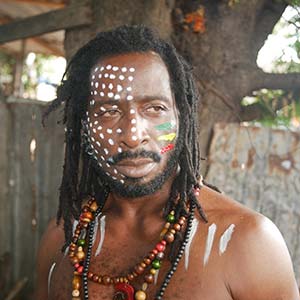
Het valt bijna niet te bevatten, maar George Scott, de man die zijn muzikale carrière begon als Wild Life, maar zichzelf, met de hulp van het Franse O.B.F. heruitvond als Nazamba en zo in één klap de toekomst van de Jamaicaanse dub poetry ging belichamen, is niet meer, nadat hij afgelopen weekend plots bezweek aan een hartaanval. Als postume ode hieronder geen regulier in memoriam, maar een nog ongepubliceerd interview uit 2019, toen hij een aantal keren ons land aandeed. George 'Nazamba' Scott werd 55.
Nazamba, your long player debut 'Nazamba' (Dubquake Records, 2019) seemingly came as a bolt from the blue. What few people realized is that you already had a music career under another name.
Nazamba: "Yeah, I started out as Wild Life, doing more regular reggae stuff (Wild Life's debut album 'Too Tuff' was released by Dutch label Not Easy At All Productions in 2007, red.), but back then I never focused on the whole dub poetry thing, like I'm doing now as Nazamba."
A logical follow-up question then… How did dub poetry come into your life?
Nazamba: "From December 2016 to March 2017 I did a tour in Europe as Wild Life, and that's how I linked up with O.B.F. and Dubquake Studio. Rico from O.B.F. approached me and told me he was working on a mixtape ('Lightning & Thunder Mixtape', 2016, red.) and wanted to use my voice for the intro. So, I went into the studio and did a little dub poetry style thing, and apparently Rico was so impressed, he came up to me and told me: "Yo Wild, I feel like we should do an album project, dub poetry style!". I didn't have to think twice and just replied: "Yeah, let's do it!", and the rest is history!"
So, on a personal level were you already into dub poetry or poetry in general?
Nazamba: "Well, ever since I started writing, I wrote all kind of stuff, from song lyrics over short stories to poems. I was born in Clarendon and one of my greatest influences has always been Claude McKay (September 15, 1890 - May 22, 1948, Jamaican-American writer and poet and a central figure in the Harlem Renaissance, red.). I even knew his work before I started going to school, because he wrote this poem called 'The Spanish Needle', and Spanish needle is a plant (also known as shepherd's needles, beggarticks or butterfly needles, red.) that's found all over the Clarendon region. So basically, I've been dealing with poetry way before I ever started in music. It's always been a part of me, and, of course, in a way songwriting is also a form of poetry. It's just the way you deliver the lyrics you write that is different."
Your voice has often been described as being somewhere between the thundering vocals of Prince Far I and the tonality of Linton Kwesi Johnson. Can you recognize yourself in that comparison?
Nazamba: "Some say Prince Far I, some say Linton and still others have compared my voice to that of Mutabaruka. It's a reality and I can only take it as a compliment, because these people are truly great men. Of course, first and foremost I want to be myself, but if my voice sounds similar to theirs, I can't really help that and if you're being compared to great legends like that, I don't see anything wrong with that! (laughs)"
Listening to the album, I wouldn't immediately call it a straightforward dub poetry album, as O.B.F. added its mark with their trademark sound.
Nazamba: "That's why I liked embarking on this project with O.B.F., as they approach reggae and dub music with a fresh eye and ear. Rico knows what the European youths like and blends those sounds with traditional reggae and dub, but always with a positive conscious message. Music shouldn't be an endless repetition, we have to keep evolving, push forward and modernize!"
After its release, the album became an almost instant success in the European sound system scene.
Nazamba: "I honestly have to say that I never would have dreamed it would go this fast! I know we tried to produce something innovative and I guess we succeeded. I can only give thanks to the people for appreciating the work!"
You already mentioned you were born in Clarendon, something that inspired the lyrics you wrote for 'The Hills', a duet with reggae veteran Linval Thompson.
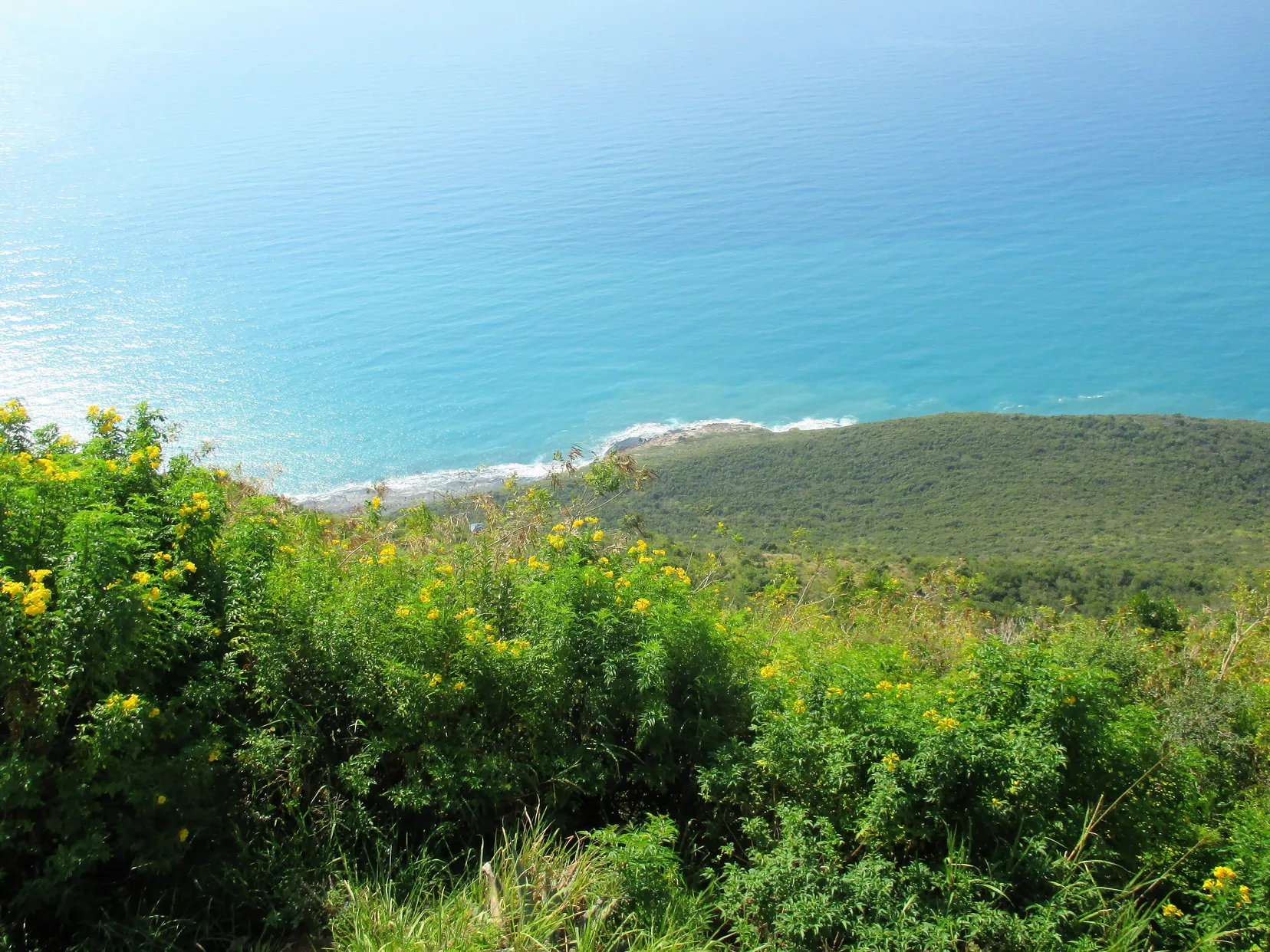
Nazamba: "Yes man, I was born on a hill in Clarendon, a plateau really, about the same height as Bullet Mountain, which is one of the highest peaks in Jamaica. That song really takes me back to that place where I grew up."
Apart from the duet with Linval Thompson, there's also 'Politricks', a less likely pairing with Scottish-Indian MC Soom T. Did you two already know each other?
Nazamba: "Yeah, back in 2010 I came to Europe to do a promotional tour with Esperanza sound system from Freiburg in Germany. We played the Delicious Offbeat Festival in Freiburg and that's where I met Soom. Back then both Esperanza and Soom were linked with the Jahtari label in the UK, so that's where everything started. When we started working on the album, I suggested to bring her in to add something a little bit different. She's a born-again Christian now, but she's still kept true to the music. When I sent her the lyrics, she immediately jumped on it and did her thing. Her fast-paced lyrics combined with my slower dub poetry style gave the song a wonderful balance. After we finished the song, we even found out that we shared the same manager (Stéphanie Gautier, red.), which I didn't know. So, there you go, natural mystic! (laughs)"
If sound wise there's one exception in the track list is has to be 'Play Sweet', for which you used the classic Drum Song riddim. If we're talking Jamaican classics, what was the music you grew up listing to and who were the artists that influenced you in your own music?
Nazamba: "That truly depends of the genre, because there's a long and varied history in Jamaican music, and I try to embrace all of them. In reggae there's no getting around Bob Marley, just like in ska there's no getting around Derrick Morgan, but even before that you had mento with a man like Lord Flea. It wouldn't feel fair to choose, but I still have to admit I took a lot of inspiration from the writings of Count Lasher, another performer from the mento days. One of my all-time favorites is his song 'Perseverance'. Apart from that, I'll always refer back to Bob Marley and Michael Jackson, as I feel they were in a league of their own. But as I say, really too many to mention."
In conclusion… When or how did Rastafari find you?
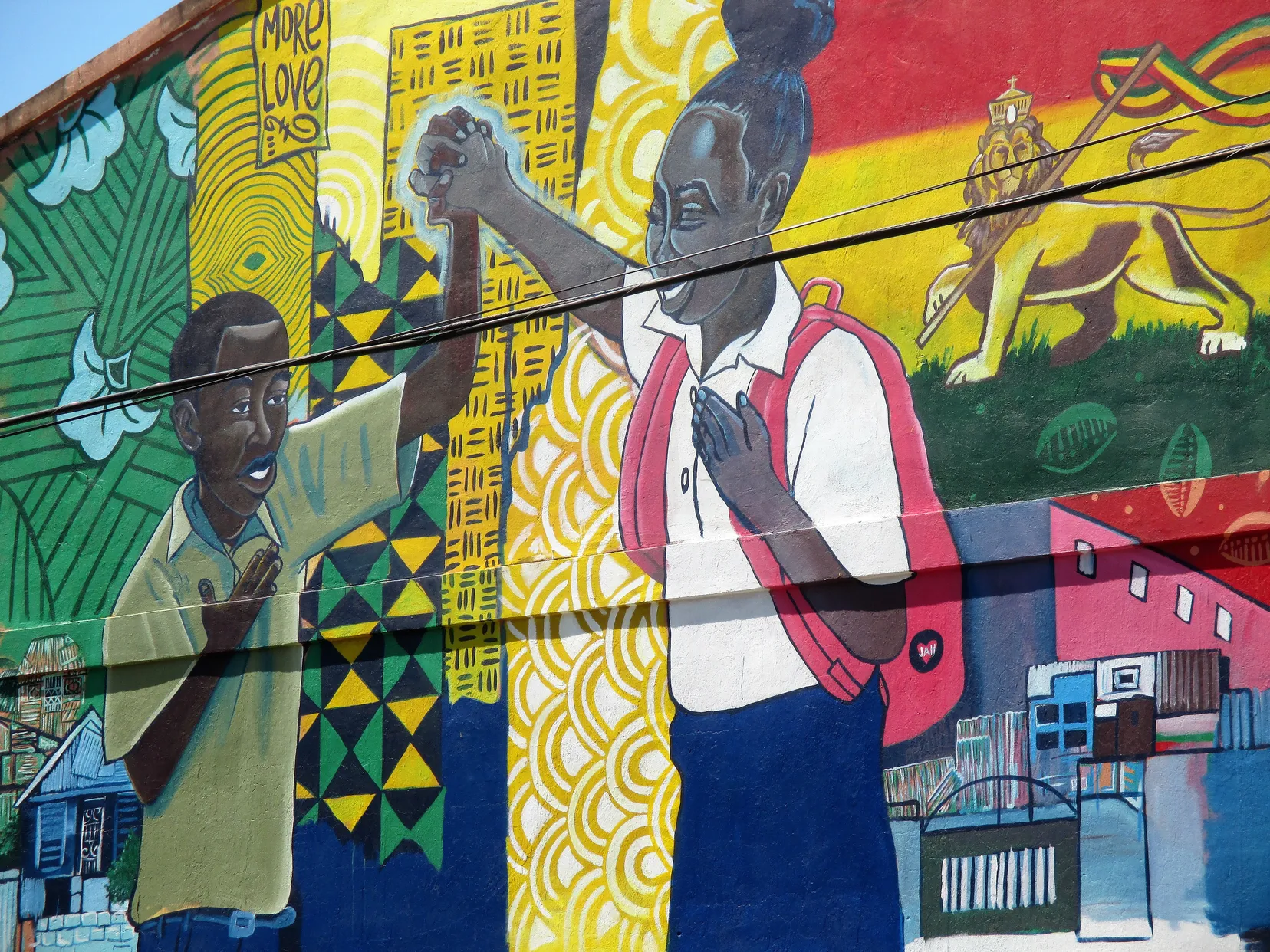
Nazamba: "To be truthful that was through music. Before I started pursuing a career in music, I was working as a motor vehicle alignment technician, but I was always singing along with the music that was playing while I was working. One day one of my friends, Rockland, a bobo-dread, heard me sing and decided to take me along to the studio. I ended up recording my very first self-produced song that day, called 'Work So Hard' (Wild Life Records, 2001, red.). The studio I voiced at was Caveman, owned by Don Sinclair, who is Rastafari. I started hanging out there more and more, listening and learning. To me Rastafari is no religion, it's a nice, sweet, good way of life. The main thing Rastafari taught I, is to show respect and learn to tolerate other's perspectives, and above all else it's about love. No matter if you're wearing dreadlocks or if you're bald, if you're black or white, you can have any form of movement or government, if there's no love, it will never work out!"

.Dl7BAwhJ_ZJXLLF.webp)