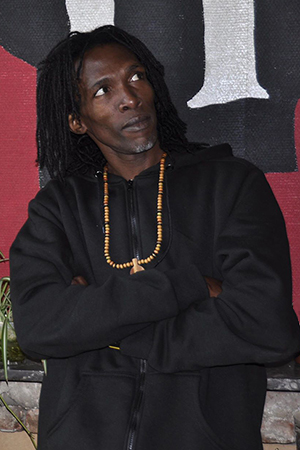
Op 18 oktober aanstaande komt Kologne in het gezelschap van Turbulence en Linval Thompson zijn nieuwe album 'A New Chapter' live voorstellen in de Antwerpse Zappa. Als opwarmertje alvast onderstaand gesprek dat we met de zanger uit Linstead hadden...
Kologne, you hail from Linstead, a town known to every reggae adept thanks to 'Linstead Market', the folk traditional which has been covered over and over again throughout Jamaican music history. Tell us a little bit about your home town...
Kologne: "Well, Linstead is in the countryside, where people live a normal live, farming, raising animals. It's where nature's life!"
Do you think growing up in the country gave you another outlook on life as compared to someone who grew up in Kingston?
Kologne: "Yes, totally different! It's a totally different life, because when you wake in the morning you see nature. The countryside also offers more inspiration, as the city can be distracting as it can often be crowded and chaotic. In the countryside you get more time to focus; getting up in the morning, doing what needs doing around the house, having some food and then just sitting back under a tree, on a stone or going to the riverside and sitting quietly. Country life is a totally different from city life, and for me it's the best place to live!"
You first started discovering your voice as a member of the local school choir…
Kologne: "Yeah, when I was still in Time And Patience primary school in Linstead. At about the age of 8 I recognized the talent that I got, so they asked me to join the school choir and I ended up becoming one of the lead singers together with a girl called Jean Donna… I'll never forget her name. Apart from the school choir, I used to sing at my mom's church as well; it all started from there, from a very tender age."
At which stage in your life did you start thinking: "Hey, I might be able to make a career out of this?"
Kologne: "Well, I would say, when I left school. When I left school, I started to take music more seriously, more professional, trying to link up with studios and producers to voice a first track. I'll never forget the first time I got to voice and afterwards listen back to the track, thinking: "Wow, the engineer picked up my voice and put reverb and stuff upon it!". I was so damn surprised, that it gave me the urge and drive to continue professionally."
It's only recently that you are going by the name of Kologne, as before you were known as Singing Cologne. Could you explain how you came by the name Singing Cologne and why you decided to cut that first part now?
Kologne: "I got the nickname from a friend of mine, a lady in my district. I sang at her birthday party one night and when I finished singing, she said: "Turn-up…" - my nickname was Turn-up at the time - "…you sweeten up the place like a perfume!". Another lady was there and said: "No, not perfume, cologne!". From that Saturday night onwards people started calling me Cologne. I couldn't stop it, and from there I expanded it into Singing Cologne until I decided, look, I'm just gonna go by the name Kologne and put the "singing" aside."
We might have to mention, because that's the last change that happened… it's Kologne with a "K" now.
Kologne: "I forgot to mention that… yeah Kologne with a K now. I think I should have changed a long time already as this way the name stands out a lot more."
It helps to avoid confusion with the German city as well!
Kologne: "For real! The K is a real cool move. Looking at Kologne spelled with a K is what I should have been doing long time. Lucinda & Johan (Schuerwegen and Livens with Puur Live Entertainment artist management and promotion, red.) proposed it and all I could say was: "Yes!"
At one point you hooked up with legendary and late Fatis Burrell...
Kologne: "Yeah, he's my general!"
As he has passed now, how do you remember him? What kind of a person was he and what did he teach you?
Kologne: "When you say Fatis Burrell, well it really brings back a lot of memories. He was like a father to me in music. I first met him in 1999 and at that time he was already a Jamaican music icon. Fatis didn't produce just any music; if it wasn't conscious and positive Fatis wouldn't touch it! He was also picky about the artists he wanted to work with, so when I got the chance to do so, I realized how valuable my music was. I worked with him from 1999 until 2007 when he decided to take me to Europe supporting Sizzla. Thas was my first time over here, the first time I ever flew anywhere actually. We returned in 2008, but when we returned to Jamaica, Fatis fell ill and eventually passed away in 2011. He was like a father figure and a great, great producer. He knew the business and believed in conscious music; a sad, sad loss!"
Fatis might have been a big influence, but over the years you've also worked with people like Max Romeo, Linval Thompson and Steel Pulse's Sidney Mills; all veteran in the business. You definitely had the right connections.
Kologne: "I am most grateful!"
So how come we are only now starting to hear the name Kologne over here in Europe.
Kologne: "You know what? It's because now I am in good hands as I'm working with Puur Live Entertainment in Belgium. They're really doing a great job. After Fatis passed away, I continued recording, working in Jamaica, recording songs, but the touring part of my career kind of came to a halt. I never found a good team to get things in order since Fatis died, until I hooked up with Puur Live Entertainment that is. I'm really grateful for the work they've done!"
Personally, I first came across your name on albums from the UK by people like Alpha Steppa and Dub Dynasty. That's a totally different kind of reggae music. How did you hook up with them?
Kologne: "I met Alpha Steppa through Linval Thompson. It was a wonderful job to do all this roots music. I know the wider world needs roots music and that's what I choose, that's where my head is now: doing conscious music. I could choose something else but this is where my head is. I see myself as a roots artist."
A lot of your tracks have a kind of old-school vibe going. Is that just the influence of the people you've worked with over the years, or is that also the music that you are personally the closest to? What are your musical influences?
Kologne: "Dennis Brown and Delroy Wilson really influenced me, but growing up as a youth I also listened to a lot of Black Uhuru. In some part, my music is always going to reflect the music that I grew up with."
In closure… When did Rastafari find you?
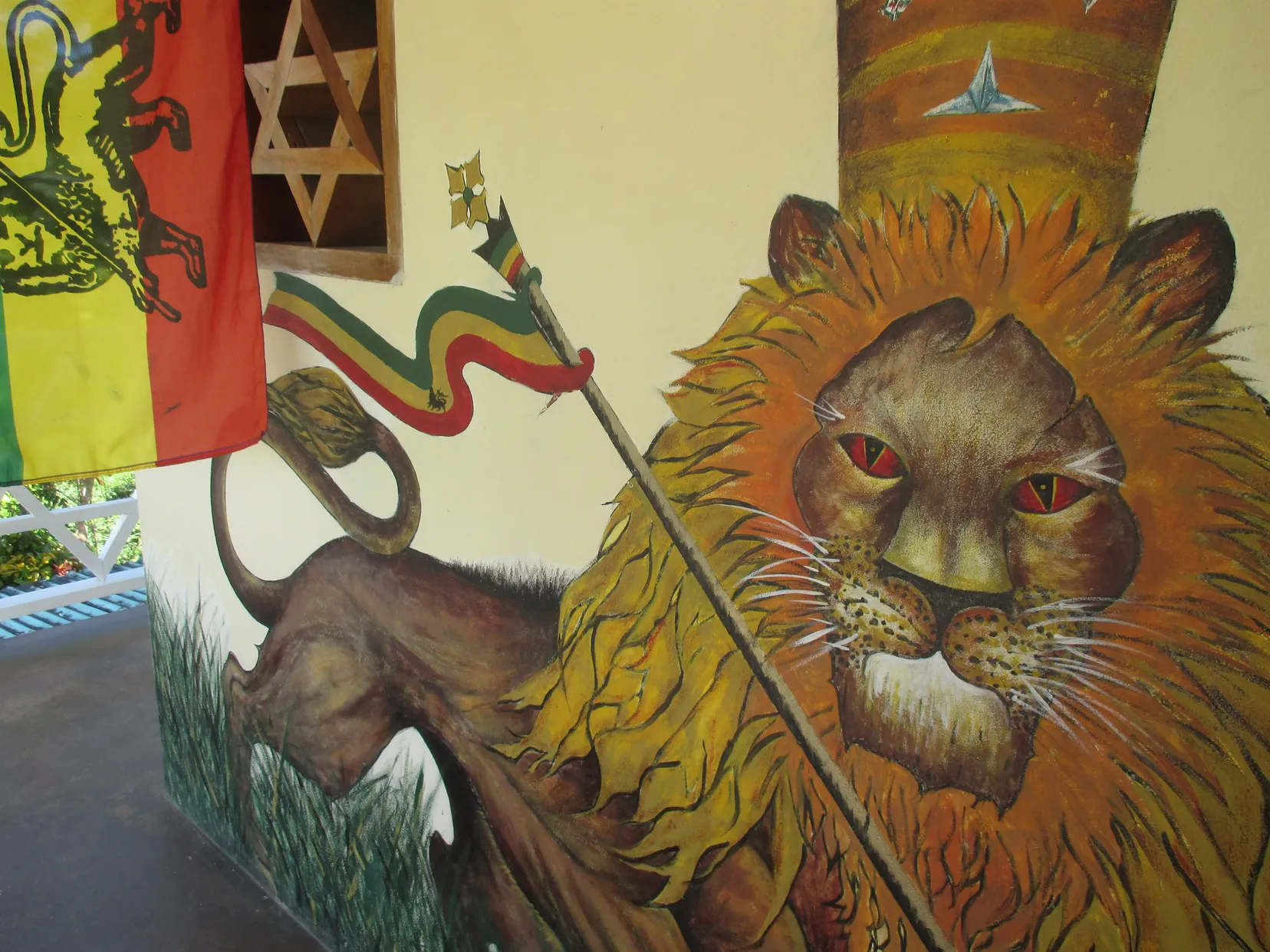
Kologne: "It was an inborn thing… I was born as a Rasta youth from day one. Growing up I started to take it more serious and more positive; started focusing more on what I was doing. The more you march, the more you focus, the more you get a grip on what you're really doing. My mom is a devout Christian and when you're raised in a Christian household you can't just tell your parents you don't want to go to church anymore; you simply don't have a choice. But as I grew into adulthood, I just knew Rastafari was my path to follow and I had to start praising the Most High Jah!"


.Dl7BAwhJ_ZJXLLF.webp)