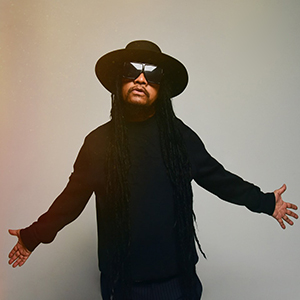
Maxi, talking about Maxi Priest is talking about knows about your connection with Saxon Sound but there is a chapter before that when you were still with a sound called Negus Negast…
Maxi Priest: "Oh my gosh… Negus Negast are some guys that I grew up with and that taught me so much! You know, as a young kid, culturally, as a man, everyday living, everyday life… They taught me so much, those are my bonafide friends."
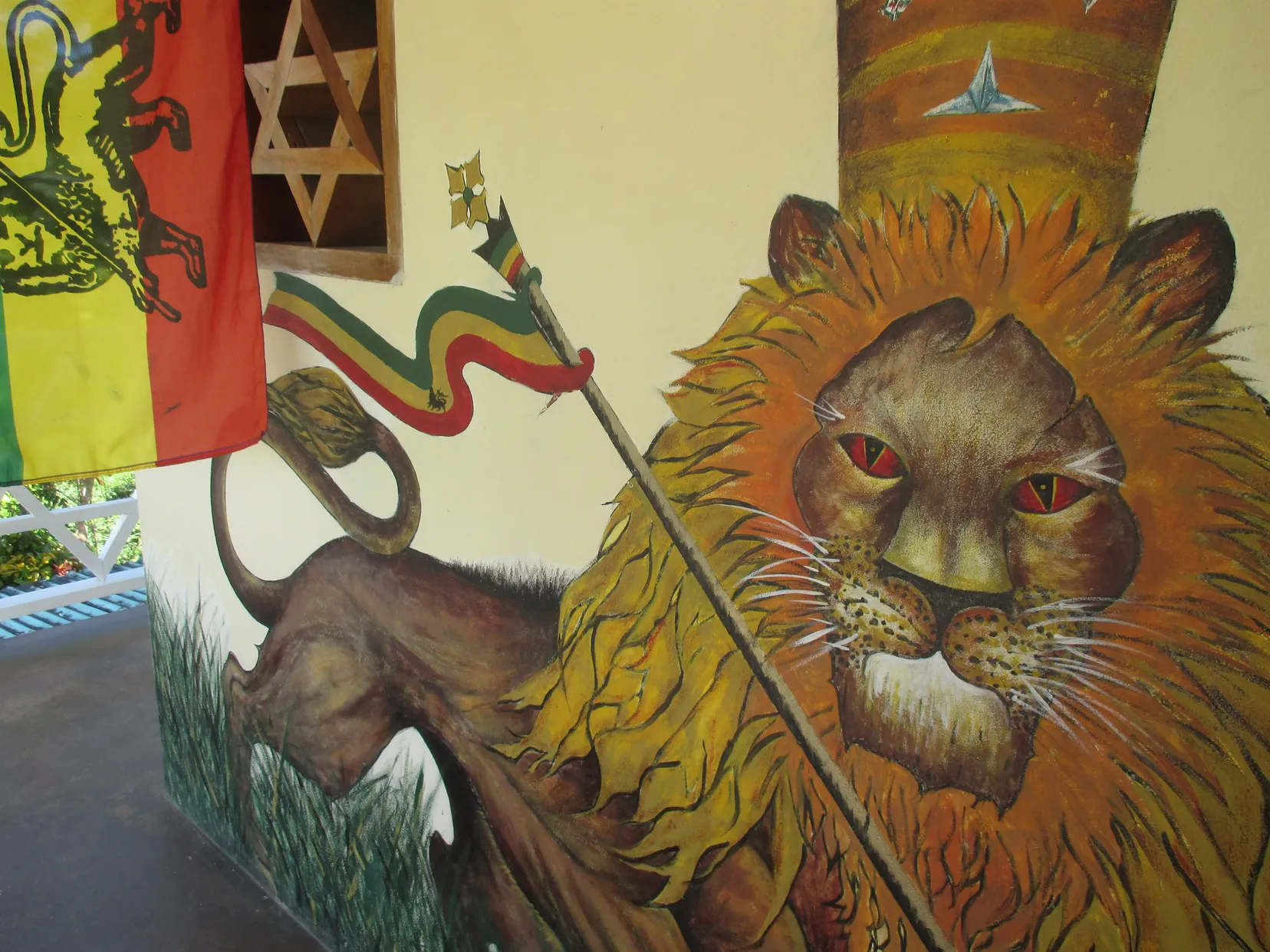
Starting to hang out with these sounds and gravitating towards Rastafari, having grown up in a household with a mother who was heavily involved in the Pentecostal movement, how did she take that and how did you handle it yourself?
Maxi Priest: "It was pretty easy really. All religions have a similar foundation. At the end of the day what is the key? The key is love! Doesn't matter what religion or how you want to perceive God or whatever, it all boils down to love. If you can't give love, you can't receive love. It doesn't really matter how much you can preach, to me it's what's within you and how you walk and talk and treat people. That to me really is the key. So for me, for my mother, my household, for me to say: "Rasta!" was not a problem. It was more of a social issue in having a child who suddenly started to grow his locks in an era where society would still frown upon such things. I think that was the bigger issue for my parents, but spiritually, culturally, humanly my family was very receptive and open as we come from the key word L.O.V.E.!"
Let's stick with the letter L for a moment… You grew up in Lewisham, probably not the most well-known part of London… What kind of an area is it or was it?
Maxi Priest: "Wow, for me it was like my world! It's very middleclass, a lot of the early people that came from the West Indies grouped in south east London and found their way from that point. What kind of area is it? It's just a very hardworking area… We had our problems, like racism. I'd often be called black this and black that or go home and what have you. My next-door neighbour at one side would be very offensive and the ones on the other side were West Indian people like ourselves and then further down would be some more white people that didn't like us. But luckily I grew up in a household that was all about love for humanity. My mother constantly and consistently preached the word love. Forgive and be forgiven. Whereas my dad was a little harder, a little stricter and more serious and obviously, I guess, frustrated with a lot of the problems surrounding and affecting us. So it was a weird kind of balance: somebody very hard and strict and somebody very loving. Out of that we found a balance."
Your dad sadly passed away when you were still quite young. Did that also mean that you had to step up all of a sudden?
Maxi Priest: "Yes, oh gosh, definitely! I grew up in a family of 9 brothers and sisters. That's a very big family, but at the same time, us as boys, we had to stand up, be counted and take the reins. I was working on building sites and things like that from age 14; became a man very, very fast. At the same time I wasn't too clever yet, never really understood too much and just wanted to run free, so I got up to a lot of bad things, wrong things as well."
After you started to gravitate away from the sound system scene and started focussing on a career as a solo artist, there was one person who proved kind of instrumental in teaching you the basics of song writing… I'm of course talking about One Blood 's Paul Robinson aka Barry Boom …
Maxi Priest: "Yeah, when I was around the sound system I wasn't really thinking about whether you could go in studio, record and all that. It was only after a few years had passed and, obviously, wasn't really making any kind of real money, that I started questioning what I was doing, because something had to pay the bills, you know… I guess it was around about the time that my mother got sick. She'd met up with Paul Robinson and had asked him if he could you help me with my singing. So, I met up with Paul, we decided to go into the studio, take what I'd been doing in the sound system scene into and make it into this other world, into a record (the result being Maxi's debut album 'You're Safe', 10 Records/Virgin, 1985)."
Maxi, I still grew up in the age of cassette tapes, and the two very first tapes I bought were your 'Bonafide' album (Virgin, 1990, red.) and the Soul II Soul album that came out about the same time ('Vol. II: 1990 - A New Decade', Virgin, 1990, red.). That might not have been coincidence as Soul II Soul played an instrumental part in producing your 'Bonafide' album…
Maxi Priest: "It was such an amazing time you know. But I got to say that if it all finishes for me tomorrow, I've had an amazing time and I would never look back and think to myself: "Well damn, what happened?". You have to remember that back then Soul II Soul was rocking. There was a time that Soul II Soul ruled the world. We all come from London, we went through the same struggle, fought the same fight, so when my manager told me it would be a good idea to do something with Jazzie B and Soul II Soul, it was a no-brainer, so I just said: "Bring it on!"."
Maybe something that not all of your fans will know is that you were related to the late Jacob Miller.
Maxi Priest: "I sadly never got the chance to meet Jacob in person. I knew his dad very, very well. His dad and my dad were brothers. Jacob's dad, Sydney Elliott, was a singer as well. He recorded lots of songs in England, somewhere between rocksteady and country in style and he had a few of successes in the UK with songs like 'Who Dat Girl?' (Spark, 1969, red.) or 'Little Boy Blue' (CBS, 1971, red.). It came as a massive shock to us that Jacob was his son (Miller took his mother's name, red.) and I was really disappointed that they didn't tell us that earlier, because apparently Jacob only found out Sydney was his dad mere weeks before he died. He came to the UK and went on English media to explain he was looking for his dad, and that's how he eventually found him. As I said, I was really upset with my family for not acknowledging or explaining to us that he had a son who was someone we really looked up to!"
When we're talking musical influences I think there is one name that I have to put above all others when talking to Maxi Priest and that's of course that of the late great Dennis Brown!
Maxi Priest: "Oh God! Before I actually met Dennis Brown (in 1978, Brown moved to live in London, and set up premises in Battersea Rise, near Clapham Junction to relaunch the DEB Music label with Castro Brown, red.) I already felt as if I knew him; as a kid, I just wanted to sing like him. Anything he touched I was into it. That was my way of practicing and learning my craft, through Dennis Brown. So when I finally met him I can still remember just thinking: "Wow, if he only knew how I was a kid, always listening to his records, putting the needle on the record and listening very, very carefully how he pronounced his words, how he would sing, slur, the type of emotions that he would give…". And then years later being given the privilege of touring with him, sharing the same bus with him for weeks or months on end, sitting there, listening to his experiences and the advice that he would give. That kind of shit is irreplaceable!"
A person who's luckily still alive and that you also did a lot of combinations with and shared the stage with on lots of occasions is Beres Hammond? What does he represent for you?
Maxi Priest: "Beres is very much a part of that family of Dennis Brown, Gregory Isaacs, Freddie McGregor, John Holt, Ken Boothe… There are a few more of them; a tightknit group of entertainers who were like a large extended family. I had the wonderful privilege of spending time with these guys all in one place, and, to me, Beres represents what remains from those times."
Before the release of your 'Easy To Love' album (VP Records, 2014, red.) there were some years of relative silence. Were you repositioning yourself in the music scene?
Maxi Priest: "Well, things have definitely changed a lot! In the days of being signed to a major record company, there was massive preparation, a whole machinery behind an album release, you know. To me there's nothing more magical than bringing live musicians together in a studio to create something new. There's magic in that process that I simply can't find sitting down behind a machine by myself. So, yes, it's definitely taken me some adapting."
Over the years you've created your own crossover style of music with influences from reggae and many other genres, but by many people you're also still seen as one of the stalwarts of the lovers rock movement. Do you own that?
Maxi Priest: "I own everything that I'm given! Just imagine that I was giving nothing, then I probably would be upset. (laughs) So, as long as it's positive and it's to progress I'll take it and I'll caress it. Maxi Priest is created by many, many different people with different vibrations, inputs and thought processes. As I already told you, I come from a family of 9 brothers and sisters, so for me it's never been: "Me, me, me!", it's always been "We, we, we!". If someone wants to call me the king of lovers rock, I go "Yoh, cool!". It's all good, because as long as it's positive, then we can build. If it's negative, then who wants that? I don't want that. I just love life, love people and I love the world. I truly recognise that I am blessed and I appreciate my blessings. As an artist I do have an ego, but as a human being I really appreciate whatever support I've been given over the years."
In conclusion… Your stage name Priest is a reference to the Tribe of Levi, not just any tribe, but one that comes with responsibilities. Is that also how you feel about it?
Maxi Priest: "Definitely! I have a lot of responsibilities. I have a responsibility to walk well, to glue people together. I have a tremendous responsibility: what I do is going to echo to the next generation, to the people coming after me. I have a responsibility to open doors; I have a responsibility to make things happen. I have a responsibility to evolve and a responsibility to just be a good person!"






.Dl7BAwhJ_ZJXLLF.webp)