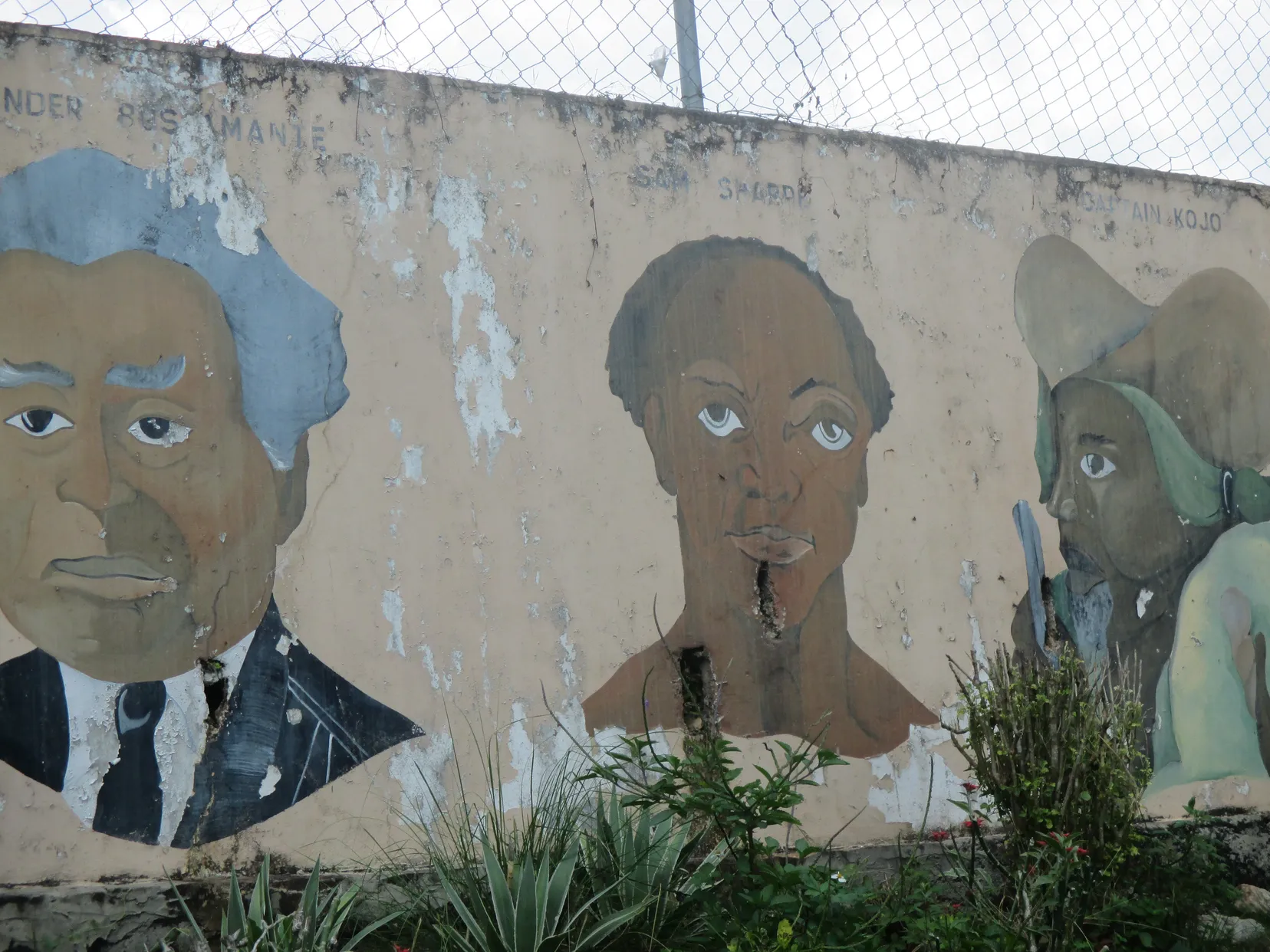
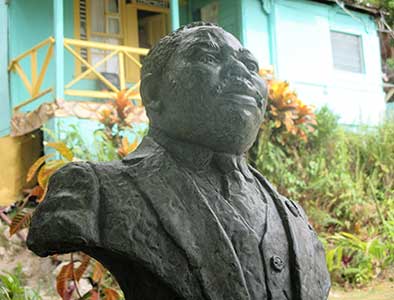
De Jamaicaanse regering wil het geboortehuis van Marcus Garvey in Saint Ann's Bay uitroepen tot nationaal erfgoed. Als Obama hem postuum niet in ere wil herstellen, moeten ze daar gedacht hebben, dan geven wij onze held nog wat meer glorie. Beter laat dan nooit en voor ons de ideale gelegenheid om de profeet van Rastafari uitgebreid aan u voor te stellen.
In zijn speeches en geschriften borduurde Marcus Garvey voort op de Bijbelse metaforen die hij ook als dominee had gebruikt in zijn preken, en die wij later zouden terughoren in 1001 reggaesongs. Daarom staan ze hier in het Engels (en ook een beetje omdat ze in het Nederlands algauw een beetje barok en pathetisch klinken).
"As children of captivity we look forward to a new day and a new, yet ever old land of our fathers, the land of refuge, the land of the Prophets, the land of the Saints, and the land of God's crowning glory. We shall gather together our children, our treasures and our loved ones, and, as the children of Israel, by the command of God, faced the promised land, so in time we shall also stretch forth our hands and bless our country."
En welk land mag dat dan wel zijn? "Ethiopia shall once more arise from the ashes of material ruin to the heights of temporal glory. We see a new Ethiopia, a new Africa, stretching her hands of influence throughout the world, teaching man the way of life and peace, the way to God. He, the great Creator Himself inspired others to say of us that 'Princes shall come out of Egypt and Ethiopia shall soon stretch out her hands.' This hour we are stretching forth our hands with the desire to teach the world the true principles of mercy and justice."
Zo komen we al heel dicht bij de vermeende profetie over Haile Selassie. Gooi die zinnen in een blender met het verloren script van het toneelstuk en de nieuwsberichten uit Ethiopië zelf, en je kunt er een verbluffende voorspelling uit brouwen. Garvey's toon werd geleidelijk militanter: "I say this plainly. And for everybody to hear. We are organizing to drive every paleface out of Africa. Do you know why? Because Africa is mine. Africa is the land of my fathers. We who make up this organization know no turning back. We have pledged ourselves even onto the last drop of our sacred blood that Africa must be free."
Om dat te bereiken, de bevrijding van Afrika, wilde de UNIA een grootscheepse terugkeeroperatie organiseren. Marcus Garvey richtte een scheepvaartmaatschappij op en nodigde alle "negroes" uit om een aandeel annex ticket te kopen, en te emigreren naar Afrika. Te repatriëren, om precies te zijn, naar het land van herkomst, ook al waren de eerste slaven al in de 17de eeuw over de oceaan gebracht. "Let our steamship sail the high seas," zei Garvey: "not one, not two, but hundreds of them. The stronger we become upon land and sea, the more will be the respect shown to us and the greater will be the glory."
De maatschappij heette Black Star Line, naar analogie met de Red Star Line, die tienduizenden Europeanen van Antwerpen naar Amerika had gebracht. Het is ook de titel van één van mijn favoriete reggaenummers, van de Britse band Reggae Regular: "Taking Jah people from their sorrow/Leaving behind the corruption of Babylon/Going to al land called Zion/So live right and show some just regards." Het was natuurlijk een onmogelijke opdracht, een utopie waarschijnlijk, maar Marcus Garvey was ervan overtuigd dat hij zou slagen, en duizenden "negers" kochten een aandeel.
De politie was er niet gerust in. Zij hielden Garvey al langer in de gaten en de jonge J. Edgar Hoover, de latere beruchte FBI-directeur, noemde hem: "...een gevaar voor de Amerikaanse veiligheid", zeker sinds Garvey zich officieel Provisional President of Africa liet noemen. Het ondoorzichtige aandelenhandeltje dat de UNIA had opgezet, bleek een geschikte stok om de zwarte hond te slaan. Er zou fraude gepleegd zijn, zij het op zo een kleine schaal, dat het normaal nooit zou bestraft worden met gevangenisstraf.
Marcus Garvey kreeg vijf jaar aan zijn broek. Na zijn vrijlating en terugkeer in Jamaica probeerde de gevallen held de UNIA weer op te starten. In de hoogdagen, begin jaren twintig van de vorige eeuw, had de organisatie tientallen afdelingen, verspreid over Noord-, Centraal- en Zuid-Amerika, in Lesotho, Ghana, Nigeria, Liberia, Sierra Leone, Namibië en Zuid-Afrika. Maar zonder de visionaire, charismatische leider had de UNIA haar ziel verloren. En de Verenigde Staten, zijn grootste "afzetmarkt", mocht hij niet meer in. Marcus Garvey moest zijn actieterrein noodgedwongen inperken tot Kingston en omgeving. Hij opende Edelweiss Park, the Wembley of Jamaica, waar vooral het theater een tijd lang goed draaide, met drama's en vaudevilles van lokale auteurs. En ook van Garvey zelf. Zijn 'The Coronation Of A Black King' moet iets losgemaakt hebben bij de eerste rasta's, samen met het artikel dat Marcus Garvey publiceerde in zijn eigen krant The Black Man toen Ras Tafari in 1930 gekroond werd tot keizer Haile Selassie I.
"Last Sunday, a great ceremony took place at Addis Ababa, the capital of Abyssinia. It was the coronation of the new Emperor of Ethiopia -- Ras Tafari. From reports and expectations, the scene was one of great splendor, and will long be remembered by those who were present. Several of the leading nations of Europe sent representatives to the coronation, thereby paying their respects to a rising negro nation that is destined to play a great part in the future history of the world. Abyssinia is the land of the blacks and we are glad to learn that even though Europeans have been trying to impress the Abyssinians that they are not belonging to the Negro Race, they have learned the retort that they are, and they are proud to be so."
Marcus Garvey wijst op het vermeende verschil tussen het donkere Afrikaanse ras en het lichtere, eerder Semitische type in Ethiopië. Sommige Ethiopiërs voelen zich om die reden ook vandaag nog superieur. "We do hope that Ras Tafari will live long to carry out his wonderful intentions. From what we have heard and what we do know, he is ready and willing to extend the hand of invitation to any Negro who desires to settle in his kingdom. We know of many who are gone to Abyssinia and who have given good report of the great possibilities there, which they are striving to take advantage of."
Haile Selassie reikt volgens Garvey nu al de hand uit naar elke Neger die zich in zijn land wenst te vestigen, een uitnodiging die vooral de rasta's later ter harte zullen nemen. Marcus Garvey rondt zijn betoog af met een verwijzing naar het bekende vers 31 van Psalm 68. "The Psalmist prophesied that Princes would come out of Egypt and Ethiopia would stretch forth her hands unto God. We have no doubt that the time is now come. Ethiopia is now really stretching forth her hands. This great kingdom of the East has been hidden for many centuries, but gradually she is rising to take a leading place in the world and it is for us of the Negro race to assist in every way to hold up the hand of Emperor Ras Tafari." Ethiopië zou wel eens de hoeksteen kunnen zijn van de pan-Afrikaanse unie die Marcus Garvey voor ogen had, het eerste land waar elke Neger zich thuis zou voelen, bevrijd van blanke onderdrukking en discriminatie. Met op de troon een verlichte, christelijke leider. Geen wonder dat Marcus Garvey volgens de rasta's terugkijkend een waarachtige profeet was, de man die de komst van de nieuwe Messias voorspeld heeft. Zoals ook de rest van het evangelie zich in de jaren 30 opnieuw zou openbaren. Wordt vervolgd...






.Dl7BAwhJ_ZJXLLF.webp)