





.Dl7BAwhJ_ZJXLLF.webp)
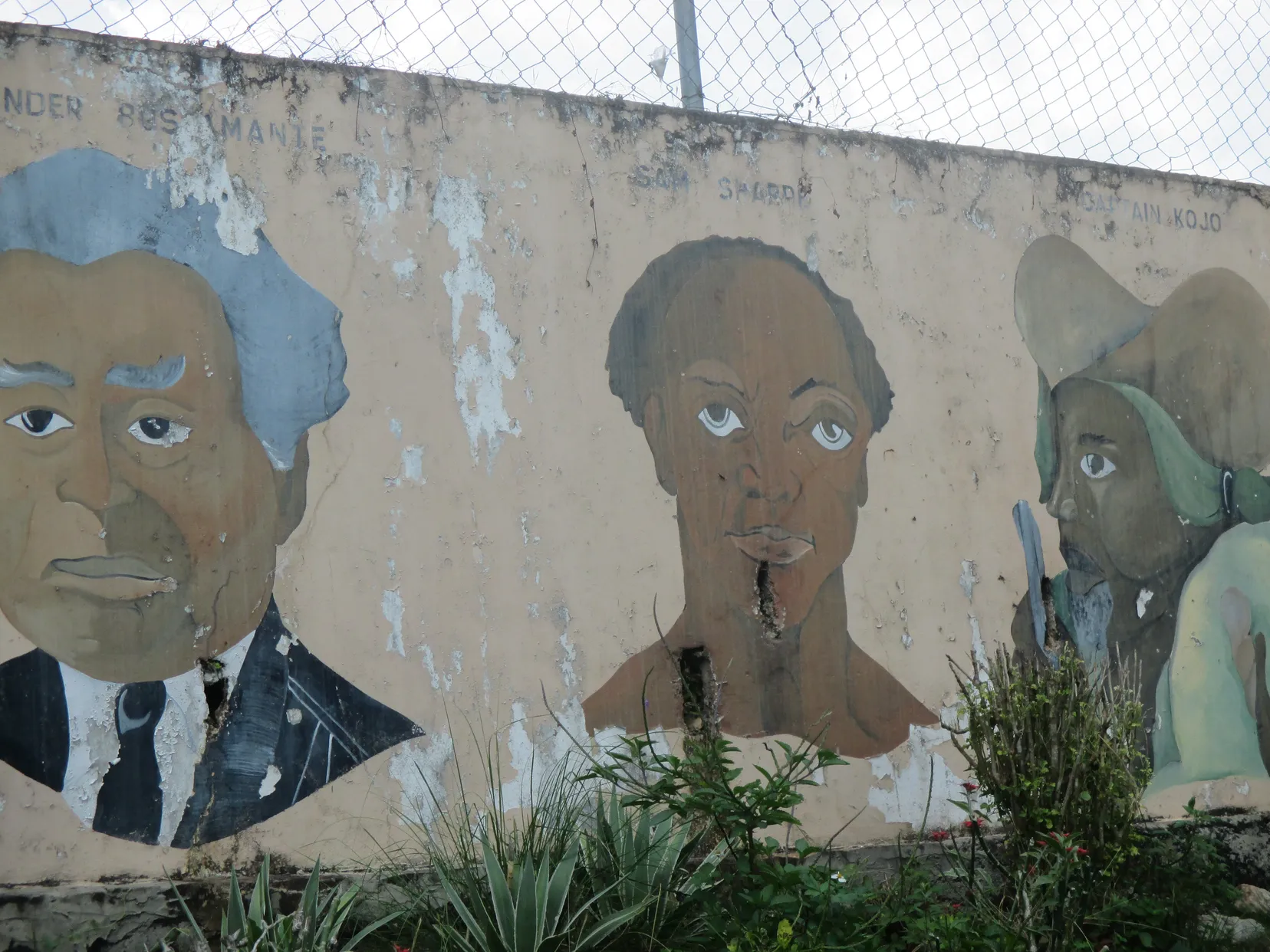
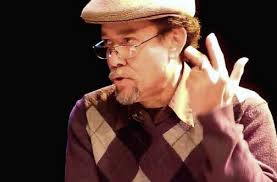
Het is heerlijk praten met Clive Chin, de legendarische producer van Randy's en sinds enkele jaren een graag geziene gast in het reggae revival circuit van soundsystems, lezingen en workshops. Op 23 maart in Antwerpen.
Wij zouden uren, dagen kunnen praten met Clive Chin (58). Hetzelfde gevoel overviel ons vorige zomer bij Bunny Lee, ook zo'n fameuze producer, net als Chin een man die een diepgaande invloed heeft gehad op de evolutie van de reggae in de jaren '70. Dit zijn de mensen die het allemaal vanop de eerste rij hebben meegemaakt, die nog weten hoe zangers en muzikanten debuteerden, welke bands er speelden op de tunes, wie wie imiteerde…
In de hoogdagen van de reggae, en dus ook van Randy's en Chins eigen label Impact, besloot vader Vincent Chin te emigreren naar New York, om daar VP Records op te zetten, vandaag de grootste reggaeverdeler van de wereld. En Clive moest mee. 'My intention was that I would help him set up a business, but his intention was that I would stay there. I rebelled. I fought like hell. Taking me out of what I was doing, of what I loved to do, of my environment? I don't think so. But in the end I stayed with the family in New York. Opened a Jamaican restaurant in Queens.'
Gelukkig kon Clive Chin tegen dan al een prachtig oeuvre voorleggen, de muziek waarvoor hij nu pas wereldwijd erkenning lijkt te krijgen. En dan hebben we het nog niet over de vele honderden tapes die al die jaren in de kast zijn blijven liggen, al dan niet aangevreten door de tand des tijds. Chin is volop bezig met de recuperatie en restauratie van die verborgen parels en wil dat materiaal de komende jaren ook uitbrengen, in het zog van de toch al zeer bijzondere compilatie-cd's in eigen beheer die hij de laatste jaren verspreidde op concerten en festivals.
Hoe begin je aan zo'n gesprek? Gewoon, met een lijstje van nummers die zijn opgenomen in Randy's en geproduceerd door Clive Chin. Meer heeft de man niet nodig om een zalige wandeling down memory lane te maken, en en passant een paar nieuwe hoofdstukjes te schrijven in de never ending story of reggae music.
Java (Augustus Pablo)
'I just recently got some control over this track, since the Pablo-estate has been on a hold for so long. They were claiming a 100% of that song, and I said: hell no! I wrote that track, I commissioned Pablo to play on it. And I can exactly tell you who was in the studio that day: Fully (George Fullwood) on bass, Santa (Davis) on drums, Chinna (Earl Smith) rhythm guitar, Jackson Jones lead guitar – he never played a solo like that in his life. Familyman (Aston Barrett) on piano and Ossie Hibbert on organ, a Hammond B3. Tony King on percussion. It was a big session, after a Jimmy London session. Have some good tunes of him too, you know. 'I will': big tune!'
'Pablo had already recorded a few tunes for Herman Chin-Loy (no family). He brought his instrument with him, the melodica. Originally, 'Java' was a vocal love song. We recorded it, vocals by Noel 'Bunny' Brown of the Chosen Few, but the lyrics didn't fit the tune, so we scrubbed it and let Pablo play a tune. The Java-theme was my idea, inspired by the song 'East of Java' by (US soul heroes) Curtis Mayfield & The Impressions. Pablo took the dub plate and came back with this melody. Minor chords, far eastern sound: I loved it. I changed the whole perspective, from a vocal to an instrumental song, adding some flavor to it, like Bunny saying 'from the east to the west'… The man Scotty say 'Java!', and I echo it. I realized this was a new and very different sound.'
'Java' was considered an instrumental tune, like Lee Perry and Clancy Eccles used to make. It went straight to number one and was chosen instrumental record of the year 1972. The concept of dub came right after that. Although most of the tracks on 'Java Java Java' are instrumentals, it is now considered a dub album, arguably the first in history. 'Blackboard Jungle Dub' came later, as I remember well, and so did 'Aquarius Dub'. Also, 'Java Java Java' wasn't made as a commercial album but for the sound systems. That's why we did a limited edition. Otherwise it would have had all the credits on it.'
'The case is settled now. The royalties of 'Java' are divided 50/50.'
King of Babylon (Junior Byles)
'Junior Byles was a person of poor health. He was under Perry's wings for a while, a man who didn't caremuch about people's health. He recorded some good material though with Lee Perry, and also with Chinna: 'Fade away'. Chinna wrote that tune, by the way. It all really depended on who wanted to take care of Junior Byles. Chinna tried but he too failed, because Junior ran away or something.'
'Satisfy my soul Jah Jah' (The Wailers)
'I didn't think these early songs of The Wailers were gonna work in Jamaica. Too commercial. They were listening a lot to American rhythm & blues at the time. I would have done more recordings with The Wailers still, if it wasn't for the direction they were going. Lee Perry brought them to Randy's and they made some of their best recordings there, but I didn't like the packaging, the way Perry presented them. You remember the sleeve of this Lee Perry-album ('Soul Revolution'), The Wailers all dressed up in a military style with guns? Bunny Wailer got very upset about that, it even came to verbal conflicts. Bunny is a very spiritual person. He can be very nice but he can also be arrogant. He wasn't satisfied at all with the result, I guess because they didn't have any say in the production of the music.'
'I witnessed one session, when the whole group was there. First, Perry had to bless the studio, with white rum, the blessed ital rum. I don't recall which track they recorded but I was very impressed.'
'Musically, Peter was definitely the most gifted one of The Wailers. Bob was very impressed when he heard Peter play the guitar, and so was Bunny. On the '69 recordings he played a lot of instruments: guitar, piano, percussion… Later Peter recorded two albums at Randy's, 'Legalize it' and 'Equal rights'.'
Rootsman (Senya & The Wailers)
'These were joint productions with (Aston) Familyman (Barrett). We built de rhythms first, then added singing, but everything was played live. At the time it didn't say The Wailers on the record, because I couldn't use that name. Now Fams have given me permission to do it.'
Foot of the mountain (Dennis Brown)
'The records weren't manufactured in big quantities. This is just one of many big tunes that got lost in the dynamics of the business. I know that Dennis re-recorded that tune for Tapper Zukie but it originally came out on a downtown black and white label. Freddie McKay made a tune on the same riddim: 'It won't get away'.'
'I didn't usually sell the tracks themselves. Maybe a dub plate, for sound system use only. Selling the tracks is bad business. You know that tune 'Feeling high'? Rupie Edwards didn't produce that song. He bought a track and built this big album around it. People didn't just steal each other's tracks, they bought it. But it's always the producers who hold the masters, never the artists. Gussie (Clarke) bought some tracks from me, to produce Big Youth's album 'Screaming target'. The title track for example, a version of 'No no no', was recorded in Randy's, sung by KC White.'
'Dennis Brown recorded in Studio One first, than Earl Heptone (Morgan) brought him to Randy's. 'Clive, check out that boy,' he said. Dennis was 16, 17 years old at the time. 'Cheater', 'Meet me at the corner'… Most of them were his own songs and he could pick a guitar but it was (Augustus) Pablo who did most of the chords, melodies and arrangements.'
Created by the father (Erroll Dunkley)
'It was his choice to cover this song and we paid royalties for it. If artists didn't get any royalties, it was through Coxsone. You always had to pay Sir Dodd. Most artists didn't know he collected their royalties but he would come after you if you didn't pay him.'
Serve HIM and live (Count Ossie & The Wareikas)
'During the fifties and early sixties, Count Ossie couldn't play in Jamaica. Nowhere. One day Anita 'Margarita' Mahfood, the rumba dancer and Don Drummond's girlfriend, was booked to perform on a Christmas Show at the Carib Theatre. She said to the promotor that she was gonna have rasta drummers on stage. At first the promotor refused but finally the drummers came on stage, in the back, out of the spotlight, but it was definitely a breakthrough.'
'Fattie bum bum' (Carl Malcolm)
'The only work I've done that had any international success. Reach to number 8 in the UK. But the copyright was with the artist, Carl Malcolm.'
Sing a song of freedom (Max Romeo)
'I did some great works with him. 'Chi-chi bud', '2000 years ago'… Still looking for 'Jamaica may God bless you', a beautiful festival song.' I also had a great engineer at the time: Erroll Thompson. Used to go to school with him, sing in the school choir. He started out as an apprentice in Studio One, under Sylvan Morris, then he came to Randy's. The sound he created there, he took to Joe Gibbs. They even duplicate the studio. Same sound board, because that was the whole idea: to get back the same sound as in Randy's. To be honest: I hated Joe Gibbs because Erroll should not have left Randy's. But it wasn't my call to say pay the man some more money and make him stay. That's all he wanted and he deserved it too. He was working 24/7. Still, to break up that kind of feeling and relationship… I was very bitter.'
Dub Babylon Dub (Impact All Stars)
'A dub version of 'Fly Jah Jah Fly', a cover of this German disco record ('Fly Robin Fly' van Silver Convention). I had that record. In those days, we test everything, and we test it to make it better. Nice line-up there. We had Pablo Moses singing.'
Going to Zion (Black Uhuru)
'I know them through someone from Greenwich Yard, Dennis Williams. I booked them some studio time and we did a couple of tunes, around the mid seventies. The line-up than was Duckie Simpson, Garth Dennis and Don Carlos. Pablo played piano and he blew on the intro. They had another tune but I'm still searching.'
Love of a boy (Nora Dean)
'She's a born again Christian now. You can't get her to talk about barb wire in your underpants anymore.'
Lag samen met Jah Shakespear aan de basis van Reggae.be; eerst als recensent en interviewer, en vanaf eind 2014 ook als hoofdredacteur. Verdeelt zijn tijd tussen zijn twee passies: muziek en Haile Selassie.
Feb 15, 2013