






.Dl7BAwhJ_ZJXLLF.webp)
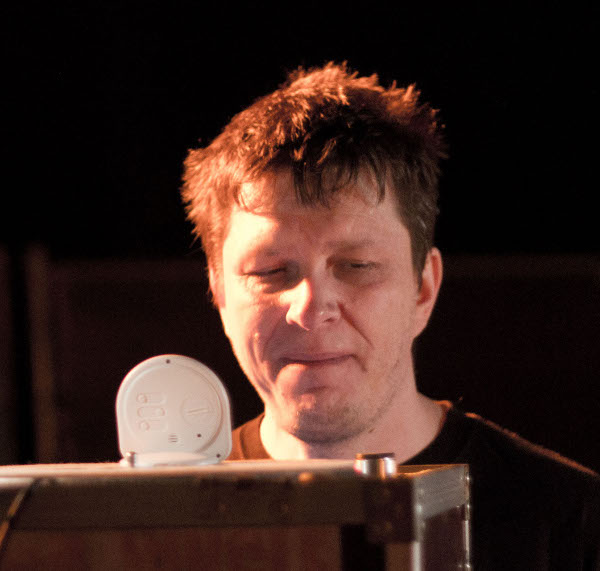
Russel Bell-Brown, beter gekend als Russ Disciple of Russ D, heeft een indrukwekkende staat van dienst in de UK-dub scene. We spraken Russ D backstage op het ReggaeBus festival in september 2011, toen hij er met Jonah Dan een set kwam spelen op de Blackboard Jungle Soundsystem.
Samen met zijn broer Lol vormde hij in 1986 The Disciples, en bracht onder deze naam 4 instrumentale dub LP's uit op Jah Shaka's King of the Zulu Tribe- label. Vanaf 1991 trokken de broers door de UK met hun eigen Boom Shacka Lacka soundsystem, tot Lol besloot er mee op te houden. Vanaf dan ging Russ alleen verder met DJ-en, producen en studiowerk. In de afgelopen 25 jaar bouwde hij een indrukwekkende discografie op: hij werkte samen met een lange lijst artiesten van Prince Allah en Michael Rose tot Sister Rasheda en Tena Stelin en produceerde en mixte nummers voor labels zoals Jah Tubby's, Cultural Warriors, Jah Warrior,… Je mag gerust stellen dat "mixed by Russ D" een kwaliteitslabel is voor nieuwe releases uit de UK. Russ D richtte zelf twee labels op die twee verschillende kanten tonen van zijn muzikale universum: Backyard Movements staat garant voor tunes met een Jamaicaanse touch, Boom Shacka Lacka voor loodzware steppers.
Greetings Russ D and welcome!
One thing that really speaks from your productions is the rich vibrations you put into the basslines. You also know the ins and outs of soundsystem equipment, so I guess you're the best person to ask: why should we play reggae on a soundsystem?
Why should we play reggae on a soundsystem? Soundsystem brings out things you don't hear when just play a record at home. The first time I noticed that was at a Jah Shaka session. He played one particular tune that I had actually gotten rid of a month before the dance: Johnny Clarke's 'Bad Days are going'. Now you know Johnny Clarke's killer tunes from the seventies, the tunes he did with Bunny Lee and mixed by King Tubby - those are your key Johnny Clarke tunes. But 'Bad days are going' is from slightly later, it's a steady, sublime mix. And when you listened to that record at home, the power of it didn't really get across to you. But when you heard it in a dance, you could hear that bottom end just dropping in -BOBOBOBOBOMBOMBOM- and the tops just whiplashing away…then it suddenly made sense: this tune was built for soundsystem!
There's something in a reggae bass that's totally hypnotic: it captures you, it grabs you by your spine and fills up your chest. What is it about such an intense bass signal that is so attractive?
There is this thing with basslines in reggae- they always kind of talk to you. And that's what the soundsystem does: it just pushes this bassline into your face. The bassline is saying something in the way it moves! Lots of basslines in dub music today sound a bit like they're played on a synthesizer with one finger. No man, you've got to make the thing play! When you're a live bassplayer, you're moving your fingers around and playing with the notes, you're doing some talking! I believe that needs to come back in a lot of people's productions. Because the bass in reggae is the melody! And all the other stuff is just the thrill around it.
Soundsystem can get people in a kind of trance. Is that something you're trying to achieve when you're playing?
Well, there's two things there. The music really used to be about the message, and a lot of people miss out on that nowadays. I'm not black or rasta, I don't have the pretence to act so, but for me the music has to have that message. The crowd of dances has changed: when I went to see Jah Shaka play in the eighties, it was a purely black crowd. There were never more than four or five white people in the room. You'll understand it was a very cultural happening: white people obviously have a different background, so I think it's quite hard for them to understand what's going on on a cultural level. They focus on the music and the bassline, but they don't hear the message.
When Shaka played a tune like 'Kunta Kinte', his famous dubplate, its sheer name "Kunta Kinte" really meant something to the black people in the dance. Shaka could run that dubplate every time because it's a part of a certain history. Sometimes people would form a choir and shout and chant in response to that tune- not just to the heavy bassline, but to what it meant to them.
What actually touched you those first times you went to soundsystem sessions? What made you decide to make dub music yourself?
Shaka wasn't the first sound I went to, that was a session by Jah Revelation Sound. They played the typical eighties rubadub sound - sure interesting, but it didn't really touch me. During the mid-eighties I was going to record shops in London, and some of the owners were longtime Shaka fans, they were always playing his session tapes in the shop. Me and my brother knew of Shaka, we knew his records, but we lived in the suburbs and we didn't know anybody else into reggae or soundsystem. And I was already making music at that time, but that was more like versioning the typical Studio 1 tunes. But hearing Shaka's sound on tape just pricked something up in my ear, I wanted to make my tunes sound like on these session tapes.
So I started making dubs in a very rudimentary bedroom-setup. After a while I took my tapes to those guys in the record stores, and they told me to take them to Shaka! Lol and I didn't even know Shaka was still playing out, not too many people were attending his dances at that time. Shaka had an arts 'n' crafts culture shop at Newcross those days, so I took my tunes to his shop. He said he wanted four different tunes and four different mixes of every tune, and he gave me a flyer of his next dance. So me and my brother went to this dance, and we saw the whole lot of it: from them arriving, setting and stringing up the soundsystem. We didn't even go into the dubplate part of that session, because around three o'clock we were mashed and went home. But from that evening on, I knew what I wanted to do. I wanted my tunes to fit the soundsystem, to drop heavy: Freedom Sounds-type of tunes, Shaka-type of tunes!
You once said you did everything you could do with UK steppers in the nineties, that's why you moved on to productions with a more Jamaican feel (deze nummers bracht Russ uit op o.a. Backyard Movements). How do you think the sound of steppers will evolve?
They have evolved, but in a way they still sound a lot like the steppers of 20 year ago. Reggae music is what it is, and you can't really change it. In the nineties, a lot of outsiders were interested in UK dub, and they tried to push it in a direction that fitted their style more. Sometimes people that wanted me on a compilation asked me to put a house hi-hat or a breakbeat in my tunes- but I don't make house or breakbeats, I make reggae and dub. You don't want to remove yourself too much from the core of the music, otherwise it just really ain't that music anymore. And if it ain't it, I don't really want to listen to it anymore.
You mentioned your brother Lol: you used to run the Boom Shacka Lacka soundystem with him for about five years. Then Lol decided to pull out and you stopped playing with the soundsystem. May I conclude that a soundsystem is an effort too big for one man?
Yes, a soundsystem is a big effort for one man to run. Some of the older sounds like Shaka's or Tubby's might be operated be one man, but they would always have a crew of bredrins around that would help them lift boxes. But I also heard stories about soundmen who did everything on their own, moving boxes, stringing up, stacking amps, plugging cables… But it was a combination of reasons that made me stop the sound, one being that the whole UK dub thing was going into a direction that I particularly didn't want to go into. Like I said before, my background of listening to reggae was just reggae music, like Bob Marley, Studio 1 and all that, the whole genre. But in the nineties, UK dub took over everything. It was good in the beginning, it was fresh and vibrant, but after a while it was the only thing you heard. With Boom Shacka Lacka we also played a lot of Jamaican tunes, but most of the crowd that turned up wasn't appreciating them - especially back home in London. I missed playing my Jamaican tunes alongside what we were doing in the UK, so I decided to finish the soundsystem and focus on studio work. And I would have stopped DJ-ing all together as well, if I didn't have a booking that I received months in advance. It was at the Culture Promotions Dub Club, and the only reason I didn't cancel that one was because the organizers just really wanted me to come. I agreed to do a short DJ-set, but only if I could play how I wanted to play. So I played some revival tunes, some new yard tunes and some of my own things… and the crowd actually enjoyed it! Another problem was that my brother used to be the mic man of the sound, and it's really a bit dry to play tunes without a good MC by your side. But I had a couple of guys that helped me out, like Wayne McArthur, Delroy Dyer and eventually Jonah Dan. Me and Jonah have been playing out together for about 15 years now.
One more question. You have experienced yourself how reggae has quickly spread all over the world through the worldwide web. Together with the music, the image of Haile Selassie I turns up all over the internet. Young people grow their locks and wave the Lion of Judah around on dances, they identify with the rasta message. But sometimes they have no clue of what they're actually trying to identify with. How do you feel about this, being a white producer in a genre that once used to made strictly by black people?
I wouldn't say it's a bad thing if young people act that way, but here's one thing: you do have to know where you come from. It's too easy to dread up and "praise Selassie", just like you would wear a badge, you know? It's like a uniform then, and that's not the way it's supposed to be. I never took it on myself. I might wear the odd T-shirt with something on it, but it's not up to me to do them kinda things. I'm very careful about those things. One of the reasons my brother was having some difficulties with the soundsystem was because as a mic man, he sometimes sang lyrics from songs he knew that were religiously orientated. And sometimes people- often rasta's- would ask him questions about that at the end of a dance. How would my brother answer that? Because the content of those lyrics didn't really fit him, and it became a mental struggle for him. You know, you have those people that will sit down, read the bible and read a lot of books about rastafarianism…fair enough! If they live a good life, it's not up to me to judge them. But I know it's also not up to me to be a part of that- I just produce music.
And we're very curious to see what you will do tonight. Thanks a lot for your time!