







.Dl7BAwhJ_ZJXLLF.webp)
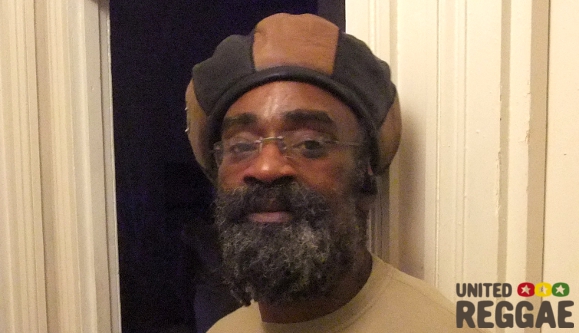
Voor hij definitief naar Jamaica verhuisde, konden we selector Spiderman van the Mighty Jah Observer nog strikken voor een interview.
Two weeks ago you played at Irie Vibes, tonight at Reggae Geel. Do you like the vibes in Belgium?
Yeah man! It was very nice! It was the first time in Belgium. I didn't realize there's so much going on here, but better late than never, you know.
Indeed! There's a rumour going on that you're doing a European tour right now because you will soon move to Jamaica. Is that correct?
Yeah, I'm moving to Jamaica. Some people say I'm retiring, but I am not retiring! I'm just going to live somewhere else, and I'm taking some of my sound with me.
Are you still going to play over there?
Yeah, yeah, sometimes in the few, once I'm settled. You'll probably hear when something's going on.
Where are you going to live in Jamaica?
St. Thomas, Morant Bay. Yeah! Away from the tourists, in the hills!
Better weather than in the UK!
We hope! (laughs)
Can u explain us where it all started for Jah Observer? And how did you end up in the UK?
My parents brought me over here when I was 5 or 6 years old. Musically, the first thing I can remember, as a child, was walking up to a turntable. In those days the parents used to carry their kids to parties, and I remember walking through a lot of legs, and they used to have these old German blue spots radio grams with a turntable. I remember going up to the turntable to actually touch the record, and someone beated me up.
Was that reggae music already?
Well, it was ska, blue beat, Fats Domino and stuff like that. At school, when everybody was interested in girls, cars and football, I was using my dinner money to buy music, and as I had collected the music, people used to ask me to play on their parties: birthday parties, weddings, … But the equipment I used to play on was rubbish, so I thought I'll make two stereo boxes, because at that time I was into HiFi. Then I bought a pre amp and two turntables, like a disco! I didn't know you needed a van, you needed help or anything. (laughs) Yeah, so that's how it started, and gradually a box here, a box there, more power and so on.
For how long do you run your own sound system now?
Well, my first soundsystem was probably in 1972.
Way back! So that means you're playing sound system for about 40 years! You must have a big collection of records.
Yeah, I'm holder when it comes to records!
Are you taking them all to Jamaica?
Yeah, I'm taking it all to Jamaica, so I have to count all my 7 inches, all my twelves, and the customs, you know. And then I'll sell some. There are always some I don't want, but someone else does.
What was the inspiration for the name Jah Observer?
Well, originally, the sound was called Tipatone, but at that time there were many sounds called Tipatone. So at the time I used to go round and listen other sound systems. Every time you looked around, I was there, as a little youth, next to the sound system, looking what was going on. So one day, I don't know who it was, he just turned around and said to me: "Wha youth, you always around there and observe!" He said that to me and I thought "yeah". Then, because of the Observer label, I had to put a differentiation. It was "the Mighty", but through a printing mistake the "Jah" came in, you know.
So it has nothing to do directly with the label?
No, Niney runs the label in Jamaica. I got a lot of his music though, but I didn't even know, at the time, when I got the name. It was only after that I found out, so I got to make it different, let the people know.
You also call yourself the original valve sound system. Why is that?
Because we use the old amplifiers, you know, the tubes, yeah. That's what we used, because I like the sound.
Is it hard to maintain now, because you need the lamps?
Well, yeah. U can still get them, if you go on the internet and you can pay between 12 pounds each to 55 or 60 pounds for one. So to tell the truth, the only reason why I still had the old amps: I couldn't affort the new ones, and people said "We love that different sound", so that's the main reason.
You're very well know from the Notting Hill Carnival in London, where you play every year. How did you get involve there?
I used to work for Rough Trade, and I just asked the boss one day: "I need some power. Can I play outside the shop?" He said "Yes" and that's how it started! It was a different place to where we play now. But I'm very surprised about the success of it, really, because at Carnival, I don't play for no one, I just play for myself. I don't want no requests, even though I say on the mic "This is a request and this and that". I'm not playing for them, I play for myself, all my tunes, because you're not paying no money. If you like what you hear, you'll stay. If you don't like what you hear, you go on. So, I try to play all my favorite tunes over there, you know. (laughs)
Now you are moving to Jamaica, does that mean the next Carnival you won't be there anymore?
No, this is our last one. Next year, we're trying to get a sound called Solution Sound to fill in our spot. Then maybe the year after I might come back, because I gonna come back for my daughter's wedding, so I come back and let everybody know to do a guest on their sound. If there may opportunities come across, I can do one or more shows in Europe.
Are you keeping the British passport?
Yeah, I'm a dual citizen. I'm Jamaican and I'm British. No problem!
You're in the reggae music a long time, so you have seen all genres passing by. Can you say when and how the dub music really arose in the UK?
Well, you could ask everybody and everybody's got a different interpretation, but on my part of view a dub was always the B-side of a record. That's just for the man on the street. For a sound system man dub means: that's the original copy, this is my copy, it's been dubbed, a different mix to you. But when I was coming up dub meant hardly any vocals. It was pure rhythms, echoes, a little bit of voice, and you could hear it all night long, you know. So that's what I call dub.
Is it important for you to play dubplates?
No, really, it's all about the music, whether it's on a 7 inch, an album, dubplate,… Sometimes you may have a cut on a 12 inch, which is a different mix from the 7 inch, and the only reason you have a dubplate is because you have a different mix, what no one else has got or not many people have got, you know, but I don't care what's it on, it's the music that's important!
A sound system is not only a way to spread the music, but also to spread the message of Rastafari. Is that the same for you?
Yeah, well, when I started my sound, I was the only Rastaman in my sound. We used to play a lot of lover's rock, we used to play R'n'B, we played a lot of parties, you know. We used to be very entertaining, because, really, I'm a lover of heart. I like sweet reggae, but I like to hear the artists who are saying something conscious, you know, because when you can go to a dance you don't come out with nothing, you know. I like to feel when you come out. When you go to the dance, you're enjoying yourself, but also your brains, you know, you get a little consciousness through the music.
That's why you became the operator of Jah Observer?
Yeah, and I play this certain type of music, because I don't care if it's ten or fifteen years old. From it's good it's good, and a lot of sounds play them. So I try to let the people know: before this, there was this.
At Irie Vibes you also played at the afterparty with the Chalice sound system from France, who you have a strong connection with. How did you link up with them?
They were one of the first European sounds to invite us over to their place, so we brought them over to Nottingham Carnival, and then from that we became good friends you know. With us and them it's more than just sound system. We visit each other and so forth. Chalice came to my wedding in Jamaica! (laughs) Yeah, he surprised me. He said he wasn't coming, and then he just turned up in the church, you know!
Way back, there was more like a clashing atmosphere in the roots scene.
Well, it depends, because in the older days, it wasn't a clash between the roots sounds as such, it were just sound systems, you know. In the older days there could be a lot of violence between sounds and sounds, and competition. Once it happened to me. There was a big fight in the dance and I said: "No more competition!" I'm not doing it for competition. You're the number one sound! I'm the bottom sound! You're the best sound! I'm not there for the competition. I don't have to prove anything to anybody! (laughs)