








.Dl7BAwhJ_ZJXLLF.webp)
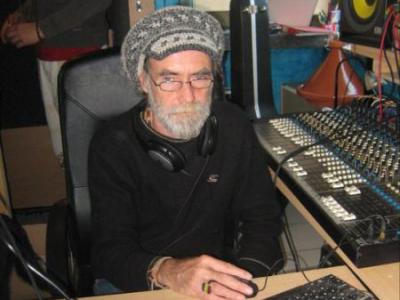
'People call me a dub man but I think of myself as a reggae man,' says Jah Rej of Jah Works.
Jah Rej (Reginald Forte) about:
I'd been listening to reggae music since I was 11 or 12 years old. I used to listen to Radio Luxemburg and one of the deejays there played reggae quite often, tunes by Jimmy Cliff, Desmond Dekker, that kind of stuff. I just fell in love with the music. One of the things for me was that the lyrics often were about wider issues than baby baby I love you. That was a eye opener for me.
Buying 7" singles on the Trojan and Pama labels, I heard the instrumental rhythm tracks on the b-side evolve into dub. I loved the space and the echo's. It sounded like a surreal version of the original track, like you have surreal paintings by Dali or Picasso.
In the early days there were only two significant UK bands, The Cimarrons and Matumbi. Matumbi's Dennis 'Blackbeard' Bovell (of LKJ fame, ed.) was probably the first UK dub producer.
Before I had the Jah Works label, a had a kind of collective band called Kaya, and we did some recordings in the old Ariwa 16-track studio in Peckham, which for us, young UK musicians, was a great experience. We each payed 7 pounds to pay for the studio time.
I have the greatest respect for Jah Shaka. In the 70ies every sound in the UK was a roots sound. After Bob passed away, it was like every sound turned into a dancehall sound. Only Jah Shaka kept to the roots 100%.
The first time I saw him was in the Central Club in Redding. It was the most amazing experience I ever had in my life. There was only one other white guy in the audience. It was so culturally different, being used to disco and such. The first thing we noticed was that you could hear the music on the parking lot but that half of the people were sitting in their cars, tuned in to David Rodigans radio show, which was also on Saturday night. They knew Jah Shaka was gonna run till morning anyway.
I walked in through the double doors and the bass almost drew my clothes off. Waw, this is amazing, I thought. Shaka played tunes like Vampire (Lee Perry) and he created a swirling sound with echo's and sirens. I was taken by it, and from then on went to see Jah Shaka every time he was in Redding, which was every month or so.
There was a point where Shaka only played small community centers but then he went to play in places like The Rocket, that could hold 2000 people. Obviously, you get a wider audience, like students. But also the culture of the dance has changed. Before, they were much more of a spiritual affair. Not so much alcohol, and suddenly you saw people sitting on the floor, rolling joints. If you went to West-Indian dance, you would never see that. You wouldn't see drunk people either, and if you did, they were snorted aout.
I was already making my own music by that time. I loved roots music, and I was fairly disappointed going to dances around 1980. Jah Shaka inspired me to establish my own sound, and he actually contributed to it. And with the music he produced himself, he's kind of responsible for the whole UK dub scene. A lot of operators like Aba-Shanti modeled themselves to Jah Shaka. He's such an influence to the Uk scene, and therefore also on the European scene.
The height of these sounds was in the 80ies. Especially the black youths went in another direction in the 90ies, more hiphop and dance. Which was a pity. A very strong British culture got diluded. On the other hand I'm very glad to see the movement very much alive and growing on the continent. That 's one of the reasons I'm living here now, in Belgium (Kortemark, ed.). There's more potential over here.
I called my label Jah Works because I wanted to set myself a high standard. When I was buying music of a certain label myself, Jah Shaka, Twinkle Brothers, I always knew what I was getting. You could buy these records knowing that you were gonna get good roots and culture. Other labels just made reggae.
The first release on Jah Works was a cassette album. I'd been in several bands around Hungerford where I used to live, and then my wife and I moved to Redding, because of work. I decided to bring together some of the talent in my local area. Newby, Redding, Hungerford, a little area in Barkshire, England. We used two studios in Redding, one for the live band and one for the more studio based music. The cassette came out in 1987, and I managed to get a distribution deal with Southern Record Distribution, one of the biggest independent distributors in the UK.
That was a good start-off, but what also boosted my career in music was that I send some of the tracks to Jah Shaka, with the message that I would gladly take the tapes to London and cut dub plates for him. The next I know is a friend calling me to say: 'Shaka has played five of your tunes in the dance last night.' He apparently cut them straight from the cassette! It came as a real surprise to me but form then people started to ask for these tunes.
The first vinyl release was a track of the cassette album by Martin Campbell, Who can we run to. Martins father was in the British army, and was stationed in Jamaica for a while. That's where Martin grew up partly. Then they moved to England where a lot of the local people couldn't understand why this white man was speaking with a Jamaican accent.
Everything start with the drums. I can conceive a song with a guitar but I start the recording with a drum pattern, that's the foundation of everything. Sometimes there are real drums but due to studio limitations back then I wasn't capable of recording a live drum kit. But being a drummer myself, I take a lot of time to create drum patterns that sound real. Which wasn't easy only using a 4-track cassette in the beginning. We re-cut it at Channel One UK.
Martin used to play a lot of instruments, I did to, and there was a nice pool of musicians if I needed an additional guitar, or horns. I called them Roots Crusaders, later Seventh Sense.
GT problaby was the first white artist seriously doing reggae. He got a deal with a major company and released two albums, The Reggae Guitars en Reggae blue. But the company he signed for didn't know how to promote reggaen which was a shame because also Island Records were after him at the time.
I remember being an art student in Torquay, going to the record shop and seeing GT's first album. I thaught: 'Wow, a reggae album by a white man. For me that was a bit of an inspiration since reggae music was made by black Jamaicans, that was the preconception.
Years later I got to meet GT. He was running a little studio in Ladbroke Grove, and he contributed a track to first album Utopia. Then we went on to record an instrumental album The Outsider Meets Jah Works At Channel One UK. An underestimated album, it's got some beautiful rhythms and melodies on it. But it didn't get a lot of exposure.
There's a kind of clarity and space of smoking, that's reflected in the music. I don't think dub would have come about without the inspiration of ganja.
I've always been a great admirer of Lee Perry. I've studied his music, especially the Black Ark period. There was a timeless atmosphere in the music he created. That's why these old recordings outsell most modern reggae releases. My tune Binghi in the jungle was done using almost the same kind of equipment, including a 4-track Teac machine.
I've had a few experiences with licensing but they were not very rewarding. I make music for the artistic andspiritual side of things. It's nice to earn a living if you can but that has never stopped me from making music.
I linked up with him at Myspace. He had some tunes, I heard him playing the trombone and I thought: waw, this man is really good. I asked him to blow over some Jah Works riddims, it was great collaboration. But it happened completely remotely, by sending CD's back and forth. It took us about 3 years but it's an album I'm very proud of. Working with a talented musician like that is such a joy. We only met for the first time at the Irie Vibes Festival last year where we played together.
I originally sent him 16 rhythm tracks of which he could make his choice. I'd already sketched in some melodies on the keyboards. A few moments later, to my surprise, he sent all tracks in and I knew I had a great album.
Luistert naar reggae sinds 1977, schrijft er professioneel over sinds de vroege jaren 80 (in De Morgen, De Standaard, P-Magazine, Highlife en vele andere bladen) en richtte deze site op in 2002. Auteur van 'De Rasta Revelatie' (2008) en 'In Het Spoor Van De Keizer' (2016).
Jul 17, 2011