


.Dl7BAwhJ_ZJXLLF.webp)
By Rubi Roots & Apostle
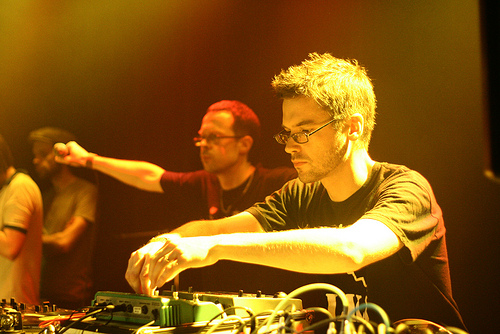
Voorafgaand aan hun uitstekende set in Kavka maakten DJ Stryda en Digistep ruim de tijd voor een aangenaam en uitgebreid gesprek met Reggae.be.
Hello, I would like to kick off the interview just like you are used to do it on your radio show: where did it all start, and how did the two of you link up?
Stryda: Greetings, nice to be here with you, all listeners, viewers or whatever this is going out to. Where did it all begin? For Dubkasm: well, Digistep and I are childhood friends, so, you know, it goes way back. In terms of the music, we both used to go record shopping during the nineties, and we were going to various record shops around Bristol, which is our home city. We both happened to be in the same music really, Digistep buying lots of dub albums and me buying 7", 12" vinyl releases. That then developed into Digistep studying music at school and then I got into selecting the records and got a radio show, so, it kind of developed from there, and we started Dubkasm in about 1994. The first release was in 1996 on an album called 'Dub Out West volume 2'. So it was a real sort of mutual love for the music. That's how things began, but I think our roles have become producer, musician and executive producer I suppose. But really, it's just two friends making music that they love. (laughs)
For how many years exactly do you host the Sufferah's Choice show on Passion Radio Bristol? And do you still like it?
Stryda: Yeah, Sufferah's Choice show started in 1996, when I was 18, so it's actually been going 15 years this month, so a long time! Do I still like it? I love it! (laughs) Yeah, I love the Sufferah's Choice. (every Monday 7-9pm GMT, red.) It's a real passion and a real commitment, because I don't get paid for doing the radio shows, so that's 15 years of doing it for the love really. But the inspiration it gives people and the feedback I get from listeners now all around the world when we're playing as Dubkasm, get to meet the listeners personally, gives me that drive to keep going and spreading the vibes!
You had a lot of guest sessions on the radio. What was the most memorable one?
Stryda: I think there have been so many great memories for live experiences but I would say some special ones are ones that Digistep and I have shared with pre recorded radio interviews, a bit like this. There are a lot, but I give two. One a dem was meeting up with Jah Shaka. Digistep and I linked him in Brixton and we got into his car. I had an old mini disc machine, which was actually very new about then. We interviewed Shaka in his car in Brixton there and that was definitely a massive moment for us, you know. Shaka gave some great answers and was really accommodating. After we finished the interview he said it went really well and then Shaka looked round to us and asked: "Have you ever met Norman Grant from the Twinkle Brothers?" We both said "No!" Then he silently drove on and we parked up round the corner. He made a little quick phone call and Norman Grant stepped out of his house and got in the car as well. (laughs) We were suddenly sat there with Digi in the back with Norman Grant, me in the front with Shaka, and another interview took place, which was fantastic! And obviously meeting Augustus Pablo in London was really special. Wouldn't you say, Digi?
Digistep: Yeah, that was definitely an inspirational experience meeting Pablo 'cause he's one of my number one influences. Some of the things that he said really stuck with us and in fact kind of influenced our music way down the line, for example him talking about the importance of original rhythms for original songs and original lyrics, rather than rehashing old ideas. That was performed on our album 'Transformed in Dub' with a clip of the interview and also with a quote on the cover. I think that whole search for originality and innovation is quite a major part of my production head and our sort of general approach to music, whether that's in the studio, using technology in an alternative way, or planting in other cultural influences like my Brazilian side, which comes from my Brazilian roots and living there for five years.
That was actually my next question. For your first full album of Dubkasm, 'Transform I', you had a link up with Brazil, which you can clearly hear in the songs. How did you involve in the Brazilian scene?
Digistep: The scene in Brazil is in its germinating stage at the moment. It's very small pockets of people feeling the music and I soon made some links with those people, but as I was living in a very remote part of Brazil, it was very hard to link with those people, so a lot of work was done on a very homemade basis. I would have musicians come to my house in Trancoso and we set up the microphones. We had to close the shutters so the tropical birds wouldn't be picked up. The instruments were recorded in Rio, Sao Paulo, Trancoso, with some real talented musicians, and like I said, I was out there for 5 years, so the Dubkasm operations ended up being a very international affair, because we had to send files over the internet and the whole story. So that was a challenge, but in fact, it kind of brought a richness to the music because we had to go to extra lengths to make it happen. That was very motivational.
Stryda: And just to add to that. Digi spent five years there, as he said, living in Brazil, but his dad is from Brazil, so there's Brazilian roots there anyway. That connection is strong and that's something we both, but obviously Digi in particular, wanted to keep alive through the music and through the album really, with the musicianship.
Next to the album, you also bring out a lot of Dubkasm productions like the recently released 'No Retreat'. What's coming up next?
Stryda: There's always more releases in the pipeline. It's just finding the time to make a release schedule really. The next release is the long awaited 12" of 'More Jah songs' (Tena Stelin, red.). This is the last kind of offering from the 'Transform I' series really, because that's gone over a period of time now. This is a track that people have wanted for a while of the album on 12", so we decided to do it kind of vintage style, disco mixed into the deejay piece from Solo Banton, who is one of the main artists that we perform with live. The flip side is a saxophone and thin whistle solo, and that gets disco mixed into a real heavy dubwise version. I said to Digi "a dub version came on 'Transformed in Dub', so don't hold back with the mix on the 12" and he certainly didn't hold back. It's a real raw rugged piece of dub! (laughs) So, yeah, hopefully that one will be well received. It's gonna come with a picture sleeve as well, kind of vintage style. That one's forthcoming any day now and there's also a couple of 12"s to come from the dubstep remix series: the Pinch back to back with Headhunter, a double sider of RSD and then ongoing many other projects, but that's too far down the line. (laughs)
Digistep: So many…
I was quite happy to see the whole dubstep album actually, with the remixes from 'Transform I'. It's really what you represent, it's really crossover, but I can imagine that not all roots and dub people are really happy about it, because it's not always the same vibe. Does the album get negative reactions as well?
Stryda: There's been sort of murmurs of the odd negative reaction, but overall it's been extremely positive and I think, you know, we love music and that's what brings us together with all these performances we're doing and record buying, selling, producing, etc. I think it's really important we're not blinkered in our outlook with that. We hold the message, the Rasta message, and the message of roots music really close to our hearts, and we like to represent that authentically and respectfully, which 'Transform I' is prove of in kind of an orthodox sense, but it can be very interesting to offer up source material to remixes, for them to offer their interpretation of that music. I think it's about breaking down barriers, not putting up barriers really.
Digistep: I think it's a very interesting question. One point, one feeling I do get from a lot of people is that electronica in general is associated immediately with druggy, psychedelic, rave oriented music. When in fact, if you discuss music and production with the people that we've collaborated with on that album, you realize that sonically and in terms of experimentation and production that's not the tip they're on. They're analytical, talking about textures, and they go to great lengths to achieve the sound they want and to push those barriers so to speak. In fact, we've been to lot of nights where you hear dubstep and similar types of music, and contrarily to people's clichéd image, there are a lot of people there listening to music, taking it in and appreciating the frequencies. I think when you listen to 'Transform I remixed', every single producer approached it from a different angle musically. There's no common threat of wobbling bass lines or anything. I think that's a point worth about.
You're touring a lot these days all over Europe, also often with the talented deejay Solo Banton. Are you well received in the countries overseas and do you find a strong roots and culture scene?
Stryda: Yeah, it's always been a great pleasure to perform in various countries and we've been received very well, thankfully. (laughs) It's been great working with Solo Banton as it 's been with Afrikan Simba and Dub Judah as well. Digi spent a lot of time in the studio and we've spent a lot of time discussing ideas and stuff, and it takes a long time to actually achieve some of these releases and hold them as physical products. It's wonderful having spent all that time, to then meet your audience face to face, and actually see the music visually being enjoyed.
Digistep: Yeah, I think it's a really fantastic experience to go abroad, to visit these places and just absorb the culture of each individual little nucleus and micro scene, 'cause the roots and the dub scene around Europe and the world is not a massive scene, but it's intense and you get this little kind of cells of people that are really enthusiastic about it and knowledgeable about the style of music. When you go to these places, it's just a real eye opener to see how much the people appreciate the music. That's really encouraging and rewarding for us to see this people reacting and actually to be able to talk to them and find out about each place we visit. That's absolutely amazing for us!
Two weeks ago in Gent we heard Dub Judah play a wicked dubplate version of his 'Babylon is a trap' by you, Digistep. Do you make a lot of exclusive dubplate material for artists and soundmen or was that pretty unique?
Digistep: Well, that tune was kind of a one of really. It's been one of my favourite tunes. Everyone loves that tune. We've been working with Dub Judah and that track, production wise, is extremely simple. You've got very sort of raw backbone of digital drum programming with this kind of clavinet replacing in the way a chop would be used. I was experimenting with that idea and I ended up layering up the riddim with no intention of really putting it on dubplate or releasing it, just because it's an inspirational track. I ended up playing it to Judah when we were in France with Zion Gate and he liked it, so we ended up voicing it at the Dub Tech studio (Dub Jockey, red.) and it became one of our regular dubplates.
Stryda: I didn't realize Judah played it the other day so that's nice to know he's running it as well. I'm sure we'll run it tonight here in Antwerp. (ze hielden zich aan hun woord, red.) Overall, to come back to your question, we don't generally do specials for sounds all the time, and one of the reasons for that is our time, which is precious and limited. We've got all sorts of requests via e-mail, but there's just not always the time to do such things and these things just seem to come about naturally once in a while, like Digistep explained with that example, and then the Shaka special we did, 'Warrior', which got released as a different version on 10". But that was built specifically and exclusively for Shaka originally and then he ran that dubplate style for a number of years. But these things tend to be kind a rare for Dubkasm, just once in a while with artists or sounds that really inspired us.
You're playing and producing a lot nowadays, but as far as I know you are not building your own soundsystem. Is that something we can expect in the future or something you leave to others?
Stryda: Well, I'd be very surprised if in a few years time there was a Dubkasm soundsystem, but, you know, stranger things have happened. (laughs) But that's not really on our agenda right now. There's a lot of other areas we like to concentrate on and as I said in one of the answers before, time is kind a precious and limited, and I think you really have to be ín the soundsystem. We both love it and enjoy it, we enjoy guesting on soundsystems abroad and in the UK, but I wouldn't view us as sound men. It's a full time mission and, you know, I'm more of a radio man and deejay, and Digi is obviously a musician and producer, and I think that comes across in our show and makes it the kind of unique show it is, but we don't really claim to be sound men. But we got to give full respect to the soundsystems that play our music and give us endless vibes really.
Digistep: Sure!
Stryda: It's an expensive thing too these days!
Digistep: Sure! (they both laugh)
Then I have one last question for you: you already mentioned something about the message in the music, but what place does Rastafari have in your lives?
Stryda: Well, anyone who listens to the music and the radio show will know that we've always, as I said before, kept the message really close to our hearts and I think we're both thankful for what Rasta's taught us, you know, and we try to portray and release music with that Rasta ethos. It's very simple really, it's about treating your brother and sister as you wish be treated yourself. You know, basic fundamental principals. That's the sort of tradition and values we hold on to and would like to pass on through music, word sound, radio... all forms of media really. So, yeah, we give thanks for the inspiration that Rastafari's brought to us.
Rubi Roots & Apostle
May 07, 2011