
.Dl7BAwhJ_ZJXLLF.webp)
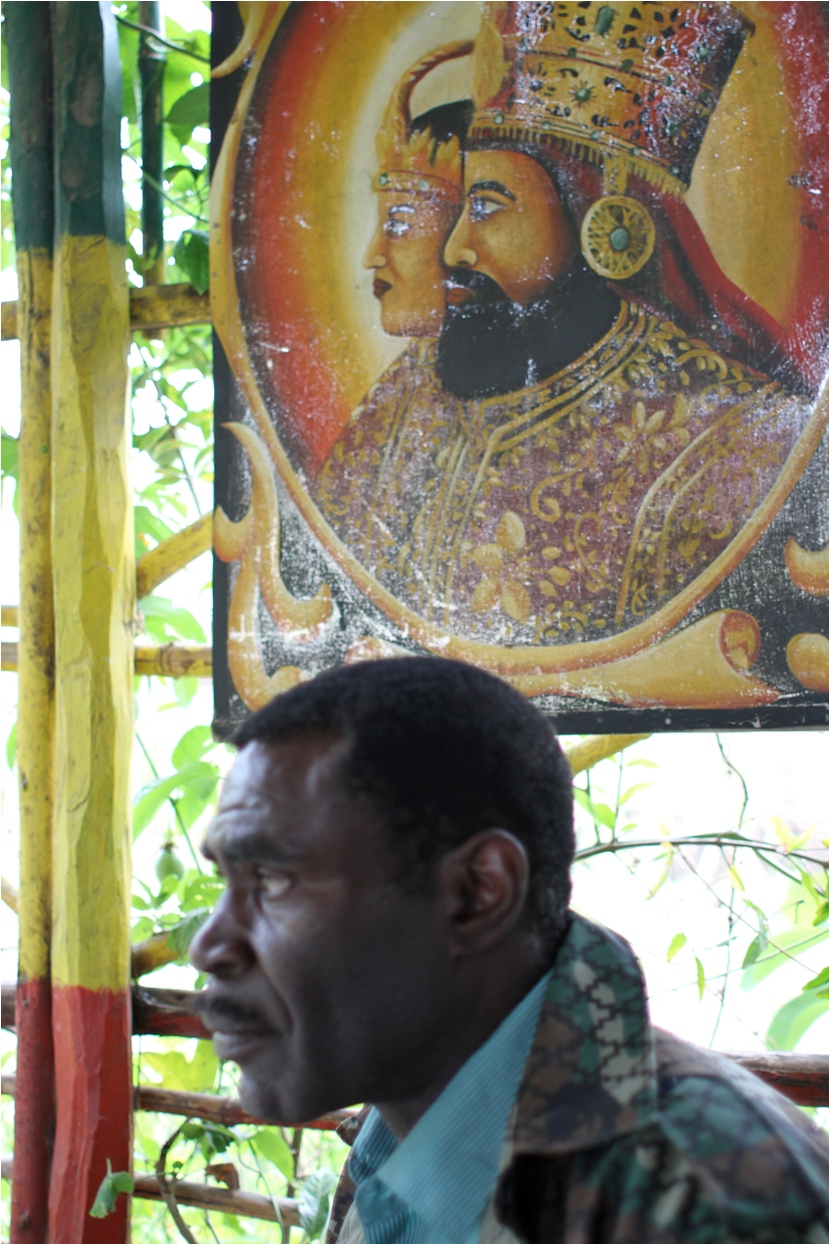
In 1997 keerde Ras Asher Babylon definitief de rug toe. Hij stapte in zijn auto in Manchester en reed dwars door het Midden-Oosten, Soedan en Eritrea naar Shashamene, Ethiopië. Een betere gids hadden wij ons ginder niet kunnen wensen. In 1997 Ras Asher jumped into his car in Manchester and drove all the way to Shashamene, Ethiopia. Today he's a well respected member of the local rastafari community.
"I came in 1997. 'Africa is nearby,' I told my friends, 'and I will prove it to you.' I jumped into my car and drove all the way to Ethiopia. Man, when I entered Ethiopia, coming from Eritrea, it was like a science fiction movie! I was driving in a bubble, mi bredren. A bubble! And I realized I was protected. It was like a shield for me. I almost felt like a saint."
What did you know about Shashamene, and its meaning for black people?
"The whole story, man. Even in Menelik time land was issued for black people in the west to return. Later, in Selassie time, Ethioipia was invaded by the Italians and the Ethiopian World Federation (EWF) was founded in America, to support the country. They weren't allowed to come and fight physically here but they gave medical help and food assistance to the Ethiopian government. Also, from the moment that Great-Britain entered the war, after Italy joined forces with Germany, colonial soldiers were sent here, from Africa and the Carribean. From that time land was issued to black people from abroad in each region, not only Shashamene. Actually, that process already started in 1922 but it was the EWF that really took up the idea."
"His Majesty's government granted those early people big sections of land. They started farming, had tractors, grew grain and other crops. But they were also very selfish. When His Majesty step out of the action, in 1974, those people left to, to foreign. Most of them were American, not Jamaican. One of the only Jamaicans that came, was Daddy Barr, and he stayed, because he couldn't afford to leave."
"It was Vernon Carrington, Gad (spiritual leader 12 Tribes of Israel), who collected money to send people over here, starting from 1975, 1976, like Sister Joanne and Brother Moses. This was the second wave of settlers. But there were a lot people that never knew authority. They all bunch up in a yard, live in a primitive house. Dem never develop the place. It's like the wrong people come here. Bob Marley said there were six devils in Shashamene. Six devils who put up obstacles to the work that had to be done. Even today, you see a reflection of these people, creatures that were sent here to disturb peace and love."
"When I arrived in Shashamene, I actually felt the presence of these devils. They even attacked me, verbally, and one of them poked me. And I wondered: what's wrong with the people? They had this organization, 12 Tribes, for more than 20 years, but no work was done at all."
You're a 12 Tribes member yourself. Why didn't you join the better structured EWF instead?
"I'm not a member of the EWF because they fool around with the membership money. It's all transferred to America. You know EWF is in court right now, to seek out the leadership? Another one of the devil's obstacles. One day Gad wanted to attend the annual meeting of the EWF in New York but he was locked in his room. He and his friend climbed through the window and they did go to the meeting. There they saw how the board members and their families were enjoying a lavish meal, and Gadman decided that he didn't want to deal with these people, and we should work independently in Ethiopia. Even until this day, 12 Tribes and EWF, don't agree. The main problem is the land grant. It's a business issue really, and that might be a great opportunity to achieve unity amongst all houses of rastafari. Business is in our common interest."
Are you properly represented at an official level?
"According to the local government we can have a representative if we can sign up 900 members. That should be possible but the problem is that we don't come together. It would probably take you a year before you reach to all these people, because you hardly know where they are. But if one man could represent the whole of the rasta community, it would have to be Priest Paul. We need a man of his strength, honor and credibility."
That's a surprise to me. Boboshanti often give me the impression of being the most intolerable of all rasta houses.
"Boboshanti stand for the Black Congress. They believe in a black Christ and Haile Selassie being God. Marcus Garvey is their prophet and Prince Emmanuel is Jesus. Bobo's are very good in describing and explaining Africa in a true sense. They see Africa as Israel, and all the people surrounding Israel. That's their perspective. If you listen carefully to them you will truly understand the prophecies in the bible. It's a very personal thing to them. When God talks to the people, they really feel spoken to. Yeah! Yu' hear dat? Just listen to God and you know how people disobey him! We live in sin and that's what's caused man to fall. Bobo tells you that."
"If anyone in the rasta community have a high temper, it's the Binghi Men. They are the most offensive ones. Yes, they're peaceful but I'm talking about the doctrine. It's not physical. They also talk about black supremacy, even more than Bobo and surely than 12 Tribes. But in fact, they all have that same doctrine, Marcus Garvey's doctrine. Seeing things through a black perspective. That don't mean they hate white people, or don't want them to come and live here. Anybody can come to Shashamene and live here."
It's been more than 60 years now since the first settlers came here. Why has there been so little progress?
"The first wave of immigrants were black Americans basically, sent through EFW. They didn't have the rasta doctrine. They never really functioned for the masses. Even when Gad came here, they told him he couldn't get any land. The socialist government told him the same thing. No land for the rastaman."
"You know, Bob Marley has visited Shashamene, just before his last American tour. He chose a piece of land and planted corn. But when Bob Marley left, most of his people in Shashamene stayed in Addis for two months. By the time they came back, the corn was overgrown with weeds. 'Look at what the rastaman do to the land!' people said. The government then issued the land to the Ethiopian people. They took it from the rastaman, and that's never stopped actually. Since 2000 we see big urbanization projects in this town, but it seems it's mostly the rasta community that has to go. All the land by the petrol station belonged to Papa Barr and Noel Dyer, two of the original settlers in the fifties. The government just took it. If you don't have money you can't have any land. When I came here, there was no land for me either. It took me years to find a proper place here."
You think things will change in the near future?
"We have to make sure that the people who come here feel welcome and won't be robbed. Sometimes you see two visitors and then ten people rushing behind them. 'You want some ganja? You want a duide? You have money?' We have to organize things properly. As for me, I'm now trying to set up a music shop and studio. There's a lot of musical talent in this area, and I want to make sure the world hears about it."
Luistert naar reggae sinds 1977, schrijft er professioneel over sinds de vroege jaren 80 (in De Morgen, De Standaard, P-Magazine, Highlife en vele andere bladen) en richtte deze site op in 2002. Auteur van 'De Rasta Revelatie' (2008) en 'In Het Spoor Van De Keizer' (2016).
Oct 06, 2010