







.Dl7BAwhJ_ZJXLLF.webp)
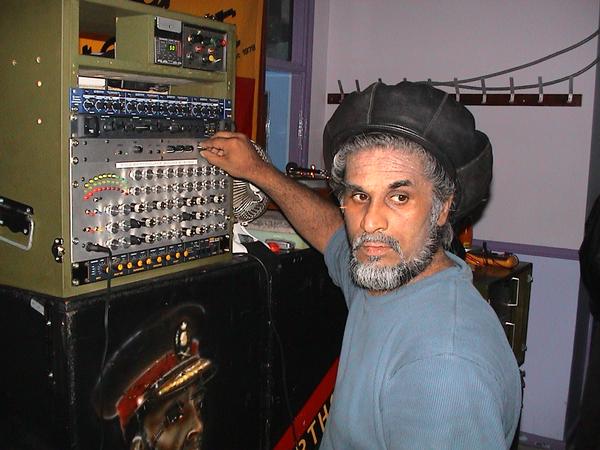
King Earthquake est un nom qu'on en doit tenir compte depuis longtemps: dès années '70 il fait dangereux Birmingham et les environs. Il – son vrai nom est Errol Arawak – joue seulement ses propres productions, dont il fait sauter la basse avec ses propres enceintes, tentée en couleurs de camouflage.
Errol, there is a significant pause between the two periods you've been playing out as a soundman. What are the biggest differences between now and then?
Errol Arawak: First time around, we were young and those times were the times when you had to prove yourself. Back in those days, you prove yourself by clashing with another sound. Actually, every time you played with a sound you had to clash with them. Second time around, there is no clash, y'overstand? Systems change, attitudes change, everything change. You don't need to clash anymore.
And what is the reason the whole concept of soundclash disappeared in the UK?
I don't think it has disappeared at all. There will always be competition, although it's no clash. When you're playing with somebody, you still want to sound better than them. You still have to prove yourself, but it's not upfront anymore.
What is the reason you quit the scene around 1985?
It was even a likkle before '85, but that year was a turning point for the whole reggae scene. A lot of different people came into the roots music, and they all added their own flavour. The spectrum of what supposed to be roots became much wider, with everybody listening different things. Everything changed from roots and went in a very different direction. This didn't happen in a nice way either: roots music was forced to become music of the past. Modern reggae music replaced the roots, and I didn't like that vibe. That's why I stopped: I just didn't want to play in the new fashion.
So the first time digital music came around, it was a bad experience for you?
It's not because it was digital, it was because of the new style of riddims and the things that they were singing. It wasn't roots, it wasn't culture, it wasn't from the heart y'know? It was music of slackness, it was giving the wrong message. I didn't want to play these kind of things, so I was forced to quit the scene.
How do you think the crowd has changed since the eighties? Roots dances certainly attract a more varied public now.
There was more a sense of unity back in the day. It was a different vibe these times, because the dance was the only place where anybody was welcome to enjoy and feel comfortable. Sometimes you would see a man and you didn't know who he was, but you would see him at all of the dances dem and you would hail a man on the street. Nowadays people walk straight passed you and they don't say nothing, you see what I mean? Right here, on a festival like this, the vibe is like a rave! It's still a gathering of people but they don't really connect the way we did.
The eighties were also the end of the golden age for roots bands. Do you think soundsystems can be a replacement for the live bands?
No, I don't see it like that. Live bands come from a musical universe that's very different from the soundsystem scene. At the end of the day, it all started with live bands. Soundsystems keep the works of the live bands alive, because they play their tracks. But even though roots bands are getting fewer and fewer, there's nothing that can replace them.
So how do you think the music will evolve? It seems like all the legends are dying now. Producers like Keety Roots or Mad Professor, soundmen like Jah Shaka or yourself, singers like Bunny Wailer... they are all becoming old men. Who is going to keep the torch burning in the future?
It's gonna be really hard to replace those people! Because what they achieved back in the day, it's very hard to achieve it now. But somebody's gonna have to carry it on, right? There's a lot of new influx right now of lots of new people with different kinds of ideas. When they are going to carry it on, they won't carry it on the same way as the original mans dem. It's gonna be a different thing, but as long as it's roots music it should be okay!
You're the only act who brought his own equipment to this festival. Why do you think roots music should best be heard on a homebuilt soundsystem?
Back in the days, soundsystems were individuals. Everybody had a slightly different sound and different equipment. Nowadays everybody has the same kind of P.A. equipment. When you build your speakers by hand and you don't buy them in a shop, it will give you a better essence of the music. You get an individual portray of the music, rather than a solid state. Tunes will sound different on different sounds, and that's why people grow to like a soundsystem and reject others.
You play with a 75000 watt soundystem. Is power a way to compete for you?
No, it's not about the amount of power you push in your speaker. You can play with a lot less and it will still sound very good. It's about the way your speaker dem is made, if it's efficient enough. You can already power one stack of speakers with a 4000 watts amplifier if they are well built. But if your cabinets are badly built, you'll never get that kind of sound, no matter how much power you push.
Are dubplates a weapon in the competition?
Well you see, dubplates used to be very hard to get. To get one, you had to go to a certain studio, get your own mix and get it cut. Those days you had no computer setup, bedroom studio's or anything like that. When you wanted music, you needed a live band. You had to go to the studio, listen to the live band, tell the engineer to do a different mix for you, and get your special cut from that mix. Y'understand how hard it was to get a dubplate? It was a rare thing, but some soundmen had them in abundance because they knew producers personally. Nowadays it's gotten so easy, like everything is easy nowadays. What we call dubplate is the actual acetate disc, y'know? Yet people play tracks from CD's, and say it's dubplate. It's not dubplate it's a CD, y'understand?
Why would a producer keep a track unpublished, keep it a dubplate?
Well I don't know about others, but when I don't release it's because I only want to play these tracks on my sound. But when you're a producer, I think it's really better to release everything, because it's your work after all. If you don't have a sound yourself, then why should you keep a track to yourself? There's no purpose for that. Sometimes you make a really good tune, and youstarve the people from it. It will make them want it more every time you play it! That way, you know you're going to sell big when you release.
Sometimes the vibes can change in the dance, especially later in the night. People get in a special kind of concentration that verges on a spiritual trance. Do you seek to establish that when you're selecting?
I don't think so. The first two hours I just play a lot of release mixes, and like that, I build up to the dubplates later on. Actually I don't know whether I do that or don't. There's only very few sounds I know of who can do that. I don't set myself out to seek for a meditative vibe. If it happens, it happens. Yeah, you can excite things up by playing the drum and the bass, but it's not my goal to get people inna trance.
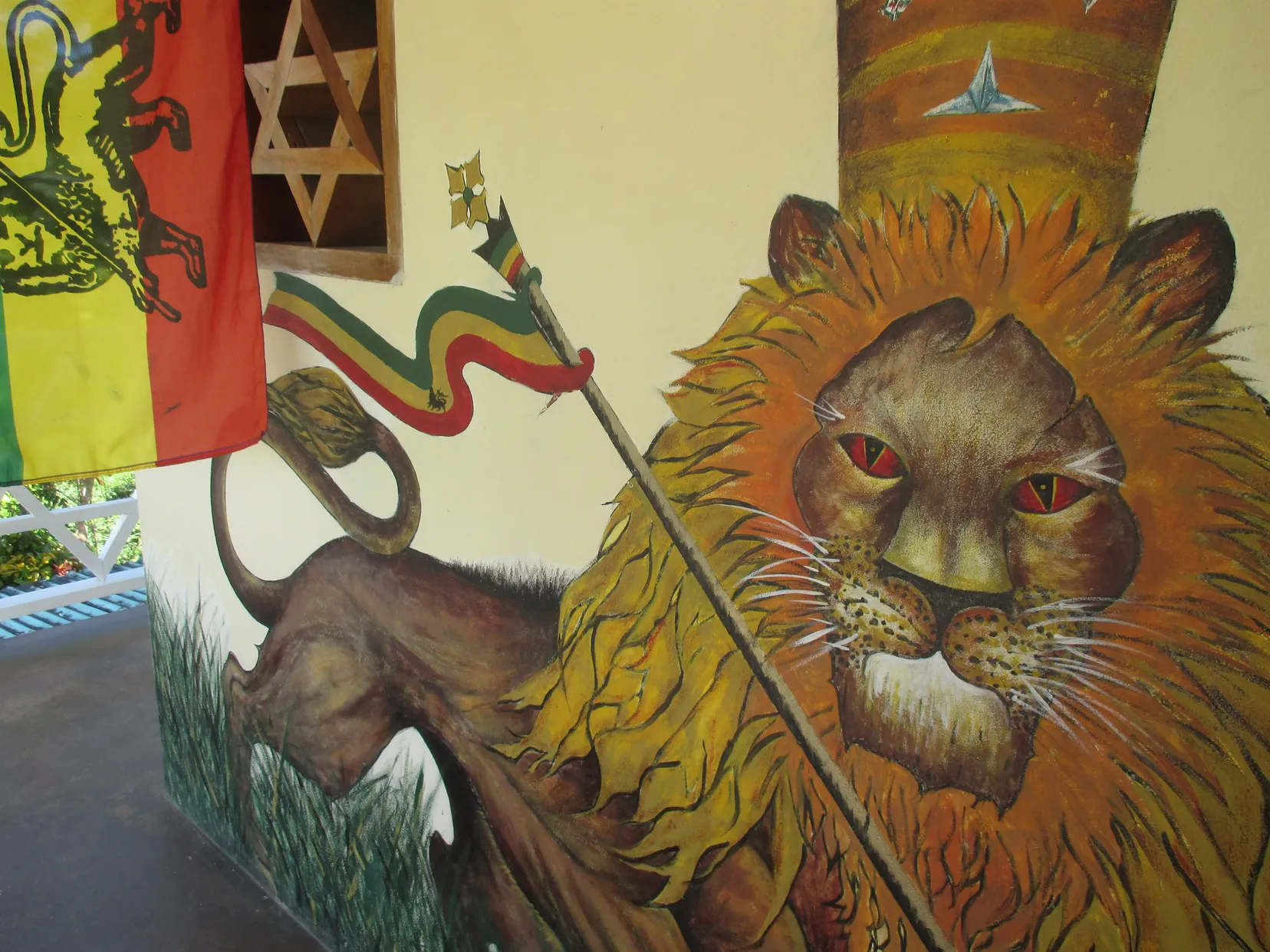
As we said before, all kinds of people come to roots dances now. It always surprises me to see youths wave flags around with the lion symbol. Actually how much can we identify with the rasta religion, when we're not raised like that?
You see, I grew in it, ever from being a small boy rasta was there for I. A lot of people that are in it now, they never grow like that, they come and find it. I guess that when they identify with the music it's because they love it, so it's not really a problem if they wave the red gold and green around. But still, those youths have a lot to learn about rasta! Maybe indeed, the new crowd has no idea at all when they come into the scene. Once you've got them hooked, a seed is being planted. Likkle more by likkle more, their interest will grow. They will learn a likkle more as they go along, especially when they're listening to the words of some of the tunes dem.
So a session has an educational function?
Oh yes, it's supposed to have! I know a lot of soundsystems, they gwaan play and try to shake down the place. They go and try and prove a point, prove themselves to be the biggest, the loudest around. It's not really supposed to be like that, it should be an educational thing.