





.Dl7BAwhJ_bSbwe.webp)
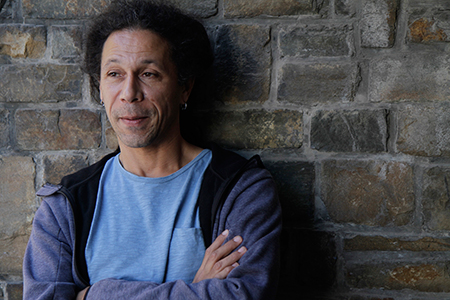
Neil, celebrating 30 years of Zion Train we can't but begin by mentioning that at the very beginning Zion was still missing from The Train.
Neil Perch: "Yeah, absolutely, the very first incarnation of what later became Zion Train was simply known as The Train, the main reason being that at that stage we were still focusing on black music in general. It was a small collective of a couple of DJ's and MC's, playing hip-hop, soul, funk and, of course, reggae. Within about a year, the more reggae oriented part of The Train, which consisted of myself and a colleague called Ben Hamilton, separated from the rest of the collective and continued as Zion Train."
I believe you were all still studying at Oxford University at that time?
I believe you were all still studying at Oxford University at that time?
Neil Perch: "Correct, we were all students at Oxford University, but we weren't really playing our gigs at university events, as we organized our own downtown. Anyone who knows a bit about Oxford will tell you it's a very divided city, with town and gown parts, the latter of course referring to the gown the academics often wear. We weren't really about class division and basically want to play our music to anyone who wanted to listen, so we started organizing events in local community centers and the now famous Roots Club and Caribbean Club in Oxford. The first period as Zion Train those were still mainly classic reggae events, not dub, because that came at a much later stage."
From a musical perspective have you always approached Zion Train like an actual train, always moving forwards, and trying to avoid looking backwards too much?
From a musical perspective have you always approached Zion Train like an actual train, always moving forwards, and trying to avoid looking backwards too much?
Neil Perch: "I guess that's more a reflection on life as just on the band, of course… Looking back and reflecting on the past, isn't a bad thing, but momentum and moving forward is much more positive in my opinion, so I'd say I like to reflect on my personal history and that of the band, but only in order to make better decisions moving forward. Where Zion Train's concerned it's definitely true we've always been forward thinking, investing our time and energy into new musical ideas, technology and new collaborations. We've also always been quite politicized, so I should also mention new political thought."
Which brings to mind the expression: "Forwards ever, backwards never!", often used by Rastafarians.
Which brings to mind the expression: "Forwards ever, backwards never!", often used by Rastafarians.
Neil Perch: "Yeah, and by various communist and socialist parties throughout Latin America in the 1970s. Apart from those political associations, it's also just a great phrase in terms of motivating people. I'm guessing that people born in more underprivileged circumstances as we Europeans are, need that sort of stimulus a lot more than we do, and in that respect "Forward ever, backward never!" could also become almost like a daily mantra to get through life."
In Zion Train interviews there's one name that's always mentioned, and that's of course that of Jah Shaka, who's been of great influence in your music, but who apparently also played one of very first tunes Zion Train ever released.
In Zion Train interviews there's one name that's always mentioned, and that's of course that of Jah Shaka, who's been of great influence in your music, but who apparently also played one of very first tunes Zion Train ever released.
Neil Perch: "We started out as a sound system playing records we'd bought at specialist record stores and then moved on to having dubplates cut, but when we started making music as Zion Train, which, in all honesty, is really the quickest road to having your own exclusive music to play, my biggest ambition was to have one of my own productions played by Shaka at one of his sessions. At that time he simply was our greatest inspiration, and he was still very active as well, playing up to three or four dances a week, with us hanging around at most of these sessions! (laughs)
That ambition manifested rather more quickly than we had expected, as Shaka started playing 'Power Two', which was only our second single. It was a bit of a bittersweet experience… We had taken the quite revolutionary step of cutting our singles at 33rpm, which was something we picked up from the house producers at the time, as it gets you more volume per inch of you 7inch single. It's to do with the compression of the sound waves on the vinyl; if you cut at 45rpm it simply doesn't sound as loud as it does at 33rpm. Of course, because reggae singles are usually cut at 45rpm, Shaka didn't notice that during the session and played the tune at 45rpm, which he's done ever since. (laughs) I found it quite funny, but the vocalist, Molara, wasn't so amused as suddenly she sounded somewhat like Mickey Mouse! And weirdly enough people loved the tune at 45rpm!
Shaka has also always played our third single, which was 'Jah Holds The Key' featuring Devon Russell, and these days whenever he spots me at one of his sessions he usually puts it on as kind of a tribute, which is great, because it means my very first sound system hero still has one of my very first vinyl productions in his record collection.
I also remember that time as being quite fertile for UK produced reggae and dub, as you still had Nick Manasseh on Kiss FM, which was still a pirate radio station at the time, who played all-nighters every Saturday night. So we would go to a Shaka dance and listen to Manasseh on the way there and on the way back! Then Sunday nights you had Joey Jay, who, together with his brother Norman also ran the Good Times sound system nights, and who played our very first single, 'Power One' (1991, red.) on his Word, Sound & Power show.
Of course Shaka influenced a whole generation of UK dub producers, from Alpha & Omega over Disciples and Nick Manasseh, to people like Revolutionary Dub Warriors and Conscious Sounds. If you'd go to one of Shaka's sessions during the mid-nineteen eighties in Southall, West-London, or Tottenham, North-London, or Brixton, South-London, you would always run into those same people."
Apart from Shaka, three names you always mention as huge musical influences as well are King Tubby, Ravi Shankar and Jimi Hendrix. Three musicians who, at first sight, don't seem to have all that much in common, so what connects them for you?
That ambition manifested rather more quickly than we had expected, as Shaka started playing 'Power Two', which was only our second single. It was a bit of a bittersweet experience… We had taken the quite revolutionary step of cutting our singles at 33rpm, which was something we picked up from the house producers at the time, as it gets you more volume per inch of you 7inch single. It's to do with the compression of the sound waves on the vinyl; if you cut at 45rpm it simply doesn't sound as loud as it does at 33rpm. Of course, because reggae singles are usually cut at 45rpm, Shaka didn't notice that during the session and played the tune at 45rpm, which he's done ever since. (laughs) I found it quite funny, but the vocalist, Molara, wasn't so amused as suddenly she sounded somewhat like Mickey Mouse! And weirdly enough people loved the tune at 45rpm!
Shaka has also always played our third single, which was 'Jah Holds The Key' featuring Devon Russell, and these days whenever he spots me at one of his sessions he usually puts it on as kind of a tribute, which is great, because it means my very first sound system hero still has one of my very first vinyl productions in his record collection.
I also remember that time as being quite fertile for UK produced reggae and dub, as you still had Nick Manasseh on Kiss FM, which was still a pirate radio station at the time, who played all-nighters every Saturday night. So we would go to a Shaka dance and listen to Manasseh on the way there and on the way back! Then Sunday nights you had Joey Jay, who, together with his brother Norman also ran the Good Times sound system nights, and who played our very first single, 'Power One' (1991, red.) on his Word, Sound & Power show.
Of course Shaka influenced a whole generation of UK dub producers, from Alpha & Omega over Disciples and Nick Manasseh, to people like Revolutionary Dub Warriors and Conscious Sounds. If you'd go to one of Shaka's sessions during the mid-nineteen eighties in Southall, West-London, or Tottenham, North-London, or Brixton, South-London, you would always run into those same people."
Apart from Shaka, three names you always mention as huge musical influences as well are King Tubby, Ravi Shankar and Jimi Hendrix. Three musicians who, at first sight, don't seem to have all that much in common, so what connects them for you?
Neil Perch: "If I may, I'd like to add John Coltrane and Sun Ra, but what connects those people for me is that when they performed or produced they had thoughts in their minds that weren't necessarily musical in nature, but rather political and emotional, but which they were able to translate into their music in the most brilliant way. To have that ability is something very very powerful! A good example is Jimi Hendrix at Woodstock… He was angry about the war in Vietnam, walked on stage and translated that anger in his version of 'The Star-Sprangled Banner'. It's pure genius: a black man, probably high on LSD, using the American national anthem at this huge hippie gathering as a sort of radical news report on the Vietnam War!
Sun Ra similarly made a film called 'Space Is The Place'. He was born in Chicago in the nineteen thirties, which was a particularly hard time and place to be born as a black man. In the first scene of this movie, Sun Ra uses his musical ability to express his political anxiety and angst, by playing this happy major key jazz pianist called Sunny Ray, who earns his living playing in a bar filled with relatively well-off white patrons. It's a great statement, because if he'd been born white in that era he probably would have been recognized and praised for his talent everywhere. These days Sun Ra is really only known by music enthusiasts; he's not really a household name so to speak, but he's a genius in the way he illustrates and emotional thoughts in the way he plays his music. That's an incredibly powerful gift to have. Shankar can do it as well, as does Coltrane.
King Tubby is a bit of a different story as he deconstructed what in his day were just standard songs and turned them into these incredible, I'd say psychedelic, illustrations of his feelings. He was a guy using self-repaired bits of equipment from other people, doing his thing in very humble surroundings in Jamaica, but turning out music the world still talks about fifty years later! He was clearly a man with more talent than could be expressed during his lifetime.
I think that particular element is an ongoing subtext to a lot of black and third world artists and thinkers, because we live in a world dominated by the Anglo-diaspora, mainly consisting of English speaking white men. And because our whole cultural world is shaped through that view, if, for example, you're an intellectual black writer from Peru, or even worse an intellectual black female writer from Peru (laughs), it's incredibly difficult to get your voice heard. All of these artists I've just mentioned have shown the power to break through that mold and having their voice heard on the world stage. The fact of trying to transmit your thoughts, not by process of logical reasoning, but instead musicalizing your intent, that's magic with a capital M to me; and even more so if you can achieve that with instrumental music, because at that stage music really transforms into universal communication.
It's not like all these guys singing: "Jah live!", "Let's get together!" or "One love!", which are all nice sentiments, but it's all cliché bullshit we've all heard a thousand times before, and most of the people singing it don't really mean it, it's just a standard way to make a success of yourself as a reggae artist. I can't stand modern reggae music to be honest, because it's all already been done. Something I absolutely dislike in music is commercialization and that's sadly what's happened to reggae music. I met guys like Protoje and Damian Marley, and certainly have nothing against them, but I just wish they wouldn't just be using this magical and powerful music to forward their own careers! In the end they have the same type of ego as all those politicians who lie to us every day. It's perhaps not as overt and nasty, but I can't ignore the similarities. What I do listen to is the old stuff and some of the new dub experiments coming from countries like France, Poland or Japan, because they have their own uniqueness.
In music there's a simple rule: if you're copying someone, you're wrong from the get-go! Copying something is not the same as being inspired by something or someone. In short: music is magic and deserves to be treated as such. I know I've got strong feelings and opinions about that, and a lot of people will probably just say: "Relax and enjoy your music!", and I also do that, but we live in a world where everything around us is strictly controlled for political gain and we're slaves to that system. I don't stand for any of that and use every opportunity to try and liberate myself and the people who are close to me from that system, and I truly believe music is or can be one of the ways out. Self-expression, art and free thought are what's missing in that system, and are exactly what the powers controlling us do not want us to have. If tomorrow we all wake up and start speaking our minds and do what we want, that whole system collapses. Also a revolution through music is much nicer, than a revolution through bloodshed. That's why it makes me so angry when I see people exploiting the magic in music, just to make shitloads of money or become famous."
You've been living in Germany for quite some time now. With the possible consequences of Brexit in mind, are you one of those Britons contemplating changing their nationality?
Sun Ra similarly made a film called 'Space Is The Place'. He was born in Chicago in the nineteen thirties, which was a particularly hard time and place to be born as a black man. In the first scene of this movie, Sun Ra uses his musical ability to express his political anxiety and angst, by playing this happy major key jazz pianist called Sunny Ray, who earns his living playing in a bar filled with relatively well-off white patrons. It's a great statement, because if he'd been born white in that era he probably would have been recognized and praised for his talent everywhere. These days Sun Ra is really only known by music enthusiasts; he's not really a household name so to speak, but he's a genius in the way he illustrates and emotional thoughts in the way he plays his music. That's an incredibly powerful gift to have. Shankar can do it as well, as does Coltrane.
King Tubby is a bit of a different story as he deconstructed what in his day were just standard songs and turned them into these incredible, I'd say psychedelic, illustrations of his feelings. He was a guy using self-repaired bits of equipment from other people, doing his thing in very humble surroundings in Jamaica, but turning out music the world still talks about fifty years later! He was clearly a man with more talent than could be expressed during his lifetime.
I think that particular element is an ongoing subtext to a lot of black and third world artists and thinkers, because we live in a world dominated by the Anglo-diaspora, mainly consisting of English speaking white men. And because our whole cultural world is shaped through that view, if, for example, you're an intellectual black writer from Peru, or even worse an intellectual black female writer from Peru (laughs), it's incredibly difficult to get your voice heard. All of these artists I've just mentioned have shown the power to break through that mold and having their voice heard on the world stage. The fact of trying to transmit your thoughts, not by process of logical reasoning, but instead musicalizing your intent, that's magic with a capital M to me; and even more so if you can achieve that with instrumental music, because at that stage music really transforms into universal communication.
It's not like all these guys singing: "Jah live!", "Let's get together!" or "One love!", which are all nice sentiments, but it's all cliché bullshit we've all heard a thousand times before, and most of the people singing it don't really mean it, it's just a standard way to make a success of yourself as a reggae artist. I can't stand modern reggae music to be honest, because it's all already been done. Something I absolutely dislike in music is commercialization and that's sadly what's happened to reggae music. I met guys like Protoje and Damian Marley, and certainly have nothing against them, but I just wish they wouldn't just be using this magical and powerful music to forward their own careers! In the end they have the same type of ego as all those politicians who lie to us every day. It's perhaps not as overt and nasty, but I can't ignore the similarities. What I do listen to is the old stuff and some of the new dub experiments coming from countries like France, Poland or Japan, because they have their own uniqueness.
In music there's a simple rule: if you're copying someone, you're wrong from the get-go! Copying something is not the same as being inspired by something or someone. In short: music is magic and deserves to be treated as such. I know I've got strong feelings and opinions about that, and a lot of people will probably just say: "Relax and enjoy your music!", and I also do that, but we live in a world where everything around us is strictly controlled for political gain and we're slaves to that system. I don't stand for any of that and use every opportunity to try and liberate myself and the people who are close to me from that system, and I truly believe music is or can be one of the ways out. Self-expression, art and free thought are what's missing in that system, and are exactly what the powers controlling us do not want us to have. If tomorrow we all wake up and start speaking our minds and do what we want, that whole system collapses. Also a revolution through music is much nicer, than a revolution through bloodshed. That's why it makes me so angry when I see people exploiting the magic in music, just to make shitloads of money or become famous."
You've been living in Germany for quite some time now. With the possible consequences of Brexit in mind, are you one of those Britons contemplating changing their nationality?
Neil Perch: "At the moment I've actually got a dual nationality, split between Britain and Barbados, which is the country my mother was from, but I've currently signed up to do my Sprachtest für die Einbürgerung ("language test for naturalization", red.) to get the deutsche Staatsangehörigkeit ("German citizenship", red.). If I manage to get German citizenship before March 31st (The United Kingdom is due to leave the EU on 29 March 2019 at 11 p.m. UK time, when the period for negotiating a withdrawal agreement will end unless an extension is agreed, red.), it would mean I could keep both my British citizenship and get the German one on top, because while the United Kingdom is still a member of the European Union, that's possible. Having said that, I'd rather not have to do that, but I have dual nationality children, I have a German-Brazilian wife, I travel all over the world, but mostly around Europe from Germany, so if I just stick to my British passport and Brexit is executed as scheduled, I would be greatly hindered in my daily life. It's a disgrace actually, as I made the choice to move to Germany and marry my wife there rather than having her come to England, because of political decisions that allowed me to do so!"
As a musician you travel back and forth to the UK all the time. While the UK remains in the EU it's only a train ride or short flight away, but what happens after?
As a musician you travel back and forth to the UK all the time. While the UK remains in the EU it's only a train ride or short flight away, but what happens after?
Neil Perch: "I think what will probably happen is that we'll get a visa that's like a stamp on your point of entry, but it will still cost money, time; in short, it will be irritating. In my view the whole Brexit thing will make Britain come to a standstill. This whole debacle really landed on our shoulders because of a schism in the conservative party in the EU, all the rest is smoke and mirrors! None of it is true: they lied about the election, they illegally funded the campaign through Cambridge Analytica and an obscene businessman called Arron Banks. All the UK engineers of the Brexit campaign have disappeared… You had David Cameron, who has retired (even though it's now rumored he'd want to make a comeback to politics, red.). And then there's Nigel Farrage, excuse my French, but a fucking merchant banker married to a German woman, with children with dual nationality, who plays the immigration card in a country that would economically perish without a permanent influx of immigrants, because the vast majority of working class or sub-working class white English people have been ignored by their own state for nearly fifty years and immigration is of course always the easiest card to agitate them.
It's a disgrace, with lies upon lies, and intelligent people living in England being marginalized. We're now mere months away from the Brexit deadline and England hasn't decided what it's going to do, Northern-Ireland hasn't decided what it's going to do, England faces great political problems with Spain over Gibraltar… The whole thing is a shit storm and the people in charge are only interested in protecting their own careers, as they always have done. They're not interested in the future of the people or the country, or even the economic future of the country. I can't but say that I'm really glad to be among the few who have the opportunity to be British but not necessarily be subject to all of that. It might be tricky for me over the next few months, but that's better than a decade of misery.
I was brought up in the Liverpool of Tatcher's Britain, which was a high unemployment spot with a lot of rightwing activity and literally abandoned by the British government, and that situation was already hard enough… I hate to imagine what it's going to be like for you British people after Brexit, because of course these youngsters, who are the future of Britain, overwhelmingly voted to remain in the European Union. Personally I'm no great fan of huge political machines, but there's no denying that union is strength, and I believe it's much better to try and popularize the bureaucracy of the European Union by people's movements throughout Europe, then by separating and isolating yourself as a nation.
Britain is an island nation and has always segregated itself culturally, but also still has this sort of postcolonial arrogance… In Belgium, Holland and France you can find that as well, but to a much lesser extent, while Britain is steeped in this "we are better than the rest of the world" attitude. It's not appropriate, it never was appropriate and if you look at it closely it only ever existed because Britain robbed, stole and murdered globally to get a strong financial position. My mother's ancestors probably fought my father's ancestors, and as an individual I can rationalize all of that, but as a British citizen I can hardly take pride in that past. A lot of people in Great Britain still believe the country is called Great Britain because of some element of greatness, while in fact it's just a bad translation of the French Grand Bretagne!"
To be continued...
Foto: © Andreas Peeters
It's a disgrace, with lies upon lies, and intelligent people living in England being marginalized. We're now mere months away from the Brexit deadline and England hasn't decided what it's going to do, Northern-Ireland hasn't decided what it's going to do, England faces great political problems with Spain over Gibraltar… The whole thing is a shit storm and the people in charge are only interested in protecting their own careers, as they always have done. They're not interested in the future of the people or the country, or even the economic future of the country. I can't but say that I'm really glad to be among the few who have the opportunity to be British but not necessarily be subject to all of that. It might be tricky for me over the next few months, but that's better than a decade of misery.
I was brought up in the Liverpool of Tatcher's Britain, which was a high unemployment spot with a lot of rightwing activity and literally abandoned by the British government, and that situation was already hard enough… I hate to imagine what it's going to be like for you British people after Brexit, because of course these youngsters, who are the future of Britain, overwhelmingly voted to remain in the European Union. Personally I'm no great fan of huge political machines, but there's no denying that union is strength, and I believe it's much better to try and popularize the bureaucracy of the European Union by people's movements throughout Europe, then by separating and isolating yourself as a nation.
Britain is an island nation and has always segregated itself culturally, but also still has this sort of postcolonial arrogance… In Belgium, Holland and France you can find that as well, but to a much lesser extent, while Britain is steeped in this "we are better than the rest of the world" attitude. It's not appropriate, it never was appropriate and if you look at it closely it only ever existed because Britain robbed, stole and murdered globally to get a strong financial position. My mother's ancestors probably fought my father's ancestors, and as an individual I can rationalize all of that, but as a British citizen I can hardly take pride in that past. A lot of people in Great Britain still believe the country is called Great Britain because of some element of greatness, while in fact it's just a bad translation of the French Grand Bretagne!"
To be continued...
Foto: © Andreas Peeters