




.Dl7BAwhJ_ZJXLLF.webp)
By Natty/Irie Nation
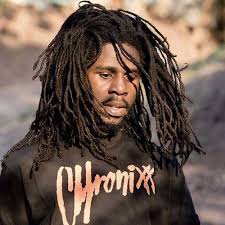
When we reach the backstage for this interview, we find Chronixx on the phone with his mother in Jamaica, telling her of his impressions after his first show on European soil, in the Petrol Club in Antwerp. This is also the very first interview recorded by Chronixx in Europe, exclusively for reggae.be
We didn't know about Chronixx until a few months ago. Then the big tunes dropped and the name appeared… What happened?
Well, I've been doing it for a while. It looks like an overnight thing but it's been cooking for a while. So now dinner's ready!
When did you start doing your own music?
I started out as a producer for Zinc Fence Records. We started that label with Teflon and Shades, producing and writing for artists. That was about three years ago but I've been producing and writing for about five years now.
So did you write for other artists?
Yes, but I don't like to say the artists names. Artists I worked with in production were Popcaan, Vybz Kartel, Lutan Fyah. Zinc Fence Records works with Jah Cure and some others. We are just making music. Writing, arranging, composing… I started doing my own music, as Chronixx, since 2011. It started to grow slowly. The first place my music made an impact was in Kenya. The song Behind Curtains was a hit song over there two years before it became a hit in Jamaica.
You are the son of Chronicle. Is this the reason why you have been involved in the music?
Well I grew up in a musical family. Any youth that grows up in such an environment can't escape music. It's there! You know about the words of Bob Marley: "When music hits you, you feel no pain." I was hit by the music, and bit by the music. My DNA got infested. Music is a sickness and is very contagious. Once you get bitten by the musical bug, you can't cure. And I don't need no cure for this one. I love this sickness.
Did you ever work with your father Chronicle?
Yes, I wrote a lot of songs for my father. He was the first artist I ever wrote for. He came to Europe in 2004 and made some contacts with various European producers, that's were he got some riddims to record on. I did write some songs for him to record. I remember he was also the first artist I recorded as an engineer. I did engineering for a good while. Sometimes I also record my own songs. It's hard, multi-tasking, but I try to make myself self-sufficient. I was highly influenced by my father, especially in my young years. He was the one who would push me to take the microphone.
Is this your first date in Europe? How did it feel?
It's my first time in Europe but I've been to a few places to perform before. But I've never played in such a cold place. It was a nice show. The beauty about it, is that you travel 10 hours around the world, but the people know your music same way and love your music same way and embrace your music, sometimes even more than at home.
You and your band are all quite young, how long do you play together?
The Zinc Fence Band exists since a year. It was the last move made by Zinc Fence. First we had the Zinc Fence label, then the management company and finally we set up the band too.All musicians are young but experienced. One of our guitarists is the son of Nambo Robinson, from Rass Brass, who also played with Sly & Robbie or Dennis Brown. We also have Josha Jones, son of the legendary drummer Desi Jones. We have Steven Coore, son of Cat Coore. So you see that there are a lot of second generation artists. We have had a high level of exposure to music, so it's not like we're new to it. Sometime I feel like I've been playing with them for a thousand years, like we're souls that are reunited for a second time.
In Jamaica lately, there's a new stream of young rasta artists like you, Kabaka, Protoje… How can you explain this?
Well it's just the power of music and the power of King Rastafari Haile Selassie. I can't really explain why it is happening but I know it is happening for a purpose. Highly significant. It's not the first time it happens, it has happened before. In music you can notice a lot of recurrences. Things that happened in the past happen in the future again. I'm happy to be privileged to be a part of it, to be somebody who can witness this movement from inside. What I think is happening: Rastafari is at work. The change have to start somewhere. Once more a movement started in Jamaica! You will see these youths come and make an impact on the whole world with their music. They will change the way how people live, revolutionize the way how people think, how they behave… It's Jah works, it's a great thing.
What are you future goals in the music?
I want to always remain obedient and keep my vibes in tune with the Most High, Jah rastafari. I don't want to reach to a point where my senses would get cut off. I don't really have any plans as far as my music is concerned. Because there's nothing like "my" music, it's not mine. I let the person who own the music to make the plans and this is Jah, it's not me. I'm just the vessel, I'm just the voice. Just like when you own your company and become the boss, you just employ some youths to do the daily tasks. We are the youths, we are the employees of the Most High. He is the one who does the planning, the administration and decision making and I just execute.
Can you tell us about your travel to Africa?
I went over there with a few members of the Zinc Fence and we did an acoustic performance in Nairobi to rally for a peaceful election. We were invited as peace ambassadors.
Was this experience the reason why you sing a cover of Bob Marley's "Zimbabwe" tonight?
Yes and it also goes to show our attachment and our passion for Africa. Because it's an inborn thing a genetic thing. We are born African people. There are only two places I can identify with: Jamaica, because it is the place where I was born and Africa, because this is where I come from. When I sing for Mama Africa, it comes as a natural thing.
Why did you make several references to Supercat during your show?
(Laugh) First and foremost, I'm a lover of music. Almost every artist who comes in the music makes an impact. But when you spot an artist who makes a significant impact and revolutionize the whole approach that people take toward music, you have to pay homage to that person. Supercat is one of those artists who stand out and influenced my musical journey, my music and my performance. You have a lot of people who did influence me: Mykal Rose, Don Carlos, Junior Reid… My band too is a big fan of Black Uhuru, Ini Kamoze, Dennis Brown, Peter Tosh, Bob Marley… From the dancehall era, we refer to Josey Wales, Nicodemus, Supercat, coming to Ninjaman, Shabba Ranks and Buju Banton. There's something positive that you can take from every artist, even coming straight down the line. Every artist who rise in reggae or dancehall music came for a purpose and there's good in it somewhere. Even if it's 99 percent bad, there's still a trace of good. The wise people will tell you that anything that you see in people is inside of you. So if all you see in people is bad, it means that all that exist inside of you is bad. But if you can look at a man who is the worse man and see good in him that means you are a fairly good person. I see a level of good in everybody and I try to emulate that.
You are a rootsman but you don't reject dancehall…
Hear wha a gwaan now… In life there's evolution, it is evident. If you look at people who live in cold places, they look different from tropical people. This is a sign of evolution. As the elements change around us, everything changes. The world is ever-changing and never-changing at the same time. That's why we have to embrace everything. It is the same with music, it is ever-changing and never-changing. Ever-changing in the sense that the sound evolves, people talk different, the process of making music has changed... But music remains the same. It's the same chord you have to play, the same bassline you have to play, the same melody… It remains the same, but in a different interpretation as time passes.So we embrace that. Any man who disregards change, just exists at a very low dimension. Everybody should be able to see change and see some good in it.
Natty/Irie Nation
Apr 18, 2013