
.Dl7BAwhJ_ZJXLLF.webp)
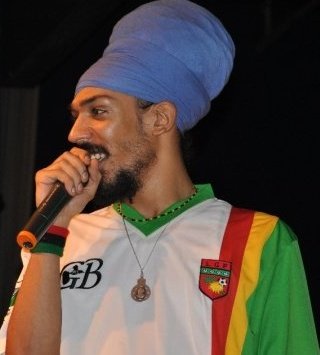
Cali P has made himself a name on the reggae and dancehall scene in the last years. But not everyone is familiar with the vibes of this artist who is original in many aspects. Musically and livitically. This interview was recorded in Montreal Canada in September 2010 and completed on the phone in February 2011. Cali P is a very active artist and is telling us about his music, his history, his decision to move to Jamaica and the launching of his own Inspired record label and media productions.
What took you here to Canada?
I was invited for the IF3 (International Freeski Film Festival). Tonight is the launching of a movie called Like A Lion, which is all about the life of Tanner Hall, one of the world's ever best free skiers. As I did the soundtrack for the movie, we also had a live show in the evening, with Mikey Dangerous from Canada and Biga Ranx from France.
Was it your first time in Canada?
Yes and the vibe was great!
Half of your show was on a sound system mode and the other half with a live band. Why?
That was specially prepared for the release party of Like A Lion. Because we are having a sports audience, ski people and so... We don't see them often and there are so many songs that they like, so we wanted to give them a nice programme. That's why we started with the party vibes, with Phantom playing the riddims as a selector. We gave them something like 45 minutes straight fire; with the dancehall vibes and the hip hop tunes. After that, as a surprise, we told them we are going to start the real show, when the people already thought it would be over soon. The band came in and we gave them a big roots programme. Powerful reggae music with the message! We prepared some songs with a band from Montreal who plays for Mikey Dangerous and it was great. I really felt the vibe, it's the first time we tried it like that.
The soundtrack of the movie is produced by your newly launched Inspired Records. Is this your first release?
We did put out some works with Inspired music before, like the mixtape with Black Chiney or the Scrub-a-Dub riddim. But the first real official big thing is the Like a Lion project, the sound track of the movie. All riddims are original from us. I sing most of the songs on that soundtrack but we also featured other artists. I involved some friends like Fantan Mojah, Munga and Charly B. We also had Full Klip on it. He's a young artist that is recording for us and that we are promoting. There's much more to come!
Who is Inspired family as you call it?
Inspired music is a record label that's gathering the whole family under one name. I just sing and make lyrics. There's Phantom who is building riddims and he's the studio engineer as well, setting the studio and mixing and all. We also have some selectors under that name and other singers. It's just starting, it's still very fresh. We also have some video makers under the name of Inspired Media, focusing on musical clips and video productions. Inspired music studio is our home. That's our base where we work from and where I can do my thing. For me it was always important to have that. As an artist, the best way to advance and build yourself is through the studio. If I have the studio, I can do whatever I want to do. If a radio station asks me a jingle, I can do that straight. I don't have to go and ask somebody if he has time for it. That's how the thing starts to big up and we build up the studio. And we called it Inspired because inspiration can come any time so if you have the studio you can bring this inspiration to life. The studio was first build up by us in Zurich in Switzerland. But now all the stuff has been transferred to Jamaica and we will build up a studio again and do the same work from there.
Why did you decide to go and settle the whole thing in JA?
The first reason is musical. I noticed that when I was home in Zurich, I was spending all my time in the studio. Night and day. So it's all the same to do it from Jamaica. And also, when you do your music in Europe, where does it go? No one will come in the studio and take your music and go out promoting it. Hence in Jamaica, you can have people come in and bring your music to the radio. They are interested to help a project rising up. Something is happening with the music!
Do you think that the music produced in Europe doesn't reach to the rest of the world?
The way I look on that. Right now, sometimes I think in Europe they limit themselves too much. They would ask: "Where is this music from?" Each one would love the music from their place. You have to listen the music with your ears and not look at the man's face. I just want to make music that is clear to the people. The first music I felt is reggae music and this is the music that's truthful and straight.
How are your projects moving?
The whole studio equipment has arrived in Jamaica. Right now some workers are taking measurements to raise a new building in the garden of the compound for the studio.
Presently if I need to do studio work, I do it at Bobby Digital's place. I am also working with his sons. They are my friends from long time so they are part of my all project. Just like other members of Inspired Music. Just like family.
Do you feel that the move to JA is positive?
Yes it's very positive. And I have a great response from the people.
Yesterday (04/02) was the launching of the official Like A Lion video clip on TVJ, the jamaican national TV. They did a world premiere. And it was great, the massive really love the vibe over here in Jamaica…
The morning before I was on an interview with female DJ Jenny Jenny on the radio and she asked the listeners to call and answer the question: "Should we keep Cali P in Jamaica or send him back to Guadeloupe?" And people called and there wasn't a single negative comment. Everyone called and welcomed my vibes.
The song that we are promoting now, Hotstepper, is making a buzz now in Jamaica. People are discussing it, saying 2011 is starting with a new style. In Jamaica they always like to bring out new styles and fashion.
The other day I was in the traffic in the car, to go and eat something. And the song was playing on a radio. And the DJ there started to pull up this song again and again and chat on it and play it for more than 20 minutes! For a song that's 3 minutes long!
On a business aspect of the music, in Jamaica, for people to know you, you need to make people to know ONE of your songs. When they know that one, it's the time they start checking what other music you have in store. So Hotstepper is the song I want to push now.
What do you hope to reach there?
You know my focus since a long time is Africa. So now, me moving to the Caribbean makes it possible for me to work in Africa very soon on a better level. That's why I made this movement
I know that if I stay in Jamaica and really make people know and appreciate the music that we do, it will have a bigger impact and I will have more means to go to Africa and to do what we have to do. It will be easier for me.
You know, I went to Africa very early. The first time I went to Africa I was just 18 years old. My father sent me to Africa exactly for that: to check out what was needed on my mission, what I have to do. And when I was in Africa I saw it very clearly. That's what I am working on now.
Where are you originally from?
My father is originally from Guadeloupe and I was born from a Swiss Mother in Switzerland. My father came to live in Switzerland for a while so that I could grow with him too. We always used to swap from Swiss to Guadeloupe. When I was twelve years old, my parents separated. My father went to live back in the Caribbean and my Mom stayed in Switzerland. So I have a heart in both places.
Your father, a musician, involved you in the music very early?
Yes he did it very early, so I was in the music from creation. But maybe he did it without even planning it. That's just the way my father used to flex. When I was a boy and I was with him in the house, all he was doing was building drums, to sell drums, and then he had his LP's and he was playing some reggae music all day long. So I grew up in that movement: seeing the drums building, playing the drums, listening music, changing the vinyl and putting another one on the player. For me when I was a child, the vinyl was a big thing: to change the plate and see it turning and the music come out used to amaze me! So I used to dance and sing.
You played at an early age as drummer?
Yes, I started to play drum as a youth. I got my first drum set when I was 6 or 7 years old. So I used to practice and play a lot, and also try various percussion instruments. When I was about 12 or 13 years, some friends of my Dad asked me to come and help them to play some shows as a drummer on some reggae concerts. I did that until the day when I realized that if I wanted a future in the music, I would need to sing. At the time, I already used to sing and write lyrics. But it wasn't really my focus to say I will go in front of a stage and sing. But at that particular time I made up my mind with myself and said: "If I want to be a musician, it's better I go for the singing."
Your father is also the one who teach you the rastaman culture?
Yes, I grew up in a rastafari culture. My father is really "Africa-oriented". It's the case for every rastaman but for him it is really on a next level. He studies a lot about Africa. Musically, culturally, historically... How Africans live, what they believe and how they do their things. And I travelled to Africa. That also gave me a lot of strength. If you really check it, it's all about the Nature. When you live as one with the Nature, and you know that the Nature is good, it's easier to go thru life. And African people are very wise and they know the Nature very well. Sometimes you just need to sit down and watch and listen and you will learn a lot of things, that you would never have thought exist. Only time and experience that that can bring that.
Did you follow a normal schooling as far as you were spending a lot of time being busy with the music?
I did my normal school in Switzerland. The only thing is that during the last two years of my school I was already on the road, touring as Cali P. Sometimes, I would tell my school that I was sick and I was at the Summerjam Festival performing. After studies, everyone prepares himself to find a job, or go and follow an apprenticeship in some office of such. Really, I didn't find myself interested into that. If I got to work, my work must be music. So when I told them I want music to be my work. And they used to tell me music is not a work. That is when I got the big problem in school. Because I know that music is a work. But in Europe they don't want to accept that fact.
Where did you get the name Cali P?
I got this name from back in school days. Because I always have something to do with cali. If someone needs cali, he will need to find me. And the P is from my original name Pierre. So you see I got that name before I was even singing seriously.
And the Lyrical Fyah name?
I remember that day very well. It came after a show. You know, I always like to do very different shows. One day we made a dancehall show full of dancehall riddims and for the next party I told my crew, today I don't want any dancehall riddim, only roots and culture riddim and I am going to give them the lyrical fyah. On stage I told the massive "Today I will give you the musical fyah." And then this nickname also stuck to me. Whether it's hip-hop, reggae or dancehall, always I keep the lyrical fyah.
You dedicated all your life to the music. What's your motivation to continue?
My motivation is Africa and all the other brothers and sisters on the four corners of the world who really get a lot of hope and happiness and strength when they hear our music. That's my motivation because I know it makes people feel good.
Now you are in JA, it's not far from Guadeloupe, so you can keep the links with Guadeloupe…
Yes, it's about one and a half hour flight. I was even there two weeks ago for a show, sharing some good vibes with my people.
Do you sometimes sing in Creole?
Not really... I have a couple of songs in Creole but I'm not ready to put them out yet. Everything has a time. The day I will be ready to put out an album in Creole, I want to make sure I impress the people same as in English.
Now, you are going to tour very soon in Europe again.
We are still on the promotion of the Like a Lion project. And at the same time I am also going to Switzerland because I am having an album getting released there for the European side. It's called Unstoppable. It's a project I did with one producer but it's not a reggae album. It has mostly dancehall, hiphop and r&b flavours. That's why I only wanted to release it in Switzerland at first. You know I am a reggae artist so really and truly, the albums that I want to release worldwide are some purely roots reggae albums. I am working on that album in Jamaica. It will be called Musically Speaking. It was supposed to be released already but as the Unstoppable album was finished first, and as we invested a lot on that album and videos, we didn't want to put it aside. It's not an album for someone who knows Cali P as a roots reggae artist. If it's your case, then you would be disappointed. Unstoppable is a different thing.
The roots album should come out in 2011?
Yes definitely. I am now working on some promotion in Jamaica, preparing the ground for the release of that album. I want the massive to look forward to my music. I want to make a strong impression and go against the mainstream of dancehall music. But I want to come back to their own roots and culture. We are using brand new riddims as well as elder riddims that we reworked. And there will be a couple of riddims from Bobby Digital.