







.Dl7BAwhJ_ZJXLLF.webp)
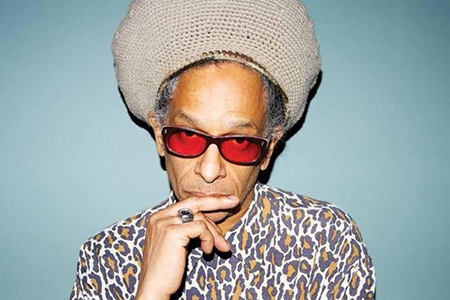
Revealing interview on the history of reggae music with the undisputable father of the UK scene.
"If you look at a map of the world and you see how tiny Jamaica is, it's amazing to think how the culture had such amazing effect on popular music. Reggae is now part of the fabric of popular music. The emphasis on the bass, the 12" remix, deejay talking, rap... An island that spent hundreds of years under colonialism has now culturally colonized the world. Rap is now the biggest selling music on the planet and it has its roots in Jamaica. You have the understand the true history of music."
Don Letts is one of the most inspiring figures in the history of reggae music. In the seventies he almost solely bridged the gap between reggae and punk as a dj, and more specifically between punkers and the rastaman. It was Letts who introduced Bob Marley to the punk scene (and indirectly inspired 'Punky Reggae Party') and made the definite movie on sound system life in England, 'Babylon' (featuring great music by Aswad).
In the eighties Don Letts was a part of Big Audio Dynamite and the underestimated Screaming Target (named by the great Big Youth tune), two band who fused rock and funk with reggae and dub. Last year Trojan released compilation album with Don Letts' favourite tracks from way back. With Don Donovan (of Dreadzone & Big Audio Dynamite fame) Letts formed Don Letts Dub Cartel, a sound system that mingles classic roots with 21st century dub steppers.
"I worked as a deejay in a punk club but it was so early in the punk days that there wasn't any punk music to play. So I played something that I loved: reggae music. Lucky for me, the punks liked that as well."
And they couldn't roll spliffs, so they had to rely on you guys. Or is that a myth?
Don Letts: "No, it's true. We sold ready made spliffs over the bar, rolled them ourselves. But we also had something else in common. Punks en Rasta's were both anti-establishment. The development of reggae music shows a lot of punk attitude. It was created at a time when the people wanted to express their feelings. Ska originated in the post-independence period, it was very optimistic music. We're free! Now our time has come! Over the years the Jamaican people realized it wasn't working like that, and the music reflected that changing mood. That's when reggae appeared, more militant and anti-establishment. And because they lacked certain musical abilities they developed their own musical style. Very punk rock."
But the music was and is very different, almost opposite.
Don Letts: "I grew up listening to Bob Marley and Led Zeppelin. In my mind there's no problem. I listen to music from around the world, and mostly I like it. Except maybe for Chinese music. In China the music has no bass, and I do like bass lines. I can hardly live without them."
In 1978 you went to Jamaica with Johnny Rotten.
Don Letts: "When the Sex Pistols broke up, he wanted to escape the paparazzi. Richard Branson took him to Jamaica because he wanted to start a new reggae label, Frontline. John invited me as a friend and also because I was black. He thought that would make things easier in Jamaica. But I had never been there either! The closest I had been was watching the movie 'The Harder They Come'. In Brixton. But we have a big Jamaican community in London. It really surprised me how close I was to the reality of the Jamaican people. It wasn't like a big cultural gap. The only way they could tell I was from London was because of the sweat. They couldn't tell by my accent because I talked Jamaican. My parents were Jamaican. And also the music kept us very close to the cultural climate in Jamaica. On a week to week basis. What they sing about today, we know about it tomorrow."
These were the golden years of reggae music.
Don Letts: "That's right. Burning Spear, Culture, Abyssinians, Tapper Zukie, I Roy, U Roy, Big Youth, Gladiators... I could go on and on. Everything was good then. Music wasn't as polarized yet. Now you have bashment ragga verses roots & culture. Jamaican music has always been the result of the dynamic between rude boy style and consciousness but personally I don't like music that preaches hate, homophobia, sexism, none of that stuff. Music is not supposed to preach hate. It should bring us together, not drive us apart. The music I grew up with empowered me, the lyrics of Bob Marley made me feel strong. On the other hand, it's very easy for the white establishment to demonize Jamaica. You see sexism, hate and violence in the history of rock'n'roll too. And how about homophobia in America? The preachers, the Bible Belt, 50% of the people: all homophobic. Nobody points fingers there, even if they don't make songs about it and export them to the rest of the world. But in the end nothing excuses ignorance. Communication is available to everybody, also in Jamaica. We all know better. Gay people, Jewish people, black people: they are all part of the same struggle."
Do you think orthodox Rasta's realize that they are on the same level as Bible Belt Americans?
Don Letts: "I wouldn't know. I don't have any contacts with so called orthodox Rasta's. To them I'm a renegade. I don't call myself anything because if you give yourself a label that's all you can be. And then people start to tell me what I'm supposed to do. So I call myself nothing. I call myself Don Letts. It's worked for me for 50 years."
Nowadays we can see you perform as a deejay with Dub Cartel but in the past we knew you as the member of bands like Screaming Target and Big Audio Dynamite. Why didn't you continue playing that kind of exciting fuse music?
Don Letts: "Because nobody knew what to do with us. We were not rock, we were not reggae. We were mixing reggae bass lines, hip-hop beats, rock'n'roll guitars, a bit of deejay and sampling... These were the elements that now define pop music so I'm still very proud we did it. It was a kind of a signpost of the way the culture in England was going."
What made you decide to make your comeback now as a deejay?
Don Letts: "I was asked to do a couple of compilations. 'Dread Meets Punk Rockers', 'Dread Meets B-boy' and my personal favourites for a Trojan collection. That's when people had the idea that I could also play these old records on a stage. Instead of doing this alone I asked Don (Donovan, Dreadzone & Big Audio Dynamite) to join me. Actually it's our way of networking. You get to meet people and stay in touch with what's going on. If you don't have input, you can't have output. It's livity, always moving forward. We don't have a global plan to make the world a better place but if we can turn one person on, it's a start. When people come to our set, they get a lesson. It is history and legacy. We take you from the sixties to now and beyond, and the connecting tissue is the bass."
And you select the music?
Don Letts: "We both do. Dan also deals with the technical part, like he has always done. Even way back with Big Audio Dynamite. I couldn't play the keyboards, still can't, so Dan put stickers on the keys. I've never made a secret of that. I even showed my keyboard to the people: "Hey look, if you've got an idea and you're brave enough, you can do this too!" Dan knows everything about new techniques but he uses them in an old school fashion, so they sound organic. I like to describe our set as a joint operation. I smoke the joints, Dan runs the operation."
You hardly play any vinyl anymore.
Don Letts: "Nowadays everybody uses cd's and for us it was also a necessity. Four years ago we had a fire and all our vinyl records were destroyed."
What a disaster!
Don Letts: "A terrible thing. I cried. It's like losing a family member, even worse. People die, vinyl is supposed to be forever. But is has been an interesting experience. I now realize that playing music is not about the medium, it's about the content. That also goes for the sound system by the way. It's not about the size and the volume but about the content."
New dub music, steppers, dubstyle, that kind of stuff, has a mainly white audience. How does that strike you?
Don Letts: "Undeniable. Maybe because black kids are influenced mainly by MTV culture nowadays. The me-generation instead of the we-generation: that's reflected in their musical taste. MTV is their only source of information. Their historical knowledge doesn't reach any further than Shabba Ranks. In Jamaica also, people don't know what happened in the past. Everybody is copying the American blueprint. So now you have white guys making so called black Jamaican music. Alpha & Omega are from Cornwall! It's funny how this culture has been embraced by with people. And in Jamaica they ignore this evolution."
Can it be that Jamaicans were disappointed after the seventies, seeing that nothing really changed, and for that reason turned away from roots music and Rastafari?
Don Letts: "The main reason they turned away from the message of Rasta is that don't want to check themselves anymore, and their position in society. You can't go around shooting people. You can't go around treating women with disrespect. You can't use music to preach hate. You have to think how you live on a day to day basis. A lot of young people don't bother anymore, in England, in America and in Jamaica, where the same MTV culture rules the airwaves. But there is a shift. People start getting tired of this bashment style and all the negativity. That's why singers like I Wayne are coming up now. Things are changing. The pendulum is swinging back."
Have you been to Jamaica recently?
Don Letts: "Last time was three years ago, to make a movie called 'One love' (Don Letts also made 'Dancehall Queen', and way back in the seventies the cult sound system movie 'Babylon'). It's a love story starring Ky-Mani Marley. I haven't gone back since because it's too much. Lucky we have a woman now as a prime minister. The men have really made a mess of it. In Jamaica it has always been women who keep the fabric of society together. Men are always bigging up themselves while women take care of the house and the family structure. That's why I made 'Dancehall Queen'."
Any other movie plans?
Don Letts: "At this moment I'm working on a BBC documentary about George Clinton. Last year I did Sun Ra, the year before Gil-Scott Heron. It's all about music with substance, music with an agenda other than ego and make-up. Making the world a better place, that's still the bottom line. I have definitely become a better person listening to Bob Marley and The Beatles when I was young. I still believe music has that potential."
How did you get acquainted with Bob Marley?
Don Lets: "I became friends with Bob Marley because I sold him weed. One day I go to his place wearing my bondage trousers. He laughed at me and said: "Now you look like those stupid punk rock people!" I explained to him that these people were my friends and that he should check them out. He stayed in London for three more months and then released the record 'Punky Reggae Party'. He went beneath the surface and found out they had something in common."
Jah Shakespear has been listening to reggae music since 1977, started writing about the subject in the early nineteen eighties (for De Morgen, De Standaard, P-Magazine, Highlife and a number of other magazines) and founded this website in 2002. He's also the author of 'De Rasta Revelatie' (2008) and 'In Het Spoor Van De Keizer' (2016).
Dec 06, 2006