





.Dl7BAwhJ_ZJXLLF.webp)

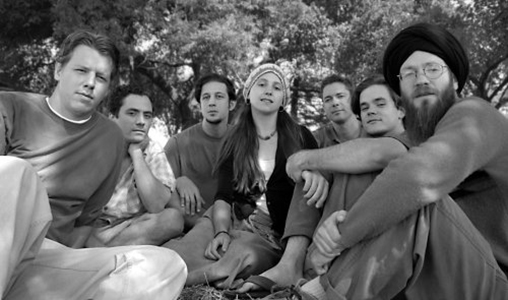
Groundation might be the band every righthearted reggaefan has been waiting for all these years. The Americans bring together the roots of reggae, the energy of rock music and the virtuosity of jazz. In their songs they combine everything that we, critical white music lovers, liked so much about classical rootsreggae: great songs, deep rhythms, spiritual lyrics, the mystic of rastafari, inspiring solo's and mindblowing dubs.
All musicians of Groundation have had a jazz education (at California State University) and play brilliant solo's. One time one of the horns men kicks off, lonely at the top, another time Marcus Urani juggles a wild Motown-shuffle. Even bass player Ryan Newman stuns live audiences with a solo of genius. He also starts the sudden breaks and changes to a higher or lower pace, sometimes to a complete different song, or so it seems, but that's the way Groundation composes its songs.
Between the start and the end of these deliciously long tracks (live and on CD) the music turns and swirls in all directions, not as an unguided projectile but according to tight engagements and highly gifted ideas. "We play a different show every night," says singer Harrisson Stafford: "The basical structure of the songs is defined but improvisation will always be an important part of our music."
Stafford is, with Urani, the brain and the heart of the band. The man looks like a soft white Osama bin Laden, the dreadlocks hidden under a turban, an appearance that many American and European rasta's in the nineties adapted. But the stage performance of Stafford is not soft at all. With a lot of soul and bravoure, qualities that only very the very greatest reggae artists have in common, he sings his lyrics about love, hope, justice en tolerance. No predictable rasta texts but ripened musical poetry, as ambitious and well considered as the music.
Staffords voice is situated somewhere between Bob Marley and David Lindley, another American who loves reggae but who has never really dug into it, as Groundation did. We have rarely seen a singer who is able to enchant his audience for such a long time and a the same time leaves his musicians plenty of time to excel as he does.
And never have we heard such authentic, original covers of Marley, two forgotten gems from way back, in Lee Perry's time: Caution and Stop this fussing and fighting in the show enjoyed so much in Eeklo, Belgium. The band knows how to reflect the threatening chaos of the originals and still gave them a whole new character and sound color.
Harrisson Stafford also succeeds in imitating the voices of Cedric Myton and Don Carlos, two prominent guests featured on the new album, which might be the biggest compliment you can give to this white Californian, one of the best reggae singers we've ever heard.
Groundation has arguably given one of the best reggae shows we've ever seen. Maybe even as good as Bob Marley (1980), Burning Spear (1984) or Lee Perry (1990). Groundation not only deserves a place on every reggae festival but is also able to charm and convince a rock audience. There's not many reggae acts that can say that.
Groundation continues where Jamaican roots bands have stopped: musically, lyrically and on stage. Groundation has re-invented reggae and with a little luck could be very big in the future. After the show we meet in the dressing room. It turns out singer Harrisson Stafford and I share several experiences in Jamaica with some of the rastafari elders, like the brethren of Mystic Revelation of Rastafari. Groundation however are all (white) Californians, former jazz students (California State University), and mix authentic roots music with jazz and soul infusions, to a very new, truly original style.
Stafford: "That's what we are set out to do, to be an original voice. Definitely."
Marcus Urani (keyboards and co-founder): "Reggae is another jazz form, just like Motown was. We inject rootsreggae with these other forms. Every musician puts in his own musical knowledge and background."
Stafford: "We love reggae music but the music that we love dates back from the seventies. It was telling stories of the community, people weren't in it for the money or to be a star. That's how we look it, only our music reflects the lifes we live now."
Although you collaborate with illustrious roots men like Cedric Myton (Congo's) and Don Carlos.
Stafford: "It's paying tribute to the greats. We've learned so much about them. Congo I've known for years. Jim Fox, RAS engineer in Washington, came up with Don Carlos, a singer I have been listening to for years. He asked: do you know Don Carlos is living down the road at your place? No! Really? I called him up, we met a few times, and what can I say? Don Carlos is the most loving and caring human being you can imagine. We wrote his lyrics, because we want them to fit into our concepts, but he made them his own."
Your second record Each One Teach One features Ras Michael and Marcia Higgs, daughter of legendary singer/songwriter Joe Higgs.
Stafford: "Ras Michael is based in L.A.! He's 63 now but still lives and breathes music. Joe Higgs I have known before he passed away. Another very loving person. He did such great things for Bob Marley, Ijahman, Wailing Souls, all those people, but never asked credit for it. In mean, if it wasn't for him, we might even not know Bob Marley."
And you couldn't do those excellent Marley-covers.
Urani: "We try to do different stuff every night. We know about 80 Bob Marley-songs."
Stafford: "Every February (the 6th is Marley's birth date, red.) we do our tribute to Bob Marley. In two sets we play all Bob Marley music, that means also the old hammering stuff, full of energy."
Urani: "On tour we try to do the more obscure stuff, including the full horn arrangements. All Bob Marley's songs are great songs."
Stafford: "He was arguably the best song writer ever."
In the seventies most rootsreggae used to have horns. Groundation brings the virtuosity and creativity of horns back to life.
Stafford: "Money, touring... All kind of problems made the horns disappear from Jamaican music. But we would never even consider playing without them. All roots bands should have a horns section and never replace it by some synthesizer."
Although I was very impressed by the live sound of Groundation, I know you could put a lot more into it, special effects and the like as we can hear on the albums.
Stafford: "We can't bring all our stuff but we will in the future. Three organs, more equipment: we're just beginning. We have done some shows on the west coast where every instrument had a separate track and we could do some great dubbing."
Urani: "We could a lot more stuff. Rearrangements, post-production: it's all fresh and new to us, especially live. Things can only get better."
How are the songs created? Do you write out arrangements and solo's in advance?
Stafford: "The ideas just pop up and we elaborate on them. Real jamming, you know."
Urani: "Sometimes we talk about a certain break or solo that somebody proposes, conception wise that is. How do you feel about this?"
Stafford: Also, I don't think of Groundation as my own band, not even as a band that plays my songs. It's we as a unity, coming together and creating roots music."
Like the original grounations in Jamaica, after which you named the band.
Stafford: "Right. It"s the same coming together of people and ideas."
Have you ever met the elder rastamen in Jamaica?
Stafford: "A number of times. From when I was very small I got the opportunity to meet with many elders. Brother Sam? Is that the guy who makes the drums for Mystic Revelation?"
No, that' s Little Bop.
Stafford: "Oh, than it's him I toured with in Jamaica with Planno (the most respected elder rastaman of the country, who was the first to meet with His Imperial Majesty..."
Jah Shakespear has been listening to reggae music since 1977, started writing about the subject in the early nineteen eighties (for De Morgen, De Standaard, P-Magazine, Highlife and a number of other magazines) and founded this website in 2002. He's also the author of 'De Rasta Revelatie' (2008) and 'In Het Spoor Van De Keizer' (2016).
Dec 12, 2004