






.Dl7BAwhJ_ZJXLLF.webp)
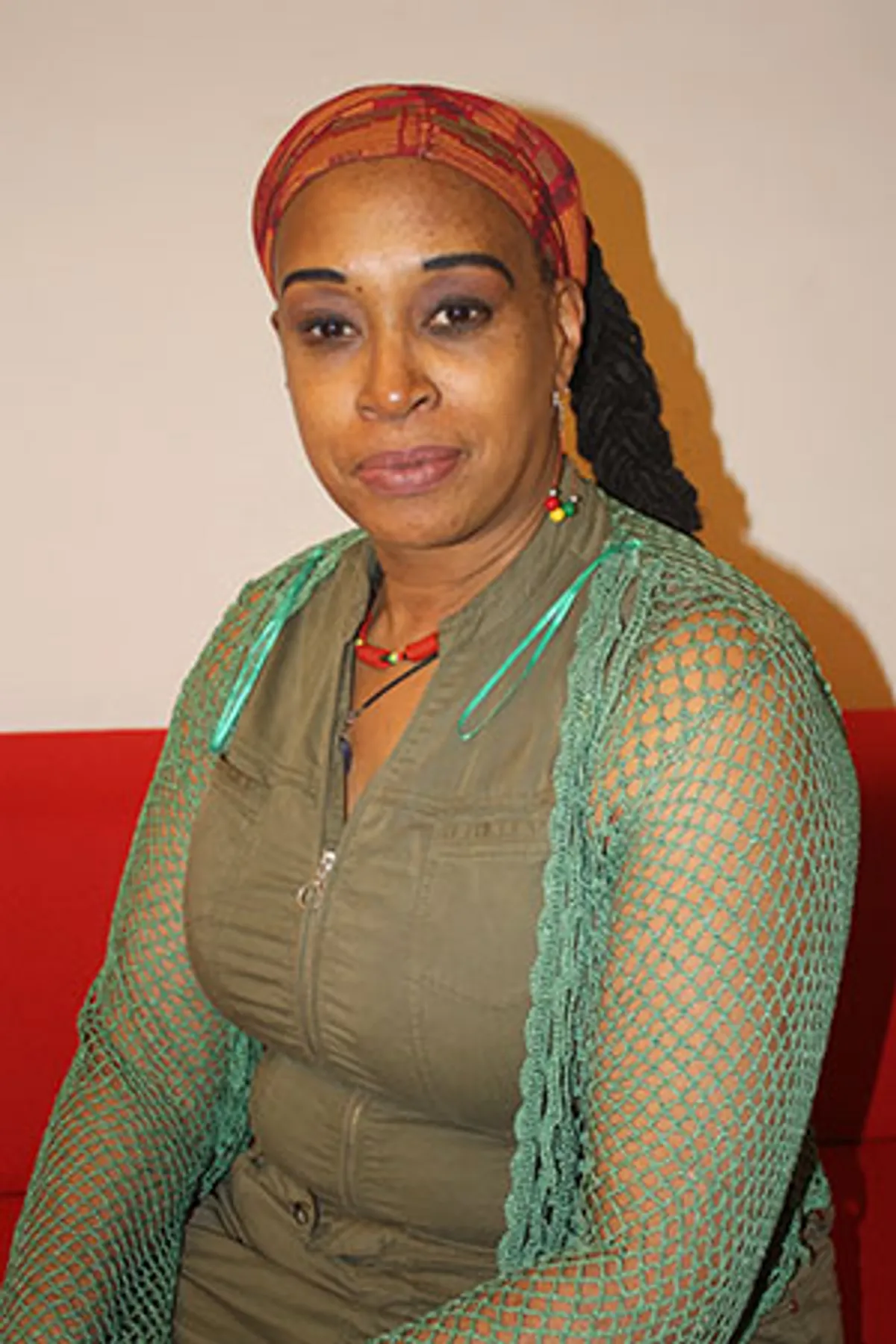
Aisha: "I'll never actually write a song for the sake of writing a song!"
by Jah Rebel
With her now iconic debut album 'The High Priestess' and singles such as 'The Creator' and 'Prophecy', Aisha has left an indelible mark on the reggae history of the United Kingdom. On Friday 31 July, she will perform alongside Mad Professor at the Dub Forest of Reggae Geel, and as a warm-up, we are delighted to bring you the following interview!
Aisha, I think your first, let's call it professional, move in music was on a sound system known as Locks City (later renamed Skippy And Lippy). How did you get involved? Did you just present yourself?
Aisha: "Lippy used to play at this place called Barry's and every Wednesday, when my dad was at work, I'd sneak out of the house. One evening I decided to go up to Lippy to ask him how I could get involved and he told me I had to start writing. From that point onward, I started hanging around with him and the other sound men in his crew. We would meet like once a weekend and then we would sit and start writing. I used to write songs to songs that were pre-recorded. A lot of those original tunes went into the hands of a lot of people. I never really had no copies. But there's one track from those original sessions, 'Oh Africa', that's now included on the 'The First Lady Of Dub' album (Ariwa, 2017, red.). From Lippy days came Capital Letters and then Sons of David."
How long did your stint with Capital Letters last?
Aisha: "It didn't last long. I was only 17 and had just left school. Lippy introduced me to the band members. I met Earl Lynch, who was the original keyboardist. The original Capital Letters were Earl, Teacher (Danny 'Teacher' McKen, guitar & vocals), Dude (Roderick 'The Dude' Harvey, drums), Bulk (George 'Bulk' Scarlett, guitar), Paulette (Paulette 'Lee' Hatden, backing vocals) and Del (Pauline 'Dell' Spence, backing vocals). I was asked to step in when one of the backing vocalists became pregnant. I joined them on a tour, which was actually my first experience of being in a band. I think it lasted for about a year and a half. And then they decided they didn't want any more ladies in the band. When I left with one of the other singers, I hooked up with Macka Dub, who went on to produce a lot of the tracks on my first album. We did our own thing with Lion Heart Rhythm Section, and from that came Sons of David."
I believe it was Dr. Alimantado who eventually introduced you to Mad Professor?
Aisha: "When I met Alimantado, it was like a passing thing. Tado was working with Macka Dub at that time. I believe the first sessions were at Lion Heart Studio. He used to come in and listen to a lot of the tracks. At one point Tado said: "I'm going to give Professor one of your tapes!". Soon after Prof invited me to the studio, and the first tracks we did… What was the first track we did Prof?"
Mad Professor: "The first track we did was 'Can You Feel It'. It was a UK soul track."
Aisha: "'Can You Feel It', yeah, with Drumtan. He played live drums on that. Which was like fantastic for me."
Your debut album, 'High Priestess', iconic in its own right, for more reasons than one, contained one track that helped define your career. I'm of course talking about 'The Creator', which was later sampled by different artists, including The Orb. But I'm curious… beyond that outside recognition, did 'The Creator' already stand out to you at the time when you were making the album?
Aisha: "That's a very interesting question. When I did the track, I didn't really feel anything. I felt something in it when I was writing it, though. And if I remember correctly, we did that track with a drum machine. Is that correct Prof?"
Mad Professor: "That was one of the first good songs that used the drum machine. I remember playing that track to Shaka, and he said: "I don't know if I can play that tune, you know, the drum machine spoiled it!" (laughs)"
Aisha: "I knew that the lyrics were strong. It was ahead of its time. And I was quite amazed years later when The Orb sampled it. And that was amazing. At first, we didn't know that they'd sampled it or that it was on BBC, on national television. They opened doors for me, you know. Because people who only knew the vocal didn't know the artist. I can remember going to places and people saying, oh, that's you. They knew the tune, but they never knew who the person was behind the melody!"
Mad Professor: "Funny enough, that was the first ARIWA album we ever put on CD. We didn't really know what we were doing when this CD thing was coming up. And then our friend, Guido (Delvoux, Runn Records, red.), decided that this should be the first album that we'd put on CD. He manufactured it for us in Holland. That was back in '88 or '89. We put out a thousand copies, and it stopped there for a couple of years, and we couldn't understand why. I guess it was really ahead of its time."
The iconic image used for of the sleeve of 'High Priestess' was recently included in Alex Bartsch's book 'Covers', which saw him retrace iconic reggae album covers to their original locations. Can you remember who came up with the idea to take that picture of you dressed as a high priestess in front of one of the sphinx statues at Cleopatra's Needle (one of a pair of obelisks, together named Cleopatra's Needles, that were moved from the ruins of the Caesareum in Alexandria, Egypt, red.)?
Aisha: "It was Prof who first came up with this high priestess concept. Even though I'd done tracks like 'Dancing time' and 'Can You Feel It?', he didn't want to market me as the next lovers rock sensation. We'd planned to do the photo session in the studio at first, but when the photographer (Tom Picton, red.) came in he felt it wasn't the right location. He took us for a drive and eventually I ended up in front of one of the sphinxes at Cleopatra's Needle. I still remember standing there, looking up and thinking: "You're in the wrong place, girl!" (laughs) It wasn't until years later, when I started to retrace my history, that everything fell into place."
Mad Professor is also famous for having brought a lot of female singers from the UK to the forefront in lover's rock. And you just said you didn't go for that angle. What was the reason for that? Why did you go roots or conscious music?
Aisha: "Well, to be honest, the A-side to 'The Creator' was a lovers rock tune called 'Dancing Time'. A lot of people don't really know that track. At that time the scene was flooded with lover's rock hits, and I think Prof wanted to try and market me somewhat differently. I did 'Dancing Time', but the reality is, people went for 'The Creator', the B-side! And then he did the same thing with 'Heartaches' and 'Prophecy'."
When we see you performing live, it's usually with a sound system, with Professor as well. It's also where you started, you said it yourself, with your dad and then Libby. Is that where you feel most comfortable?
Aisha: "I love to perform live, but over the years I've learned to adjust. The scene's different now, people can't afford to hire musicians anymore. You also need the right kind of people around you when you're on stage. I don't like working with a band that's not as energetic as I am. Whereas with Professor it's like the drums are recorded in such a way that they are live. And technically, I don't have to worry about Mad Professor's hands on the decks. That's probably why people will see me more with Professor, because with him I don't have to worry. That isn't to say I wouldn't work with a live band, because I think that's what I'd like, but it would have to be with musicians that could play the way I'd like them to play. Not lazy playing. Professor's not like a musician, but he's a musician in his head. He knows exactly what he needs to do, and over the years, I've actually learned to put that into motion. I think it's been a good learning curve for me. I'm more confident now in working with my ideas. And I can't forget my drummer as well, Snipper. I don't know if he likes me calling him that. (laughs) I'm talking about Clive Brown, who, you know, has been like a real major force, you know, because he's an original drummer who programmed a lot of the beats on 'The First Lady Of Dub!'. Clive is a brilliant musician, he's got a certain way when he programs. So we work together collectively, lyrically as well as musically."
Apart from Professor, another name that we must mention is that of Norman Grant.
Aisha: "At that time, I was really trying to work with Norman because he was somebody who I really admired. We recorded two albums together ('Daughters Of Zion' and 'Raise Your Voice', red.), and the energy of those songs is quite different. I think part of me always wanted to evolve and try different things, and at that time, Norman really gave me the strength to continue writing and doing what I had to do."
I almost forgot to ask… When did you start using the moniker Aisha? Did you come up with that yourself? Did somebody start calling you like that?
Aisha: "Well, that's a funny story… I was carrying my last son, Simon, and I remember Carol Stewart, who is my ex-partner's sister, saying to me she had a beautiful name for my baby. She told me that if turned out to be a girl, I had to call her Aisha. I immediately fell in love with the name. Eventually I had a boy, which I named Simon, so then I decided to adopt the name myself. I actually started out as Aisha Dan. I loved it because it was very simple and people could remember it. And now I couldn't change it if I wanted to!"
What role, if any, has the philosophy of Rastafari played in your life and in your music?
Aisha: "A lot of the things that I've felt have come out through my songs. What's been inside of me has been inside of me for a very, very long time, and there's things that I would never even consider disclosing. But I can assure you that it's never failed me. When you hear songs like 'The Creator' or 'Guide And Protect', you know that there's more to it than just me putting the pen to paper. Professor knows, I'll never actually write a song for the sake of writing a song. So, in terms of my faith, that's what 'The Creator' is all about."
Photo: © Fabrice de Smedt
About the author
Jah RebelMore Less
Together with Jah Shakespear, one of the founders of Reggae.be, he first started as a critic and a reporter before in the end of 2014 becoming editor in chief. Divides his time between his two passions: music and Haile Selassie.
Genres
Published
July 13, 2026