

The man's dog is cute, a small golden retriever obediently standing beside its owner. Then, an officer gestures for us all to line up, placing our hand luggage on the ground. This is a drug check, no matter how well-behaved the dog may be. But who would take ganja to Jamaica anyway? The dog and its owner patiently make their way down the line. Once they've passed us, we're allowed to proceed, onto the airport, walking back to the TUI Boeing.
Wedding Cake

Meanwhile, ganja in Jamaica is more freely and readily available than ever before. Even before we depart, Dane, our driver, immediately knows where he can score something for us. He returns with two round plastic containers with flip-open lids. This is how cannabis is sold now in the "ganja shops", of which I intend to visit a few on this trip. One container holds the strain Wedding Cake, the other Platinum. The scandal bag, a piece of trash bag or other plastic in which ganja was usually sold on the street, seems to be a thing of the past, especially in the shops.
On the way, twisting, turning, braking, often pressing the accelerator deeply, in short: driving like most Jamaicans do, Dane encourages us to test the ganja. "Of course, you can smoke in the car!", he exclaims: "I do it all the time!". I recall the roadblocks from the past when only a hefty bribe could prevent the police from arresting you for drug possession. Today, you're allowed to carry two ounces of cannabis in Jamaica, 56 grams. But are you allowed to drive "under the influence"? Once again, Dane responds with a questioning look: "Why wouldn't we be allowed to smoke while driving?"
Ganja? Call the doctor first!
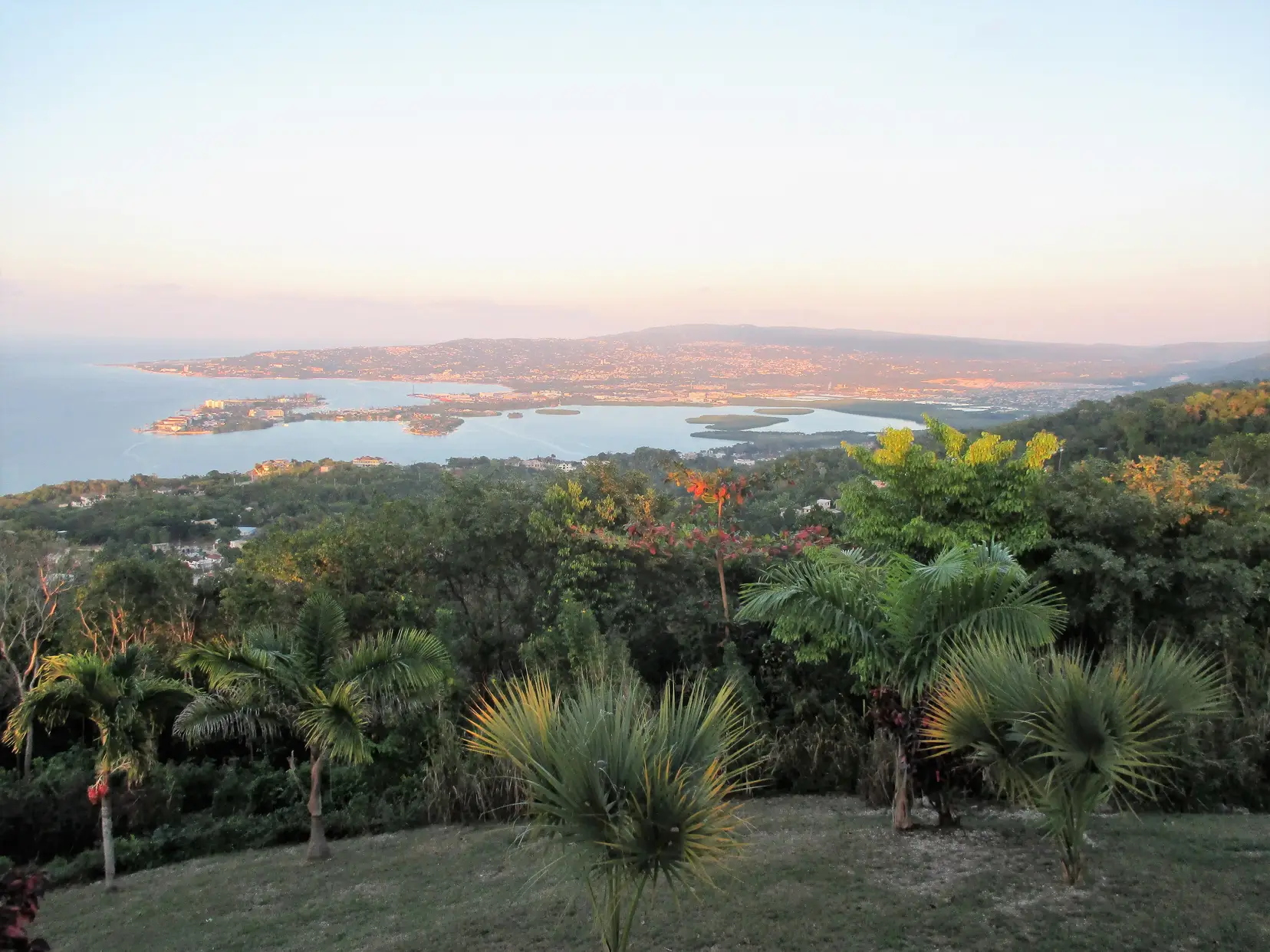
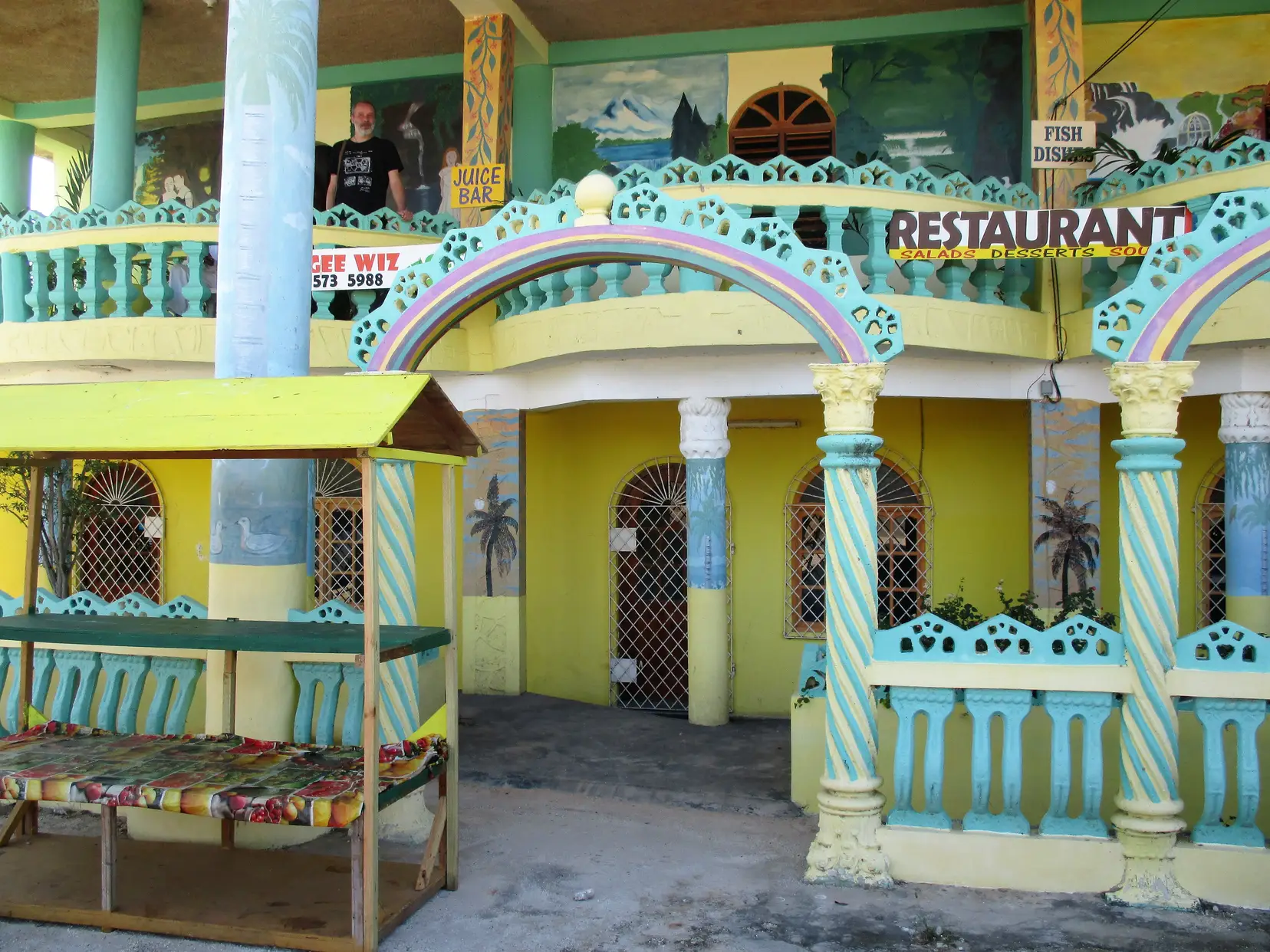
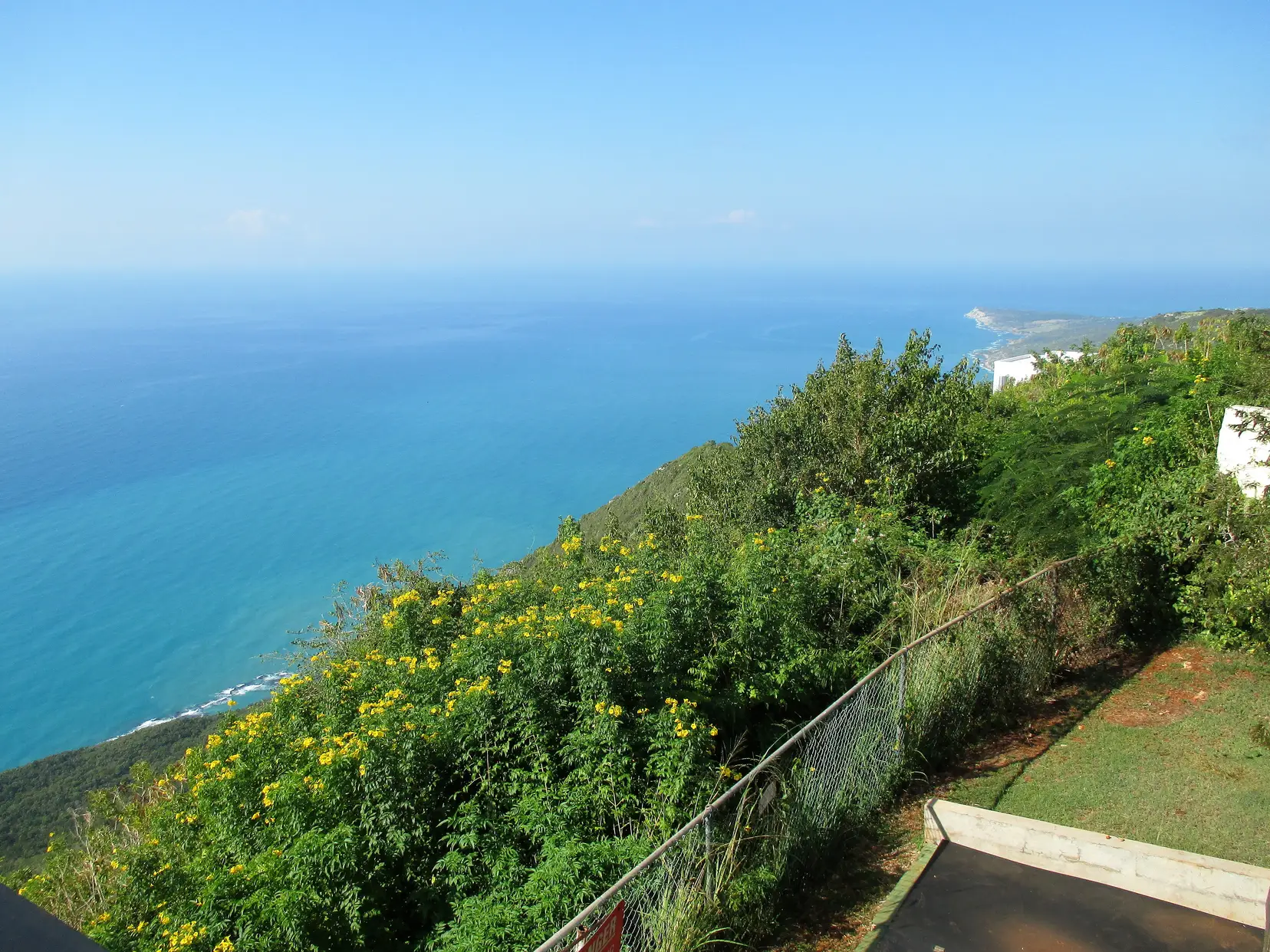
After a wild ride, culminating on a gravel road full of potholes, we arrive at our guesthouse, high above Negril. We're the only guests, and Monica, the guardian of the house, is willing to prepare food for us. Rice with fish (river snapper) and veggies. Naturally, this takes some time, and in the meantime, I meet Pop-Eye (his eye does indeed pop out a little). As always in Jamaica, we immediately engage in reasoning, about big and small topics. We roll spliffs and listen to the rustle of the wind and the distant sea. It always feels a bit like a homecoming.
The next day, we visit some ganja shops in Negril, a bustling tourist center where the many foreigners, particularly Canadians and Americans, contribute to the extra clientele. But that doesn't mean you can just walk into a shop and buy something. You must register yourself, and then make a phone call to a doctor. This costs around 2000 JA dollars (12 euros), locals paying about half. So, the doctors also benefit from this system. Perhaps an idea for our own legislators.
Fiji Sound
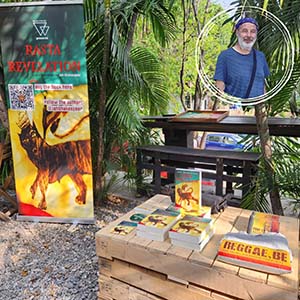
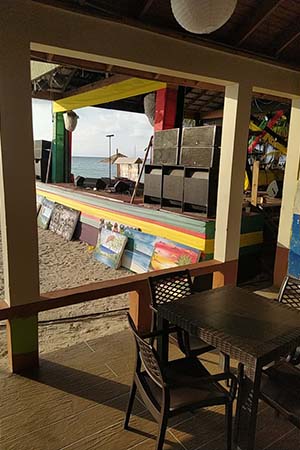
The book presentation at the Roots Bamboo Resort, more authentic and primitive than the other hotels along the coastline, is a washout. The sound engineer for the planned concert by Black Uhuru connects a thin laptop to a tangle of cables and connections, and suddenly all the lights go out. For three hours, it remains dark on the terrace and the secluded stretch of beach where a stage is set up. But that doesn't dampen the vibe in the bar, and people keep coming in. They've all paid 50 or (at the entrance) 60 US dollars, so there aren't many Jamaicans around.
Except for one Belgian: my good friend Kristof, the man who built the first Belgian sound system, Fiji Sound, in the late 1990s. He has been living in Jamaica for several years now, and has found happiness here. I can see it in his broad smile and relaxed attitude. We reminisce about our mutual friend Ras Fire, and the many parties and concerts we've experienced together. The evening couldn't be better for me, even when a hastily brought-in generator finally provides electricity just before midnight and Black Uhuru prepares to play. We have to get up early tomorrow, and we've seen Black Uhuru so many times already.
To be continued...